
The English figures that show Scotland’s drug-deaths rate really is a national disgrace – Tom Wood
Scotland’s drug-deaths rate is three times that in England because of bad management of the problem

Forgive me for quoting statistics from south of the Border. I appreciate that many think of us as somewhat unique up here but, in most ways, we are not.
In our struggle against the terrible harm caused by illegal substances, we have all too much in common with our neighbours in England and Wales. Our drug deaths are far worse only because we’ve managed the problem poorly over the last 20 years, not because of any material difference in drug-taking.
Which brings me to the news that for the first time, cocaine has overtaken our old enemy heroin as the major killer. Last year, there were over 5,000 drug-related deaths in England and Wales, accounting for 92.4 deaths per million people. Compare that with Scotland’s ratio of 277 deaths per million, and you see the extent of our problem.
Poverty is no excuse
Just think about that. A drug-deaths rate three times greater than our neighbour’s. And forget the poverty excuse. People are just as poor in many parts of England with much lower death rates. This is not only a national disaster, but a national disgrace.
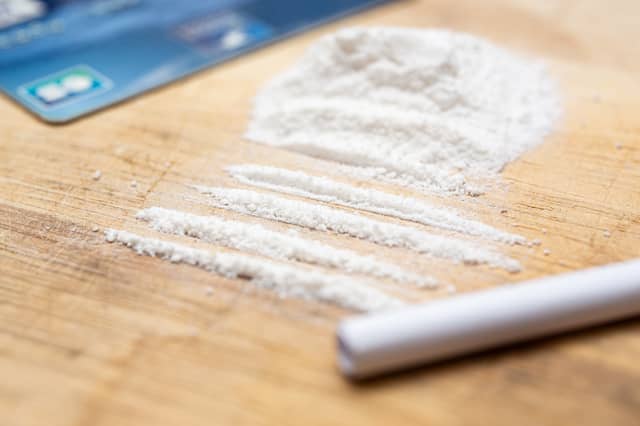
Cocaine was associated with over a quarter of the deaths in England and Wales, apparently due to its greater purity. The hugely addictive ‘dinner party’ drug is proving to be a stone cold killer.
Likewise the veterinarian drug ketamine is also now killing more. Heavy use of ‘ket’, a particular favourite of the young, can also destroy your bladder.
Then there’s the new threat of ‘nitazenes’, synthetic opiates of enormous strength that are becoming increasingly popular. And of course our old enemy heroin remains, no longer the top killer, but it and other opiates continue to kill in numbers, as they have for 50 years.
READ MORE: SNP has turned a blind eye to the drugs crisis for years as cash is thrown at wealthy voters
Safe consumption rooms can work
Then there’s cannabis, now almost ignored as a ‘harmless’ recreational drug. However, the new super-strength skunk variety is a time-bomb waiting to explode. Evidence is growing that heavy use of strong cannabis, especially by the young, is associated with the later development of psychosis, and incurable mental illness.
It’s a bleak picture, particularly in Scotland, where our response has been so inadequate, but perhaps there are signs of improvement. The Thistle safe consumption room in Glasgow is at least a bold attempt to address a particular issue of injecting drug users in the city centre.
Much heralded as a ‘Scottish first’, in fact safe consumption rooms have a long history in other parts of the world. The evidence is clear. They are effective in addressing local problems, provided they are surrounded by support services – health, mental health, social care, housing and employment. If these services are clustered round, then The Thistle will work.
READ MORE: I know the loneliness of addiction. The support of good people is vital to beat it – Rona Lindsay
But let’s not be confused. It cannot simply be transplanted to other parts of Scotland. The patterns of drug misuse across Scotland vary enormously. One size will never fit all. Most cocaine and ketamine is not injected and Glasgow’s problems are not Scotland’s.
We face a long, uphill struggle to address our drug problems but the latest data from England and Wales should serve as a wake-up call. The drug trade does not stand still. To succeed, we must be clear-sighted, and follow the evidence.
Tom Wood is a writer, former police officer and chair of Alcohol and Drug Action Teams.