
SNP's vision of Scotland is based on bad history as new book reveals – Brian Monteith
Scotland: A Unionist History by Professor Alan Sked demonstrates how Scotland has done well out of its British adventure
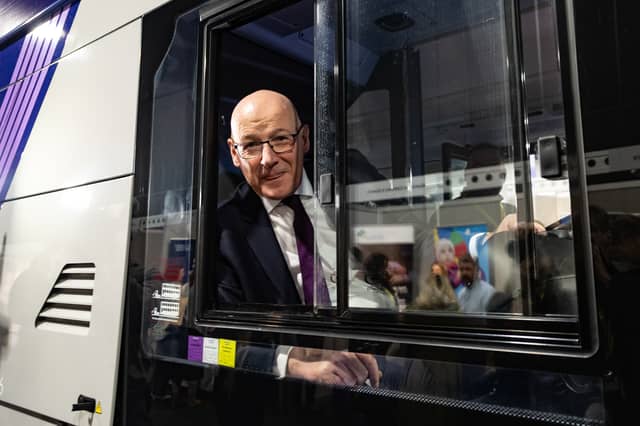


After two decades of SNP rule at Holyrood, it’s quite clear the party has run out of ideas if its annual conference last week was anything to go by. The attempt to launch a new pro-independence campaign on the back of the 30th anniversary of the Trainspotting movie has got many people laughing at its irrelevance and inanity.
With Scotland being the country with the highest per capita drug deaths in Europe, the SNP has displayed a shameless lack of self-awareness and an appalling unwillingness to take accountability.
Then the backing of the conference for a UK-wide ban of social media platform X has shown a couldn’t-care-less attitude for free speech. No doubt all the criticism of the SNP’s drug policies on social media has been sorely felt.
Rather than come up with real answers or listen to Scots telling them what they are getting wrong, the SNP would ban the platform – or, at least in Scotland, the SNP and the Scottish government will choose not to use it.
Good luck with disengaging with political debate when about 24 per cent of the UK adult public has an X account but only 3 per cent of UK adults use Bluesky. Talking to oneself does not a convert make.
READ MORE: SNP's unintentionally funny Choose Scotland campaign debunks nationalism better than I could
Demonising entrepreneurs
The most memorable aspect of John Swinney’s conference week was his threat of nationalisation through regulation that could close down McGill’s Buses, the country’s biggest private operator. It’s not a good look when the First Minister for the whole of Scotland is seen to be demonising the idea of entrepreneurial talent building a business that serves the public interest and brings shared prosperity to the country.
You would think with the failures reported regularly in this paper regarding drug deaths, education standards, growing homelessness, falling life expectancy and a burgeoning fear of lawlessness that the SNP would want to come up with some answers that would galvanise support.
Unfortunately, having been in power for so long the party cannot easily blame other parties for the mess. The stock argument that it’s all Westminster’s fault demonstrates an unwillingness to be accountable for the decisions taken over a period where taxpayers’ money was available and the priorities were those determined by the SNP.
No one forced them to choose the wrong policies such as minimum alcohol pricing that made illegal street drugs cheaper than legally approved booze. Likewise, the SNP was warned that nationalising the railways would use scarce resources poorly and so it has proved.
Abolishing peak fares made commutes busier
Under Scottish government ownership, the still-aging ScotRail fleet has only become older, driver shortages have persisted and chronic industrial disputes have led to thousands of train cancellations. The percentage of trains on time has fallen the last two years in a row, down to 68.9 per cent and has never once beaten or even matched the performance of 70.2 per cent in 2021/22 before nationalisation. Worse still, after nationalisation, the SNP increased rail fares by 8.7 per cent in 2024 while the subsidy cost to taxpayers doubled, reaching £818.6m in 2024/25 alone.
Passenger journeys remain about 16 per cent below pre-Covid levels, due to the inability of SwinneyRail to fully reinstate services. All the flagship policy of ending peak fares manages to do is ensure the busiest times will become even more overcrowded because there’s no financial incentive for passengers to travel when it’s cheaper.
In comparison, McGills has made a private investment of some £95m in zero-emission electric buses and depot infrastructure, resulting in the McGills fleet of more than 200 buses clocking-up over 20 million zero-emission miles. One has to fear what the impact on the bus services will be when the SNP gets its hands on the steering wheel. One also has to ask who would want to start a business in Scotland, nurture it and invest in it, only to see the SNP government act the bully so you have no future.
False grievances
Members of the SNP would be far better recognising that Scotland has a proud history of achievement in business, not just because of our successful home-grown education system but because of the markets that the Union opened up to our merchants and people of commerce, as well as our engineers and inventors.
A new book by eminent historian Professor Alan Sked, the leading authority on the rise and fall of the Hapsburg empire, who just happens to be a Scot, explains succinctly the benefits of the Union of Parliaments and how extraordinary Scots adapted and adjusted the bargain to make it work for them.
It could not be more timely in correcting many of the myths that Swinney and his adherents would have us believe. How Scots fought for Britain and why; how Scottish mistreatment or false grievances have been encouraged and allowed to fester; how in the past Scots enslaved Scots; and Scotland’s own dalliance with fascism and its relationship to the original founders of the SNP.
“Scotland: A Unionist History” is Sked’s very readable journey that gives historical context to how Scotland has done well out of its British adventure and why it remains comfortable and settled with it.
When political parties like the SNP start blaming the messenger rather than seeking to win a debate or give people a voice; when they would rather a multinational corporation be given contracts than encourage local businesses built from the ground up in Scotland, then electors have to stop voting them back in or we shall be destined for division and economic ruin.
Brian Monteith is a former member of the Scottish and European Parliaments and editor of ThinkScotland.org
Comments
Want to join the conversation? Please or to comment on this article.