
Shocking rise in sexual crimes shows how Scotland treats women as less than human
The terrible beauty of an artwork containing the names of more than 200 women killed by men and Gisele Pelicot's lyrical memoir show why a society must change
Dominique Pelicot knew exactly what he was doing to the woman he had ‘loved’ for more than 50 years – the mother of his three children, the family breadwinner when he was out of work, his loving companion in retirement.
On his computer hard drive sat a folder that said simply “Abuse”. It held the evidence of a decade of brutal sexual violence, during which he drugged his wife Gisele, inviting dozens of strangers into her bedroom to rape her while she lay unconscious. He filmed every ugly assault, carefully storing the clips in that folder.
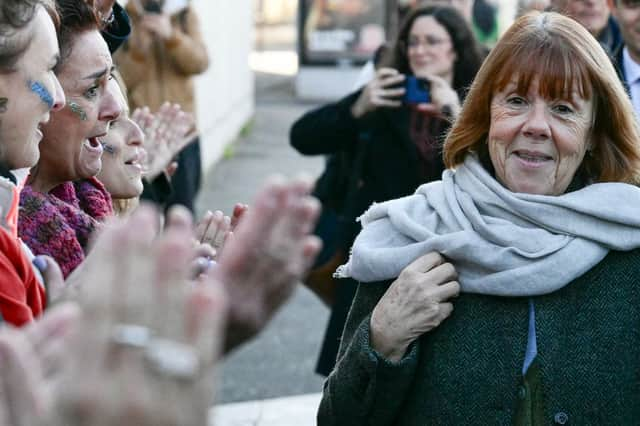
The act of a sordid sexual fetishist? Of an evil sociopath beyond redemption? Or a product of a society that does not truly value women and girls? Perhaps Pelicot is all three. In her memoir A Hymn to Life, published earlier this week, Gisele Pelicot describes last year’s trial of her husband and 50 of her rapists, which she decided should be held in public.
“It was a deep dive into all of us: ordinary men and women, into our bedrooms, our relationships, our families, our sewerage,” she writes. “This story stirs up our violence, our barely concealed sordidness, our dormant traumas… It is the grubby reflection of the domination and predatory activity that still structure our world.”

‘Until society stops killing women...’
Only a few hours after her book landed on my doorstep, I witnessed another reflection of the predatory activity that still structures Scotland. Lost Women is a banner designed by renowned Scottish artist Jenny Lupton and embroidered with immense skill by the women of Selkie Stitching.
It is a thing of terrible beauty, showing Botticelli’s Birth of Venus with the names of the women and girls killed by men in Scotland since 2009 stitched into her flowing locks. There are more than 200 women, aged from two to 86, each lost to the terrible violence that some men call love. “Until society stops killing women, this banner will never be finished,” said Jenny Lupton.
The meeting where the banner was unfurled was a gathering of women from all walks of life, organised by campaign group Women’s Rights Network Scotland to discuss how to tackle male violence against women. In silence, the women, and a handful of men, heard senior police officer DCS Sarah Taylor describe how violence and abuse is on the rise.
The latest statistics for 2025 show a 10.5 per cent increase in sexual crimes, a three per cent jump in violent attacks, and a seven per cent rise in reported incidents of domestic abuse. She suggested that the next set of figures due to be published soon will show a further increase. “It’s Scotland shame,” she told the meeting. “We need a change in our culture.”
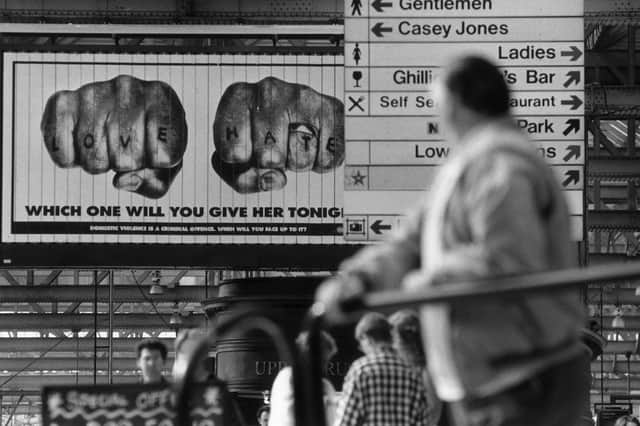
Women have been fighting for a change in our culture since the 1960s, when second-wave feminists argued that male violence was the most potent – and deadly – aspect of a society created by and for men. They opened domestic abuse shelters, rape crisis centres, campaigned for changes to the law, for better policing, for society to admit that it had a problem.
As a young Edinburgh councillor in 1992, I was a member of the city’s women’s committee that launched Zero Tolerance, the world’s first public campaign to address male violence against women and girls.
“No man has the right,” proclaimed one of the campaign’s powerful posters. More than 30 years later and far too many men still believe they have the right to beat their wives, to rape strangers, to abuse girls online.
It was ordinary men who lined up to rape Gisele Pelicot, an unconscious woman in her 60s. A firefighter, a lorry driver, a nurse. Husbands. Brothers. Sons. But as Gisele writes, “power has always been on their side”.
She recalls the birth of the women’s liberation movement in the late 1960s, describing how as a young woman, she heard them, admired them, but was far removed from the fight.
“I couldn’t really grasp what this conflict between men and women was all about,” she writes. And yet, “here I am in my 70s, a symbol of the new feminist wave I hardly know anything about…”
Outwardly respectable abusers
The new feminist wave she describes is the same as the one before, and the one before that when women won the right to vote. It is the voices of women raised in righteous anger against societies that still treat women and girls as less than human. Societies where rich, powerful, outwardly respectable men abuse teenage girls procured for them by people like the paedophile Jeffrey Epstein.
Societies where ‘loving’ husbands offer their wives to strangers for sex. Months after the Pelicot trial, a former Tory councillor in Swindon, Phil Young, pled guilty to a string of sexual offences against his wife Joanne, including drugging her so that strangers could rape her. And societies like ours, where, after three decades of hard-hitting public campaigns, ground-breaking legislation and fundamental changes in police practice, violent and sexual crimes against women and girls are on the rise.
Gisele Pelicot writes that her story is no longer about her. “It has roused a deep, silent pain as old as time,” she observes. In two weeks’ time, on March 8, the world will celebrate International Women’s Day.
We will witness politicians queue up to pledge their solidarity to women and girls, business leaders will boast of their commitment to equality and celebrities will jump on the passing bandwagon. Meanwhile, in a street close to you, a girl will be raped, a mother beaten, an elderly woman abused. The deep, silent pain endures.