
Remembrance Day: Poppies do not glorify war yet every year brings more controversy – Stephen Jardine
We should all make our own choices about wearing a poppy, but the freedom to do so was hard won by those who fought and died for it
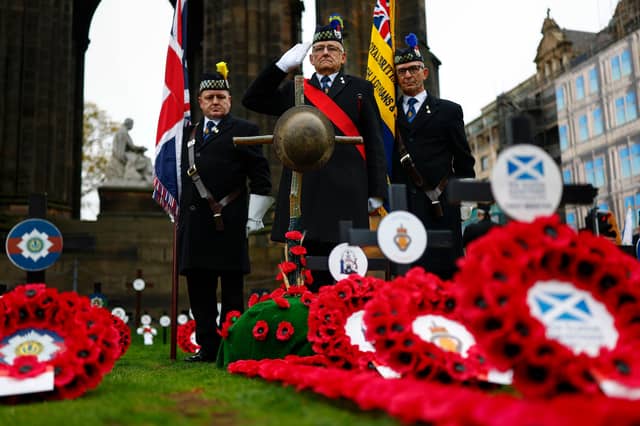

Another year, another row about the poppy. Remember the time Fifa tried to ban them from football shirts on November 11? Or when an ITV newsreader faced a deluge of abuse for opting not to wear one?
It wouldn’t be this time of year without some controversy about this little symbol of sacrifice. So a century after it was introduced, why do we still care so much? We care because it matters.
Do what you do. If you want to wear a white poppy or a Palestinian poppy or no poppy at all, feel free. But the freedom to make choices and behave as you wish was hard won and that is what the poppy commemorates.
Five million a year made in Edinburgh
Remembrance emerged from the vast outpouring of grief that marked the end of the First World War. In 1921, Anna Guerin took her idea of using silk versions of the poppies that bloomed through the mud and death on the Western Front to raise funds to support veterans. The newly formed Royal British Legion recognised the simple dignity of the idea and ordered a million for sale.
In 1926, the Lady Haig Poppy Factory opened in Edinburgh, giving work to veterans. A century on it remains in the original premises at Warriston, producing five million poppies every year. If you’ve never paid a visit, I’d recommend taking part in one of their excellent tours.
Looking at the old photos and mementos on the walls, something is clear. The poppy doesn’t glorify war, instead it symbolises remembrance – the act of remembering and showing respect for someone who has died or a past event.
READ MORE: Purple poppy coat unveiled at War Horse memorial to commemorate service animals for remembrance day
A staggering death toll
Let’s remember those numbers. Close to 150,000 Scots died during the First World War. Their names are recorded on war memorials in every village, town and city in the land.
My hometown Dumfries suffered the highest casualties of any place in Scotland during the Great War with nearly 5 per cent of the population losing their lives. My grandfather narrowly survived and came home terribly injured. Then his son, my father, was called up to serve in the Second World War and saw kamikaze pilots slam into troop carriers in the Pacific.
They made sacrifices we’ve never been asked to make. They fought global aggression – now life is all about the injustice of micro-aggressions.
This year’s row has already blown over. Poppy-wearing pubgoers in Hampshire claim they were turned away from Wetherspoons, sparking calls for a boycott of the chain. Only then did it turn out to be a big misunderstanding with Wetherspoons pointing out they are long-standing supporters of the poppy appeal and raised £55,000 for it last year.
As the years pass and the old soldiers leave us, you might think these controversies would fade as remembrance flickers. Instead, it seems to go from strength to strength.
More than 10,000 will march past the cenotaph on Whitehall tomorrow with millions more attending events all over the country.
In these turbulent times, with so much division, we should be proud of the role remembrance continues to play in our national life. Every poppy controversy shows we care. Every poppy sold shows we remember.
We’ve not been required to fight. We are only expected to remember those less lucky than us. Surely that’s not too much to ask?
Comments
Want to join the conversation? Please or to comment on this article.