
Iran War shows why we can't trust Reform UK to make 'big, important, once-in-a-generation decisions'
If Reform UK was in power, would the UK be taking part in Donald Trump’s threatened campaign to ‘bomb Iran back to the Stone Ages’?
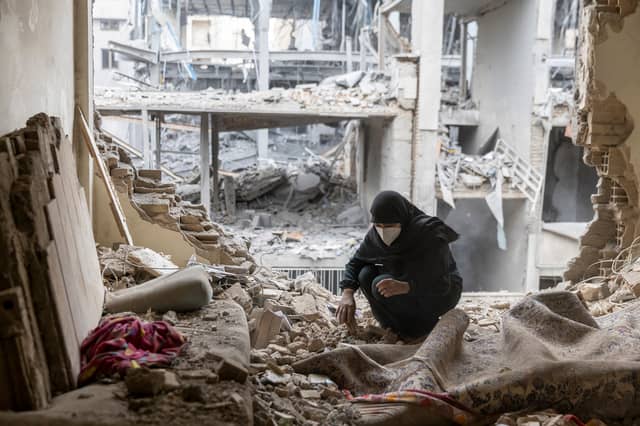


Speaking shortly after Donald Trump launched his war in Iran, Reform UK’s deputy leader Richard Tice said, correctly, that “leadership is about taking courageous, big, important, once-in-a-generation decisions and this is what this is”.
In an interview with LBC radio, Tice also argued that, by refusing to allow US forces to use British bases in making the attacks, Keir Starmer had been “utterly gutless and cowardly”. The Prime Minister should have supported the US operation “to give the Persian people an opportunity to get their country back”. Furthermore, by failing to do so, Starmer had “significantly damaged the trust and confidence from our most important allies, the US, in whether or not they can trust the UK on the big decisions, the big moments”.
Tice’s remarks were echoed by party leader Nigel Farage, who said “we should do all we can to support the operation” and claimed that Iran “potentially poses a bigger danger than [Russian leader Vladimir] Putin poses to us”. Reform’s Andrea Jenkyns, mayor of Greater Lincolnshire, asked herself “do I want to see British troops on the ground [in Iran]?” and concluded “ideally not at this stage” but added that “you can’t rule anything out”.
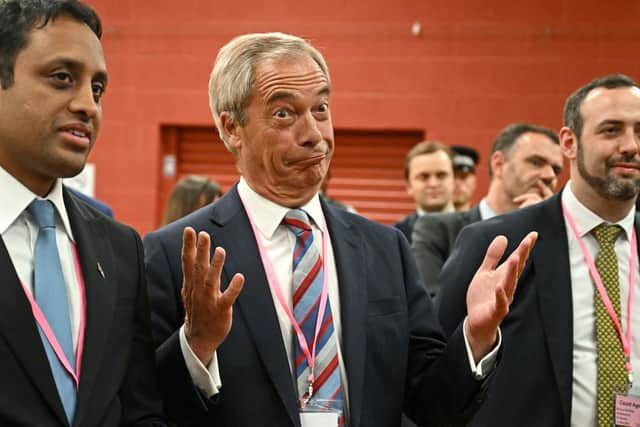
Farage ‘dictating’ to himself
More recently, there appears to have been some backtracking, with Farage saying there were “differing opinions as to whether we should physically join the attacks” and adding a note of caution to hawks in his party who favour military action: “I, as leader, am saying to you, if we can’t even defend Cyprus, let’s not get ourselves involved in another foreign war.”
He has also stressed that while he agrees with Trump on some issues, he disagrees on others. “You know, he is not dictating policy to me,” Farage told the Guardian, before finding himself saying: “I’m dictating policy to me”. I can’t help thinking that, surely, in an ideal world, there would be no ‘dictators’ at all, even inside Farage’s head.
However, it would have been Reform’s first response to the Iran War that would have been the important one had they been in government, which polls suggest they could be if an election were held tomorrow. With Reform in power, it seems obvious to me that it would have been a coalition of the US, Israel and the UK attacking Iran, putting us firmly on Trump’s side just as the rest of Europe gives him the cold shoulder.
For the most ardent Eurosceptics, this may be no bad thing, but then sometimes extreme Brexiteers can seem almost as antipathetic towards the EU as Putin. It should never be forgotten that Reform’s former leader in Wales, Nathan Gill, was given a ten-and-a-half-year prison sentence for taking bribes to make pro-Russian statements.
But more pragmatic Brexiteers may accept that the UK now has no option but to move closer to the EU, given Trump’s threats to quit Nato and the danger this poses to the defence of Europe from Putin’s regime.
America turning against Trump
Following Trump to war may not have been as good for US-UK relations as Tice and co seem to believe. Starmer’s refusal to co-operate has caused something of a rift – as the US president’s petulant insults have made clear – but it will only last for as long as Trump or a Trumpian successor occupies the White House. His poor ratings suggest America is turning against him and a UK Prime Minister who was overly close to Trump might struggle to maintain a good relationship with a Democratic president or even an old-school Republican one.
Trump’s appalling threats to attack civilian infrastructure in Iran – even “possibly” desalination plants, upon which much of the population relies for water (Iran’s terrorist regime has threatened to do the same to its neighbours in the Gulf) – demonstrate one of several very good reasons why Starmer was right to avoid being drawn into the war.
Would the UK be content to take part in Trump’s threatened campaign to “bomb Iran back to the Stone Ages”? Would we be happy to see our coalition leader issue a statement like Trump’s foul-mouthed ‘Easter message’ to Tehran: “Open the F*****’ Strait [of Hormuz], you crazy b*******, or you’ll be living in Hell – JUST WATCH!”
International law may not constrain Trump – the world’s most powerful man – but the UK’s leaders must obey it, and not just for moral reasons. This country is much less powerful than the US, and any British politicians or soldiers accused of war crimes may find themselves in court.
Labour and Tories’ struggles
Clearly, the previous Conservative government fell to pieces under the pressure of Brexit, Covid and the cost-of-living crisis sparked by Putin’s invasion of Ukraine, while Liz Truss’s calamitous but mercifully brief tenure in Downing Street inflicted some entirely unnecessary pain.
It is equally obvious that Labour has been struggling in office, with multiple climbdowns and U-turns which hardly inspire confidence that they know what they are doing.
In such circumstances, it is perhaps understandable that Reform have been doing well in national UK polls. Some of their supporters may have adopted a ‘a plague on both your houses’ approach and decided to give Reform a try out of desperation or as a protest.
However, every vote for Reform – whether in council, Scottish or Westminster elections – takes a party of ideological nationalists, with some decidedly Truss-like attitudes to the economy and deeply worrying positions on international affairs, a step closer to serious power.
Despite his domestic failings, Starmer has been plotting the right course over Iran and I’d trust past Conservative Prime Ministers like John Major, David Cameron and Theresa May to do the same. I can’t personally say that about Farage, but we all have our “big, important, once-in-a-generation decisions” to make, and every voter must make their own call.
Comments
Want to join the conversation? Please or to comment on this article.