
I'm a family mediator with 12 years' experience, and relationships can be saved even when it seems impossible
Family breakdown is a significant factor affecting homelessness and the number of children going into care
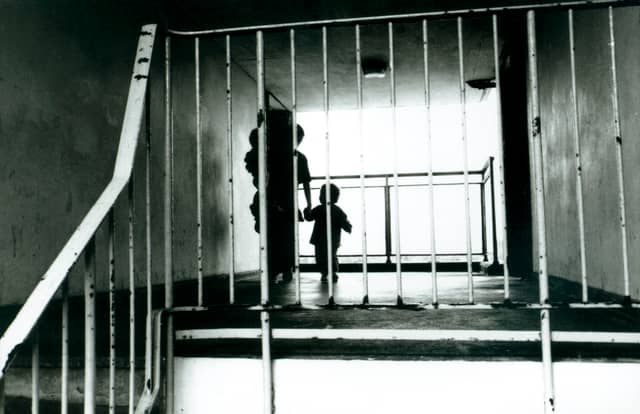

For 12 years, I’ve worked with families who are on the verge of breaking down. As senior mediator at homelessness charity Cyrenians, my job has been to provide support to parents and young people to address the risk of that young person leaving home and becoming homeless.
Those of us with kids may recognise a time when it felt like your relationship with your child is becoming really difficult. In times like these, it can feel impossible to believe that change is possible.
Even after years in this field of work, I can be surprised by how effective mediation – by a qualified third party – can make what once felt like a gaping chasm between two people shrink to something much more manageable. On the face of it, it seems simple, but this one unique intervention can have a positive effect on the health of Scotland as a whole.
Small, achievable goals
For example, we had one parent and child whose relationship had broken down through lack of trust and complexities related to neuro-diversity, so much so the parents were unable to go to work and it was looking like that child might have to re-enter the care system. By working with them to set small, achievable goals, we were able to help them see things from each other’s point of view, and repair that relationship so the child did not have to go back into care.
It is a sobering fact that those who are care-experienced are more than twice as likely to become homeless than those who aren’t. We also know that homelessness can have a significant impact on mental and physical health. Considering this, it’s not an exaggeration to say that mediation has the power to halt what can otherwise feel like an inevitable spiral of poverty and poor health that can trap families for generations.
One social worker who regularly works with the mediation and support team said: “We have very busy case loads as social workers, so we don’t always have the time to do any mediation with the family or have the specialist skills and knowledge in this area. Families also often respond better when someone independent is involved if social workers have had to make difficult decisions that they don’t agree with.”
READ MORE: Bob Geldof, Lou Macari and Social Bite show how the Scottish Government could do so much more
Tackling child poverty
It is true that charities are able fill gaps in a way that public services struggle to find the time to do. We also have the unique ability to work with the ‘whole person’.
Whilst a social worker might be assigned to someone for a specific reason, we might be able to ascertain that, for example, food insecurity (or any number of other problems) could be contributing to household stress. In this scenario we can either accompany them to one of Cyrenians’ low-cost pantries or refer them to one of several charity partners we work closely with to address that problem.
As addressing child poverty continues to be at the top of the government’s agenda, it is vital that these local networks of support continue to be funded. These networks get to the heart of what makes child poverty so hard to address. I may be biased, but I can’t think of a more effective way to address the complexities of the problem in front of us.
Comments
Want to join the conversation? Please or to comment on this article.