
How routine undervaluing of care workers causes real problems for a vital profession – Omowunmi Ola-Edagbami
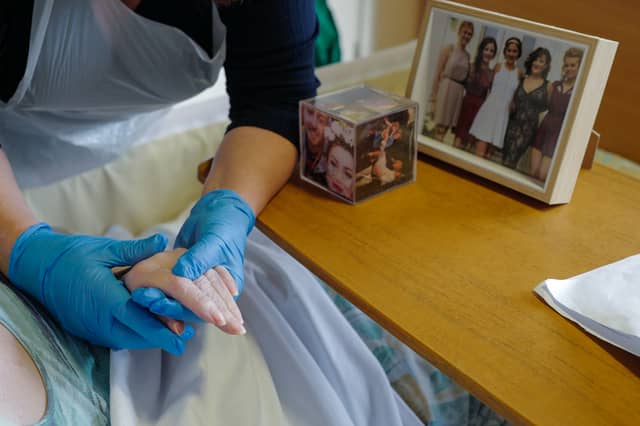

Referring to care work as ‘medium skilled’ does not reflect the emotional intelligence required to do the job – but it does effect rates of pay
A care home caseworker once told me about a night she could not forget. A resident wouldn’t settle because she was distressed, calling out and reaching for someone who wasn’t there.
The caseworker sat beside her, speaking gently and repeating the same reassurance over and over. She held her hand until her breathing slowed. There was no instruction that said she had to stay that long, no line in the rota that captured what she was doing, but she knew that leaving her alone would only make things worse.
By morning, the shift continued as usual. Medication, personal care, notes and handover. Nothing recorded those two hours where she became the emotional support in someone’s most vulnerable moment, and yet, roles like hers are often described as ‘medium-skilled’, a phrase that sounds small for work that is anything but.
READ MORE: How a pensioner stuck in a hospital bed because of SNP incompetence lost the ability to walk
Patience, attention and judgment
When we talk about care work, we are not just talking about tasks. We are talking about people who carry responsibility in quiet ways, who notice small changes before they become bigger problems, and who step into moments others might walk away from.
It is work that asks for patience, attention and judgment, that requires you to stay calm when someone else is not. This work demands presence, even when it is emotionally difficult, and yet still, it is often undervalued.
You can see this in the language we use and in how the work is talked about, how it is paid, and how it is prioritised. In policy language, ‘medium-skilled’ often refers to jobs classified below degree-level training. But outside policy documents, the phrase can quietly suggest something else: work that is easier, lower in value, or less specialised than it really is.
READ MORE: Scotland’s social care system has reached 'breaking point' and is 'piling pressure' on NHS
You can also see this undervaluation in the conditions surrounding the sector itself. Despite how essential care work is, many workers remain on low pay and insecure contracts, while working emotionally demanding shifts. According to Skills for Care, care workers in the UK are often paid only slightly above minimum wage, even while carrying enormous responsibility for people’s wellbeing.
At the same time, we are being told something else, that care roles are among the most important jobs for the future. As populations grow older and health systems come under pressure, this kind of work will only become more necessary. It is difficult to automate human reassurance, emotional presence, and the instinct to recognise when someone is not OK.
So, there is a disconnect. We rely on care work, we know it matters, but we do not always treat it with the respect it deserves, and part of that shows up in how we describe it.
Words matter
Calling care work ‘medium-skilled’ might make sense within a system that measures qualifications and training levels, but it does not fully capture what the work involves. It does not reflect the emotional weight, the responsibility, or the level of awareness required in everyday situations and, more importantly, it shapes how the work is seen.
Language is not neutral. The words we choose influence how we value people and what they do. When a role is consistently described in limiting terms, it can affect how seriously it is taken, how it is funded, and how those doing the work are treated. It also shapes who ends up in these roles.
In England’s adult social care sector, around one-in-five workers are non-UK nationals, while about a quarter comes from ethnic minority backgrounds. Many migrants working in care also arrive with years of prior experience, qualifications, and professional identities that are not always recognised within the UK system. Some were nurses, doctors, or trained professionals before entering care roles. Yet despite the skills and cultural understanding they bring into spaces of care, they often remain positioned at the lower end of the workforce.
There is also a generosity that many migrants bring into care work that is difficult to quantify. The willingness to sit with people through loneliness, illness, confusion and decline is not simply technical labour. It is deeply human labour and yet, we continue to speak about this work in ways that reduce it.
The contradiction becomes even clearer in policy decisions. Recent changes to UK migration rules now prevent new overseas applicants from applying for care worker and senior care worker visas, despite long-standing workforce shortages within the sector.
We are willing to risk further pressure on care services for the sake of political messaging in ways we would rarely accept for industries more openly associated with economic growth, forgetting that care work is economic infrastructure too.
Telling the full story
A recent report found that adult social care generated billions in economic value in Scotland alone. Beyond this, care work also prevents wider strain on the NHS by supporting people before situations become emergencies. When care systems weaken, the pressure simply moves elsewhere.
This is not about whether a classification is technically correct, but whether it tells the full story. If we continue to rely on care work while describing it in ways that do not reflect its reality, we risk normalising a system where essential work is treated as ordinary, and where the people doing it carry responsibilities that are never fully recognised or valued.
If the future is telling us that care roles are essential, then our language and our systems need to reflect that, not just in moments of crisis when we remember how much care matters, but in the everyday decisions that shape how this work is understood, supported and valued.
How we talk about work is never just about words, but also about what we choose to see.
Omowunmi Ola-Edagbami is a storyteller, writer and founder of Black Scottish Stories. Her work explores migration, identity, public policy and belonging through the lens of lived experience
Comments
Want to join the conversation? Please or to comment on this article.