
How journalist who exposed grooming gangs called out Elon Musk’s ‘fake news’
It was a ‘mainstream media’ journalist who exposed the scandal of paedophile grooming gangs – and put Elon Musk straight about his appalling claim Keir Starmer was ‘deeply complicit in the mass rapes’


It is scarcely a state secret that newspapers face challenges or that, below a certain age which rises at an annoying pace, the printed word is not the preferred medium of communication.
Regrettable though that it is, there is no point bemoaning it. The tides of time and technology cannot be held back and there are now bigger questions to address about how – or whether – the implications can be countered.
Increasingly urgent ones are about where this transition will leave journalism and why that matters. Those of us who retain a vested interest are not best placed to pontificate but occasionally there are prompts which should alert the wider audience to what is at stake.
One struck me hard this week when I read about the untimely death of Andrew Norfolk, the Times investigative journalist who exposed the horrendous story about Asian grooming gangs operating, mainly, in towns in northern England.
Unwelcome truths
It is a story which raises uncomfortable questions for those of us of a generally liberal disposition. We now know that the scale and seriousness of these practices were suppressed for years because of concerns that joining the dots would stir up racial prejudice.
This leads onto the wider, and deeply topical, question of whether unwelcome truths should be downplayed in the interests of a perceived greater good? Or is this actually counter-productive as well as, in some instances, creating an unacceptable denial of justice?
These dilemmas faced Andrew Norfolk. Based in the north of England, he started to notice court cases which involved sexual grooming and the abuse of young girls. Almost always, the accused were of Pakistani heritage. He knew its potential to be “the dream story for the far-right”.
So too did police and politicians, whose instinct was to dismiss the cultural connotations. Then, in 2010, Andrew Norfolk heard a report about a 14-year-old being the victim of multiple sex offences at the hands of nine men, all of Pakistani background. ”I decided,” he said, “that I’ve got to get over my fear that this story is impossible to cover.”
Authorities did so little
As The Times reported: “Norfolk’s next three months exemplified old-fashioned tradecraft, scouring archive court material and local newspaper articles in libraries. He identified 17 cases in 13 places where 56 men had been convicted; 50 were Pakistani Muslims.” When he put his findings to the police, he was met with “a wall of silence”.
Eventually, Andrew Norfolk was largely responsible for exposing the Rochdale scandal and others which flowed from it. “It seemed extraordinary,” he said, “that the authorities knew so much and did so little.”
It was found that 1,400 children had been groomed and abused in Rochdale alone. Without good old-fashioned journalism, the truth might never have come out and that, in a nutshell, is why newspapers matter.
‘Simply not the truth’
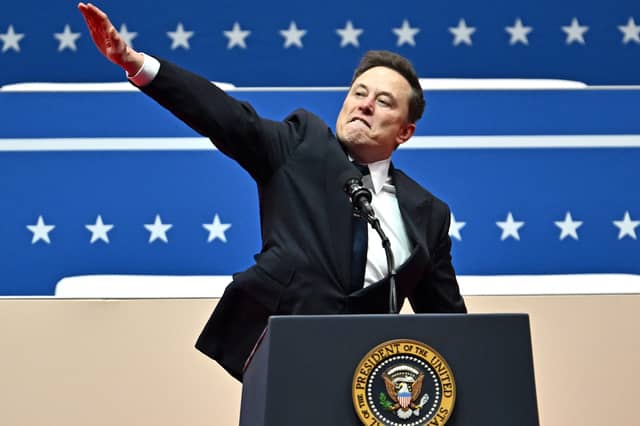
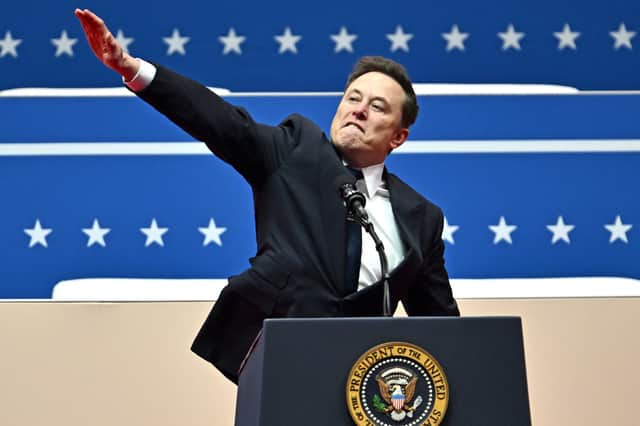
But the story’s significance does not end there. Almost a decade later, Elon Musk – the world’s richest man and controller of large areas of online media – latched onto it, in order to launch an appallingly mendacious attack upon “the mainstream media” and specifically Keir Starmer, saying he should have been jailed for being "deeply complicit in the mass rapes in exchange for votes".
Andrew Norfolk was still around to insist that this was “simply not the truth” and in fact that, as director of public prosecutions, Starmer “ripped up the rules” in order to make it much easier to prosecute these offences. It was “shameful”, said Norfolk, that these allegations were being made for political reasons.
Starmer himself recalled that he reopened cases which had not been properly investigated and “oversaw the first prosecution of an Asian grooming gang in Rochdale”.
That response and the fact that the Times devoted so much effort to the story stood on its head the narrative which the far-right, including Musk, sought to promote – that the “mainstream media” ignored it as part of a deep-state conspiracy, while their own channels were the fearless purveyors of truth.
Twisted ideologies
At this point, it becomes frightening to contemplate a world in which the “mainstream media” barely exists and the field is left clear to Musk and his breed to disseminate such disinformation on a global scale, to promote their own twisted ideologies.
It is a useful case study in why problems are not solved by pretending they do not exist, even if acknowledgement comes at the cost of certainty they will be exploited by those on the hard and far right.
This also applies to the contentious issue of immigration. The same Starmer attempted this week to seize that agenda by announcing measures intended to reduce the numbers. Inevitably, this attracted allegations of running scared of Reform. Equally, it can be interpreted as listening to the concerns of voters. The two are not mutually contradictory.
Scotland’s attitudes towards immigration are claimed to be different and superior, but this has never really been put to the test. And Reform can already chalk up 20 per cent in opinion polls and by-elections.
On the whole, Britain has managed immigration pretty successfully over the decades, despite ceaseless efforts by the far-right to make political capital out of the issue.
Whenever anyone suggests that this balance can best be maintained by sweeping inconvenient evidence under the carpet, they might do well to remember the name of Andrew Norfolk and contemplate an alternative world in which information is dominated not by liberal idealists but by the apostles of Elon Musk.
Comments
Want to join the conversation? Please or to comment on this article.