
How a second major wildfire this summer would have left Scotland dangerously exposed – Andrew Baxter
The lack of preparedness to deal with major wildfires in Scotland should scare us all, warns Andrew Baxter MSP
When we hear the word ‘wildfire’, we usually think of somewhere else. We picture hillsides glowing orange against a black sky in places like California, Australia, and Southern Europe. Smoke rolling across the horizon. Helicopters overhead. Roads closed. Families hurried from their homes as firefighters disappear towards the flames.
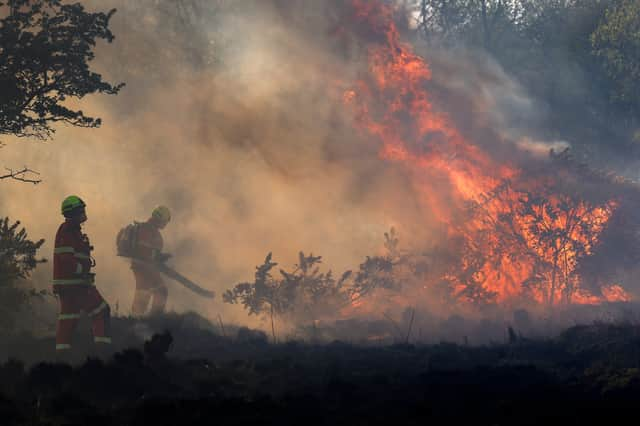
But, this summer, these fires of hell were on our doorstep. They were in the Cairngorms. This summer, one of the most beautiful landscapes in Scotland burned.
Smoke could be seen for miles. Flames tore across the hills. Nethy Bridge was evacuated. Miles of countryside were scorched black. I visited afterwards. It was apocalyptic. Where there had been colour and life, there was blackened earth. The smell of burning lingered. The landscape looked wounded.
And, as I stood there, one thought was impossible to escape. What if another fire had started? Not the following week, but at the same time.
READ MORE: Firefighters warn 'everyone should be alarmed' at state of 'creaking and straining' service

A second line of smoke
Imagine those flames still racing across the Cairngorms. Firefighters committed. Retained crews called out. Helicopters in the air. Equipment on the hill. Then another column of smoke appears over Lochaber. Or Skye. Or Wester Ross. Another hillside catches. Another community needs help. Another family watches flames creep closer to their home. Who goes?
Because fires do not politely wait their turn. They do not consult an action plan. They do not wait for a fire engine. And they do not care whether the helicopter you need is already committed elsewhere. Had another major wildfire broken out simultaneously, I am far from convinced Scotland would have been ready for it. That should frighten us.
More than 100 firefighters were involved at the height of the response to the Cairngorms fire. Retained crews left families and jobs. Farmers, land managers, rangers and volunteers rolled up their sleeves. In Nethy Bridge, ordinary people helped evacuate neighbours, organised transport and fed those fighting the fire. The community raised more than £130,000 to support the effort.
That is the Highlands at its very best, but we should be careful about romanticising it. We cannot build an emergency response on the assumption that, when the system reaches its limits, good people will appear with machinery, food and a JustGiving page. Goodwill is not a resilience strategy.
Nor should we accept a situation in which machinery is left sitting nearby and people who know every track, burn and watercourse are standing ready, while the system struggles to use them. When a wildfire is moving, minutes matter. Local knowledge matters. Knowing who has the right equipment and how quickly it can reach the hillside matters. None of this replaces our professional firefighters. It helps them.
SNP fiddled while Cairngorms burned
Yet while communities moved quickly, government moved painfully slowly. As the fire grew, I called for the Scottish Government’s Resilience Room to be convened and every possible avenue of additional support explored. There was no time for hesitation. Yet hesitation is what we got.
Emperor Nero fiddled while Rome burned. This summer, the SNP fiddled while the mountains burned. Harsh? No. Look at the blackened Cairngorms and tell me this is the moment for gentle language.
For too long, Highland communities have felt that urgency increases the closer a problem gets to Edinburgh. When Arthur’s Seat burned this summer, the flames were visible from the SNP’s ivory tower. Ministers needed no briefing paper. They could look out of the window. The Cairngorms should not have to wait until a mountain burns within sight of parliament for the same sense of urgency to address their problems.
A question of when, not if
Nobody expects Neil Gray, the Cabinet Secretary responsible for the Scottish Fire and Rescue Service, to jump into a fire engine. But we expect his government to make sure Scotland is prepared before flames appear on the horizon. Right now, I do not believe we are.
Instead, we have strategies, action plans, committees and responsibilities scattered across organisations. But these won’t extinguish a fire, drive a fire engine, or stop flames reaching somebody’s front door.
That’s why I have called for a cross-party wildfire summit. I want ministers sitting across the table from firefighters, farmers, crofters, land managers and communities who lived through this. No defensiveness. No buck-passing. No hiding behind another review.
What worked? What failed? What do we need? Who is responsible? And when will it be done? The people of the Cairngorms deserve answers.
Because it is no longer a question of if there will be another major wildfire. It’s a question of when. Perhaps next summer. Perhaps sooner.
Somewhere in Scotland, a thin trail of smoke will rise above a hillside again. The wind will catch it. The smoke will thicken. What was a flicker amongst the purple heather will become an orange glow racing across the hill.
The smell of burning will reach the houses below. Families will stand at their windows watching the horizon. Blue lights will dash along the road. Retained firefighters will leave their families and jobs and race towards the flames. Helicopters will thunder overhead. Crews and equipment will be pulled from across the country as another community watches the fire creep closer.
And then, while they are fighting it, another call will come. Miles away, beyond the mountains, another thin trail of smoke will appear. Another hillside. Another orange glow. And, potentially, a community watching their homes burn.
But this time the firefighters are already committed. The helicopters are already in the air. The equipment is already on the hill.
When that moment comes, nobody will care how impressive the government’s wildfire strategy looked on paper, or how polished the First Minister sounded at FMQs. They will care about one thing: Who goes to the second fire?
Andrew Baxter is the Scottish Liberal Democrat MSP for Skye, Lochaber and Badenoch
Comments
Want to join the conversation? Please or to comment on this article.