
Healey’s Budget cannot repeat the mistakes of Rachel Reeves
The ‘pitch rolling’ suggests this will be a Budget with a number of minor changes without signalling any major change in direction
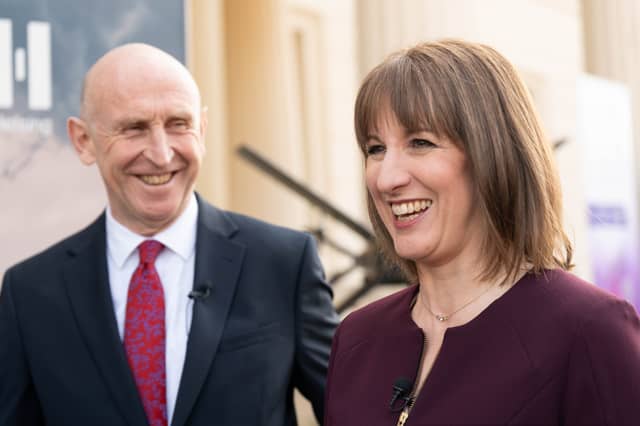


Today’s first Budget from the new Labour Chancellor John Healey will set out a direction of travel for Andy Burnham’s Government, indicating how they will address the many challenges facing the country. If early indications are to be believed, however, what we will have is a set of modest proposals, like a promise of cheaper gherkins intended to grab a headline, but not much in the way of a serious attempt to redress the mistakes made by Healey’s predecessor, Rachel Reeves.
It was the measure in her first Budget to increase employers’ National Insurance from 13.8 per cent to 15 per cent that did so much damage to the reputation of Keir Starmer’s Government as one interested in the economy, and in supporting business. This tax hike came at a substantial cost in terms of employment, with the Office for Budget Responsibility estimating at the time that it would cost 50,000 jobs.
There are many sectors heavily dependent upon staff numbers where the impact of employers’ NI increases is still being felt. Hospitality has been particularly hard hit, with hardly a week going by without the announcement of more business closures, whilst other sectors such as social care and retail, characterised by large workforces and low pay levels, have also felt the pinch.
If Healey therefore was really concerned about supporting the economy, and particularly giving a boost to business, he could make the choice to reverse Reeves’ national insurance increase. However, given what we have heard so far, this looks unlikely.
After more than two years of Labour in power, the challenges are piling up. Economic growth is dismal, while government borrowing has now hit £3 trillion for the first time. The inflation rate in September rose to 3.5 per cent, meaning that there is a real prospect of the Bank of England increasing interest rates at their next meeting, with borrowing costs for mortgage holders and for businesses going up as a result.
Meantime, welfare spending continues to spiral out of control, particularly for those of working age. We now have across the UK 1.35 million people off work with mental health issues, who would massively benefit from helped back into the employment market.
So what should the Chancellor be doing? He could start by listening to the calls this week from the Scottish Chambers of Commerce to back businesses and give them the tools needed to restore private sector confidence.
Central to this is a demand to reverse the mistake made by Rachel Reeves, and reduce employers’ National Insurance contributions. For businesses across the country, this is the number one demand from the Chancellor, after the damage done by his processor.
But there are many other measures that the Chancellor could take to help a struggling economy. Whilst the announcement about the approval of the Jackdaw gas field was very welcome for the North-east of Scotland in particular, we need this to be followed up with the approval of the Rosebank oilfield. And the damaging Energy Profits Levy, harming oil and gas firms and the supply chain, now needs to be scrapped.
Other sectors have their own demands: hospitality and tourism looking for a targeted VAT reduction, whilst the Scotch whisky sector has been pressing for a cut in spirits duty. All these calls are backed by the Scottish Chambers of Commerce, who make other interesting proposals such as investment in expanding driving test capacity, incentivising careers in key sectors, and introducing a digital skills guarantee.
For the Conservative opposition, reinvigorated under the leadership of Kemi Badenoch, the Budget is a straightforward test of whether Andy Burnham is prepared to chart a different course from his predecessor Keir Starmer, particularly in relation to the overall cost of the public sector. Last week Badenoch set out her plans to reduce public spending by £70 billion, with a particular focus on reducing the unaffordable welfare bill. This would enable tax cuts to be made both for businesses and hard-pressed families.
We will find out today exactly what the Chancellor has in mind, but the “pitch rolling” suggests this will be a Budget with a number of minor changes without signalling any major change in direction. That would be a mistake for the country, and mean that they economic sluggishness we have seen over the past two years continues, whilst businesses are squeezed and household budgets come under even more pressure.
There is one reason why Healey might be bringing forward a low-key Budget which fails to address the real challenges facing the country, and that is a political one.
Westminster insiders are increasingly of the view that Burnham may be planning an early general election in the Spring, to try and gain himself a mandate for another five years. A “steady as she goes” Budget, which won’t rock any boats, would see his Government through the next few months, avoiding any of the tough but necessary decisions that have to be made being taken.
I can see why Burnham might be tempted. Current polling gives Labour a small lead over the Conservatives, who now have overtaken Reform in most measures of public opinion. Burnham might well believe that with a split opposition, he has the chance to come back at a general election with a Labour majority.
That might prove to be a foolhardy premise, given that many of those currently saying they would vote Reform would be prepared to tactically vote for a Conservative candidate in their constituency if that individual was more likely to defeat a Labour incumbent. Burnham might find in that scenario that Badenoch was a much more formidable opponent than he is currently anticipating.
Whatever the political motivations behind the choices that John Healy will make in the Budget, is it already clear that he won’t be reversing the mistakes made by Rachel Reeves. And that means that we will have to wait before we have a government that is serious about addressing the real challenges facing the country.
Comments
Want to join the conversation? Please or to comment on this article.