
How Great British Energy can unleash tens of billions of pounds of investment in renewables
GB Energy cannot be a passive bystander and must focus on projects that will make a real difference to national energy security and economic growth
The UK’s public finances are under immense strain and, against this backdrop, the government’s pledge of £8.3 billion to Great British Energy (GBE) is bold, yet fraught with risk.
We must think carefully about how to deploy this war chest. At £3bn per gigawatt (GW), the cost of building out the UK’s 2030 target of 50GW simply cannot be achieved by GBE alone. The UK has installed only 16GW to date and, at the current pace, will fall short of its ambitions.
GBE must move beyond incrementalism, becoming a pathfinder to stabilise energy prices and tackle renewables’ intermittency issues and the associated ‘curtailment’ payments to windfarms to stop producing electricity.

Two key challenges
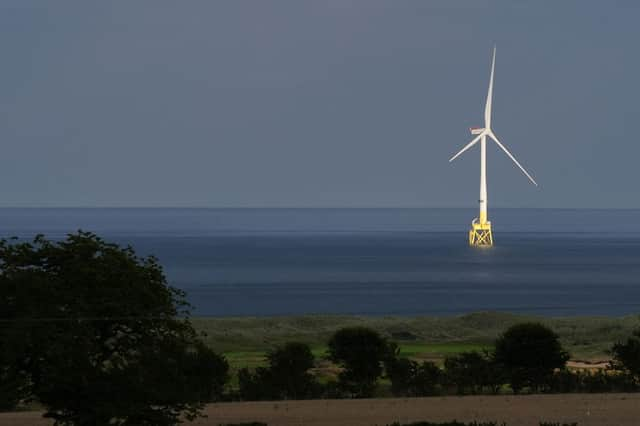
Launched with great fanfare, GBE was pitched as the UK’s equivalent to state-owned giants like Denmark’s Ørsted and Sweden’s Vattenfall. Its investments to date have seen small-scale initiatives – like rooftop solar on schools and hospitals (£255 million) and a minority stake in a floating offshore windfarm (£50m).
These are worthy projects, but do not move the needle on national energy security or economic growth, leaving industry insiders to question GBE’s purpose.
The private market has substantial funding available for offshore wind, but in order to access these funds we need to address two key challenges.
First, stabilising power prices. This is dealt with in part through the Contract for Difference (CfD) mechanism whereby prices are stabilised for 20 years but developers are left to bear the risks associated with market volatility for the ten years or more during which the windfarms will operate after the CfDs have expired. This residual price risk acts as a major impediment to investment.
The investment community needs a longer period of price protection. This can be achieved by extending the CfDs from 20 years to 30 years, the lifespan of a modern windfarm. Alternatively, GBE can be mandated to create a new financial derivative product that extends the maturity of an existing CfD to 30 years, on arms’ length commercial terms. No subsidy is required but investors would find this far more appealing than the current situation.
READ MORE: £130m secured for energy storage ‘stability island’ to bolster Scotland’s grid resilience
Second, deal with intermittency. This issue is inherent to renewables, and is currently dealt with by providing expensive, stop-gap power, for example from batteries or gas-fired power plants.
An alternative can be found by interconnecting wind farms in different areas with subsea cables. As long as the wind is blowing in at least one of these areas, consumers can count on having power on demand.
Here too, GBE can act as a pathfinder – commissioning one or more subsea cables in partnership with the owners of the windfarms to validate this concept (which for now has only been tested by academics).
As an aside, interconnecting wind farms in locations that are far apart can help eliminate the thorny issue of curtailment payments. Being able to divert power to another location solves that problem very effectively.
READ MORE: SNP's 'delusional climate gamble' as carbon capture failure risks tearing hole in net zero plan
Industrial renewal
Britain’s offshore wind capacity can generate energy on a scale that redefines our geopolitical standing. The capital markets are ready to do the heavy lifting – tens of billions in investment await for the North Sea, along with trillions standing by for the wider net-zero transition.
What’s needed is smart, targeted intervention from GBE – not as a passive bystander, but as a catalyst for sovereign wealth creation and industrial renewal.
Eric Knight is chief executive of Knight Vinke Asset Management
Editor’s note: this article has been changed to clarify the potential for “tens of billions” of pounds in investment in the North Sea and trillions for the net-zero transition.
Comments
Want to join the conversation? Please or to comment on this article.