
Gordon Brown: Scottish initiative must be start of a worldwide effort to end worst violation of girls’ rights

The international community can and must do more to pressure the Taliban leadership
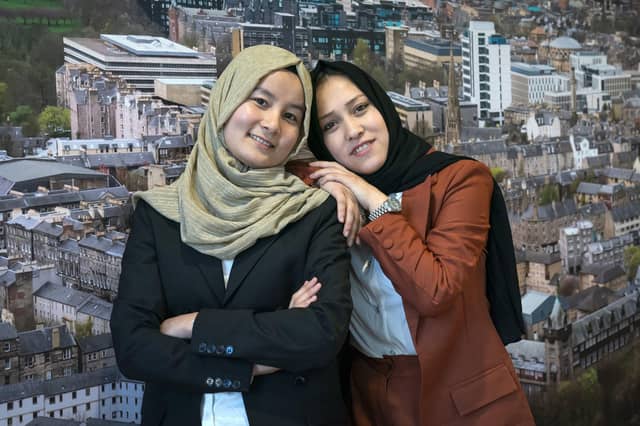
Nineteen Afghan women landed in Scotland this week to start medical studies to become doctors here, thanks to the Western Isles-based Linda Norgrove Foundation.
Offered places at the medical schools at Aberdeen, Dundee, St Andrews and Glasgow Universities, they are being given freshers packs of duvets, bed linen and toiletries by Scotland's Multibank based in Fife the bedding, clothes, toiletries, furnishings and hygiene bank rolled into one.
The young women, who were effectively living under house arrest in Afghanistan as they could not go outdoors without a male chaperone, have come to Scotland through the foundation, set up specifically to raise money for projects that help women and children in Afghanistan. The foundation was formed by the parents of Linda Norgrove, who came from Lewis and, at the young age of 36, was killed after being taken hostage by terrorists in 2010. She lost her life during a mission to rescue her from her captors.
The women are representative of the very Afghans Linda was helping. The International Student Visas granted them by the Scottish Government to study here have liberated them from the oppressive Taliban regime that has prevented any teenage girls from attending secondary school or university courses in their native Afghanistan.
Their arrival in Scotland comes exactly three years after the Taliban took control of Afghanistan in August 2021 and as the Taliban celebrate their anniversary take-over with speeches and a military parade. Not only did the regime ban the education of girls, deny them the basic right to travel freely unaccompanied by men, but they withdrew the right gain professional employment in what has been called a regime of “gender apartheid”.
And although the 19 women now do have a chance to train as doctors before, they do so without knowing if they will ever be able to return to serve their fellow citizens in Afghanistan.
Yet Afghan girls dreams of becoming doctors, nurses, teachers, engineers, entrepreneurs, and more must still be supported. And the Norgrove Foundation is sponsoring 100 medical students, 70 of whom will complete their studies in the UK.
They hope to play their part in rebuilding a strong, financially viable, and independent Afghanistan. There is no reason for them to be denied that opportunity. And one tragic result of girls’ exclusion from education has been a rise in forced marriage. A recent UN Women report documents a 25 per cent increase in the rate of child marriage, citing the education ban as a key factor.
But the systematic violations of girls’ rights are also matters of life and death. Mental distress, depression, and suicide attempts are rising, and the risk of maternal mortality – young girls dying in childbirth – appears to have increased by at least 50 per cent since the take-over by the Taliban.
Nor is this abuse confined to school - or university-aged women. The Taliban have also issued bans on female teachers and on women working in the civil service and in universities, and squeezed Afghan civil society. Following its “suspension” of women’s right to work with national and international NGOs, it has become impossible for many such organisations to continue to operate and provide basic services in the country.
Courageous Afghan girls, with support from the groundbreaking #AfghanGirlsVoices campaign of Education Cannot Wait, which I chair, are stepping up to demand an end to the Taliban’s gender discrimination.
Underground schools, local home schooling, and remote learning are all playing their part in ensuring schooling can continue. In 2023, Education Cannot Wait’s investments in Afghanistan reached nearly 200,000 girls and boys through community-based education programmes.
But despite the overwhelming demand from girls, our partners on the ground are struggling against clerical resistance, especially in Taliban strongholds like Helmand and Kandahar. These authorities need to be told that Afghanistan will not receive financing for education until full access for girls is restored.
In the meantime, we are attempting to reach more girls by expanding the online and radio courses on offer from the rest of the world. That means recruiting more universities and schools to offer online courses and make their curriculums available. And it means bringing girls from Afghanistan across the border to Pakistan – where sadly educational opportunities remain limited – or further afield as the Linda Norgrove Foundation is doing this week.
Every major organisation from the UN and all other Muslim-majority states have condemned these violations and argued that they are not in accordance with the Koran and the teachings of Islam. But worldwide opinion has not been sufficiently mobilised to force a change in policy.
Although a recent UN meeting in Qatar did manage to bring the Taliban to the table, girls’ rights have not yet been on the agenda of negotiations for the re-entry of Afghanistan into the international community. The Taliban still insist that they will not accept international advice on the issue. In a blatant violation of international law, and in contempt of our shared humanity, the Taliban have cast aside the UN Charter, the Universal Declaration of Human Rights, and the Convention on the Rights of the Child.
The Scottish Government’s initiative makes us realise the international community can and must do more to pressure the Taliban leadership on behalf of the millions of girls who are unable to leave. We know that not all Taliban agree with the current discrimination against their daughters, sisters, and wives. Other countries can increase the pressure on the regime through their own domestic legal frameworks, such as sanctioning the Taliban leaders who are most resistant to respecting and fulfilling girls’ rights.
Muslim countries have an especially important role to play. Qatar’s foreign ministry – which has long served as a mediator between the Taliban and the West – has pushed for an end to the bans; the Saudis have criticised the Taliban for failing to give “Afghan women their full legitimate rights, foremost of which is the right to education, which contributes to supporting security, stability, development, and prosperity in Afghanistan”; and the United Arab Emirates has decried the policy as a violation of “the teachings of Islam, [which] must be swiftly reversed.”
Islamic teaching does indeed support the education of girls – “Iqra,” meaning to read, is the first word of the Koran – and the rest of the Muslim world promotes it. “The seeking of knowledge is obligatory for every Muslim,” states Al-Tirmidhi in the fourth Hadith compilation, emphasizing the faith’s deep commitment to learning – by both women and men.
Afghan girls must not be excluded from this commitment. They, and advocates of girls’ rights everywhere, need to know that this is a battle that can still be won.
For Afghanistan’s long-term future depends on reversing these bans. For each year of additional schooling a country provides its children, it can expect up to an 18 per cent return in GDP per capita. For every $1 spent on girls’ education, Afghanistan would generate $2.80 in future income. But if women cannot join the workforce, Afghanistan will never recover from its decades of wars and extreme poverty. Yet today half of the population remain in need of humanitarian assistance. The Scottish initiative must be the start of a worldwide effort to end what is the worst violation of girls’ rights in our world today.
Gordon Brown will be at the Edinburgh International Festival this Sunday to discuss The World As It Is And The World As It Can Be with Festival Director, Nicola Benedetti - August 25, 4.30-5 30pm. Tickets at https://www.eif.co.uk/events/gordon-brown
Comments
Want to join the conversation? Please or to comment on this article.