
Budget offers Rachel Reeves a chance to change course on North Sea - she must take it
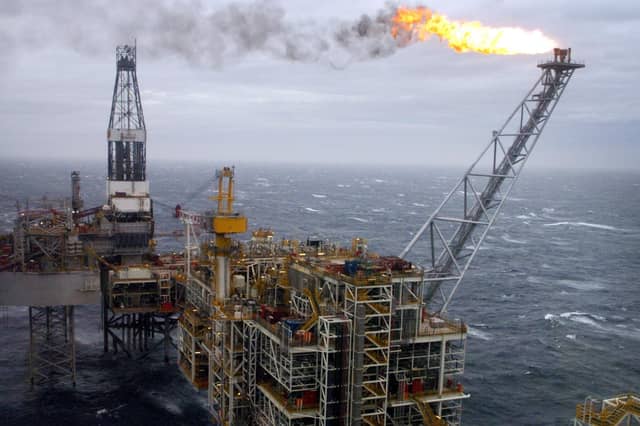

The windfall tax threatens an industry whose investments, skills and infrastructures are needed to make the transition to green industries
Since the first North Sea crude was brought ashore from the Argyll field more than 50 years ago, Scotland’s economy has been buoyed by the oil and gas industry. It has generated billions of pounds and created hundreds of thousands of jobs and is still vital to this country’s prosperity.
But misguided policies and announcements have combined with market forces to accelerate a downturn in an industry that has supported the Scottish and UK economy for decades. If we are not careful, this potent combination will have long-lasting and damaging consequences by helping to undermine the creation of the new clean energy industries and jobs that are vital for our futures.
The news from ExxonMobil, the multinational oil and gas corporation, that it plans to close its chemicals plant at Mossmorran is not merely a hammer blow for the workers and to the local and regional economies. Announced hard on the heels of Grangemouth’s shutdown, it is another sign that the UK and Scotland are not managing the transition to cleaner energy successfully and that we are experiencing deindustrialisation on a scale that will scar communities for years to come.
The closure of the ethylene plant in Fife and the loss of 400 skilled jobs comes as our members across Scotland and beyond ring alarm bells. A powerful coalition including trusted voices from academia, industry experts across renewables and oil and gas and Prosper has come together to acknowledge the extent of job losses which Offshore Energies UK (OEUK), a trade body, estimates are running at around 1000 a month.
The Port of Aberdeen recently announced job cuts, citing a "staggering" decline in North Sea oil and gas activity. Such losses are felt keenly, not only in Scotland but right across the UK, where a total of 200,000 skilled positions are supported by offshore energy.
New research published this week by economists at the independent Fraser of Allander Institute warned that the current ‘accelerated’ - rather than ‘managed’ - decline of the oil and gas sector will lose the economy £13bn by 2035. This is equivalent to 0.5 per cent of UK GDP and in Scotland this means a loss of £4bn, or 1.8% of our output at a time when our economy continues to be low growth.
Energy secretary Ed Miliband’s decision to block the issuing of licences to explore new oil and gas fields has hardly helped but the greatest challenge is posed by the Energy Profits Levy (EPL), a 38 per cent surcharge on oil and gas profits which pushes the headline tax rate to a punishing 78 per cent for businesses operating in the North Sea.
This windfall tax was introduced by Rishi Sunak to ease household energy bills as global oil and gas prices soared, due to a combination of market disruption caused by the Russian invasion of Ukraine and resurgent demand post-Covid. It was explicitly promoted as a temporary and targeted measure. But that was more than three years ago - and times have changed.
It now threatens an industry whose investments, skills and infrastructures are needed to make the transition to green industries. We actively support the move to clean energy and have long promoted the huge benefits it is bringing and can bring to Scotland. This green evolution and the firms behind it are core to Scotland’s economic future.
But this future and the new energy jobs that we need will not be secured successfully if our offshore firms cannot generate the revenues from oil and gas to invest in growing their renewables, hydrogen and carbon capture and storage businesses. Many of them have already grown these activities, but the simple fact is that they are not profitable enough to maintain investment and jobs. The future of the North Sea is not a wild leap from hydrocarbons to renewables but an integration of both.
More than five years ago, Prosper's Manifesto for Clean Growth made it clear that the sector must be used as an asset to facilitate the transition to a net-zero economy. We said it then and we say it again now.
Next week’s Budget offers Rachel Reeves a chance to change course and our advice is clear; scrap the EPL and replace it with a stable profits-based regime designed by industry experts that will encourage investment, promote jobs and promote the development of a clean energy industry.
The prize is enormous: £40 billion in new investment, 160,000 jobs safeguarded, £10.4 billion in extra tax revenue and a halving of emissions by 2030 through cleaner domestic production. The Climate Change Committee has said that we will still be using significant oil and gas for decades so surely it would make sense to use more our own resources rather than become totally dependent on imports from other countries.
Many see next week’s budget as make or break for Rachel Reeves and, in a letter to the chancellor, we have said she must do everything possible to avoid further damaging business confidence. Last year’s hikes in employer national insurance contributions and changes to inheritance tax (IHT) reliefs have already chilled investment. These reforms should be paused.
Meanwhile, Britain’s industrial strategy lacks a strong Scottish voice and this may help explain why Scotch whisky, our leading food and drink export, is absent from the plan. Duty hikes have cost the Treasury £600 million and jobs. We believe a multi-year freeze would restore confidence and protect investment. Restoring tax-free shopping for international visitors is also a move that would increase competitiveness and could pay for itself.
We also believe that Scotland’s city and rural regions are at risk of being left behind as their counterparts south of the border reap the economic benefits of enhanced devolution. We have asked the UK and Scottish governments to progress the Scottish regional devolution agenda with our local authorities and the private and third sectors.
Ultimately, all of our proposals have one key aim. To improve Scotland’s economic performance by driving growth to enhance the lives of the millions of people who call this country home. But to help achieve this we need our politicians to listen to critical friends like us.
The chancellor faces some difficult choices, but she can also right some wrongs when she gets up to speak in the Commons next week. Mistakes have been made but it is not too late to make the changes Prosper has recommended. The former French premier Pierre Mendès-France famously used to say that to govern is to choose. We urge the chancellor to choose prosperity.
Sara Thiam is chief executive of Prosper, a cross-sector membership organisation that aims to strengthen Scotland's economy
Comments
Want to join the conversation? Please or to comment on this article.