
As the Games begin in Glasgow, here's why the Commonwealth is actually expanding – Maurice Makoloo
Athletes from two former French colonies, Gabon and Togo, which joined the Commonwealth because of its values and the opportunities it offers, will compete in the Games for the first time
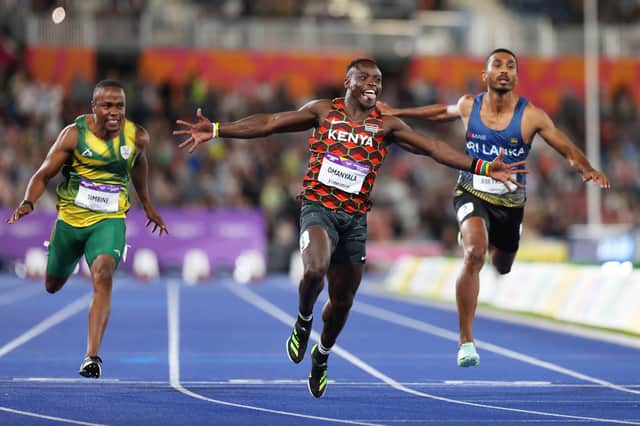
This week I am in Glasgow to support Kenyan athletes competing at the Commonwealth Games. Over the history of the games, Kenya has amassed a remarkable 258 medals. As I watch them prepare to compete, I am reminded that success – whether in sport, diplomacy or public leadership – is rarely about the fastest start. It is about endurance, consistency and the discipline to stay the course.
Those are qualities that also define the relationship between Kenya and the United Kingdom.
The 2026 Commonwealth Games take place against the backdrop of political transition in the United Kingdom – a natural feature of a vibrant democracy. Yet the strongest bilateral partnerships transcend political cycles. They are built patiently over decades, strengthened by trust and sustained by a shared commitment to mutual prosperity. The partnership between Kenya and the United Kingdom is one such relationship.
It is underpinned by deep historical ties, vibrant people-to-people connections, growing commercial links and an expanding agenda of cooperation in trade, investment, education, security, climate action and innovation. These foundations have remained firm and steady through any changes in domestic political landscapes.

A complex history
The Commonwealth is equally an important part of the story. Its history is undeniably complex, and its origins continue to invite reflection and debate. Today it has evolved into a voluntary association of 56 nations representing almost a third of humanity, providing a unique platform through which countries cooperate in education, law, business, culture and sport, while respecting each other’s sovereignty and aspirations.
The Commonwealth is a network whose appeal continues to grow. Its vitality is reflected in an ever-expanding membership, with countries outside its historical borders – Gabon and Togo as recent examples – choosing to join, drawn by the values and opportunities it offers. Fittingly, both these nations will make their debut at the Games this week.
That its secretariat remains headquartered in London – under the leadership of Ghana’s Shirley Botchwey, the first African woman to hold the role – speaks to an institution that is simultaneously rooted and renewing itself: global in reach, yet anchored in the partnerships that give it purpose.
For Kenya, the Commonwealth of Nations is not simply an institution; it is lived experience. Our students study in universities across the United Kingdom and the wider Commonwealth. Our entrepreneurs build businesses across the diverse member countries. Our professionals contribute to each other’s economies while maintaining strong ties with their respective homes.
READ MORE: Commonwealth Games 2026: Here's how to you can get tickets for the Glasgow Commonwealth Games
Growing trade links
Scotland occupies a special place within this relationship. Its universities have educated generations of Kenyan professionals and leaders. Scottish businesses continue to explore opportunities in Kenya’s expanding economy, including in renewable energy, financial services and innovation. Exchanges between our schools, communities and institutions continue to strengthen understanding between our peoples.
That spirit of continuity is reflected in the Kenya-UK Strategic Partnership for 2025 to 2030, which provides a long-term framework for cooperation across a broad range of shared priorities. It reflects a recognition that both countries benefit when we work together to expand trade, encourage investment, strengthen security and address common global challenges.
Trade between our two countries has continued to grow steadily in recent years, while expanding bilateral investments increasingly support shared ambitions in green industrialisation, digital transformation and modern infrastructure.
Official statistics indicate that trade in goods and services between Kenya and the United Kingdom crossed the £2 billion mark during the first year of the partnership, reaching £2.1bn (approximately 360 billion Kenyan shillings) in the final three months of 2025. This represents 3.1 per cent growth compared to the previous year and this rate is expected to accelerate to stay on track to achieving the goal of doubling trade by 2030.
Investments in clean energy, manufacturing, technology and urban development demonstrate how our relationship is evolving into one focused on creating long-term shared value for the benefit of both nations.
Difficult moments require honesty
Security cooperation also remains an important pillar of the partnership. Kenya and the United Kingdom continue to work closely in addressing terrorism, organised crime and regional instability across East Africa. These are challenges that transcend borders and require trusted partnerships founded on shared responsibility.
Like every mature relationship, ours has also experienced difficult moments. The tragic killing of Agnes Wanjiru in Nanyuki, Kenya, in 2012 and other transgressions during the course of the military cooperation between the two countries have caused deep pain for many Kenyans.
These concerns cannot simply be overlooked. Rather, they remind us that genuine partnerships require openness, accountability and the courage to address difficult questions honestly. Trust is strengthened not by avoiding challenging conversations but by confronting them together. This is why both governments continue to engage with each other constructively.
Which brings me back to Glasgow. When Kenyan, British and indeed athletes from the wider Commonwealth nations line up together on the track, they embody more than sporting excellence. They represent decades of friendship, healthy competition and mutual respect. Every race is fiercely contested, yet every competitor understands that excellence is achieved through discipline, preparation and perseverance.
The same is true of diplomacy. Strong international partnerships are not built in a single moment. They are cultivated over time through consistency, reliability and a willingness to invest in one another’s success.
Champions are rarely remembered because they exploded from the starting blocks. They are remembered because they maintained their pace, overcame adversity and crossed the finish line. Nations earn trust in much the same way.
Maurice Makoloo is Kenya’s High Commissioner to the United Kingdom
Comments
Want to join the conversation? Please or to comment on this article.