
Arrêtez! We should learn from the mistakes of the French, not follow in their footsteps – Paul Wilson
The EU that Andy Burnham wants to rejoin is unrecognisable from the one the UK voted to leave a decade ago
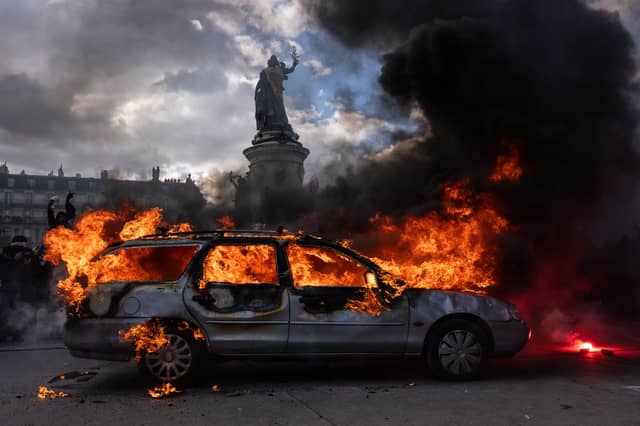


“The French are revolting” is a cheap jibe that is trotted out every time our Gallic neighbours across the Channel take to the streets. In the pejorative sense, of course, nothing could be further from the truth. The French contribution down the ages to the Western culture and civilisation we enjoy today has been immense.
Street protest is a part of the political process in France. Each big flare-up inevitably draws comparisons with defining moments in the nation's history, such as 1789, 1848 and 1968.
In the UK, we comfort ourselves with the fact that such uprisings tend not to be replicated here. The weather is less amenable, for a start. But the latest protests have spread to other parts of Europe, and the political, social and economic tensions that led to them also exist in Britain.
Students, fuel protesters, hard-left and nihilists
As is often the case, it all began with students. Demonstrations had been taking place for weeks over the state of education facilities and teacher shortages in schools and universities.
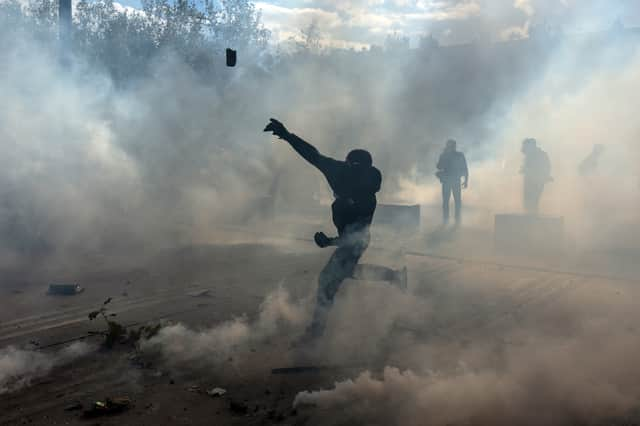
The students were then joined by protesters demonstrating about the spiralling cost of living, inspired by the gilets jaunes movement that sprang up in response to fuel duty hikes in 2018. Opportunistic elements on the hard left then joined in, along with assorted nihilists, including many from the vast, depressed banlieues of the major cities.
The protests then descended into the widespread violence and destruction, looting, and attacks on police that made headlines around the world this week. As France burned, President Emmanuel Macron handed mayors powers to impose curfews and vowed to punish those seeking to “bring down the republic”.
READ MORE: Euan McColm: Disgraceful Greens vote is latest sign of the rise of middle-class antisemitism

Half of state spending on welfare
But the republic has largely brought its troubles upon itself. France is an even more sclerotic economic basket case than the UK, with national debt approaching 120 per cent of gross domestic product, flatlining growth and a deficit above 5 per cent.
There is no scope for further tax rises, unemployment is high, particularly among the young, and more than half of all government spending goes towards sustaining the country’s extensive welfare state. Of the nation’s 87bn euro education budget, 24bn euro does not go towards teaching but to the pensions of retired civil servants.
A responsible government would try to get public finances on something closer to an even keel, with spending cuts to boost growth and reassure jittery international investors. But the French are not known for their fiscal rectitude. When former European Commission chief Brexit negotiator Michel Barnier tried such an approach during his tenure as prime minister in 2025, his brief premiership came to an abrupt end.
As next year’s presidential election looms large, the disorder of the past few days makes any prospect of fiscal consolidation even less likely.
Along with other unsustainable spending pledges, both Jean-Luc Melenchon of the left-wing France Unbowed party and the populist National Rally party's Marine le Pen – now the clear favourite to succeed Macron – have vowed to lower the ageing country’s state retirement age from 62 to 60.

Too big to fail – or bail
Bond market confidence has been dealt a heavy blow; the cost of government borrowing hit a 24-year high this week. It is very possible that France – the seventh largest economy in the world and the second largest in the eurozone – might need to be bailed out.
With national debt exceeding 3.3 trillion euros, the Fifth Republic is considered both "too big to fail" and "too big to bail", so who would foot the extremely hefty bill? Any rescue is likely be a co-ordinated effort by the European Union, the European Central Bank and the eurozone's strongest economies, bearing in mind that many of those have similar structural problems of their own.
The UK also faces a potential debt crisis, but we are arguably less vulnerable because we have our own currency. As a last resort, we could print more money to pay off our debts.
A fractious, volatile EU
All of which makes the current climate an unlikely one in which to advance the case for the UK rejoining the European Union, yet this is precisely what Andy Burnham has done since he was crowned Prime Minister by Labour MPs in July. For what it’s worth, EU membership is also the SNP’s stated ambition for an independent Scotland.
But even if we disregard France’s potentially ruinous fiscal hot mess, the fractious, volatile EU of today is unrecognisable from the one the UK voted to leave in 2016.
In the bloc’s three biggest economies – Germany, France and Italy – growth is stagnant and the populist right is on the rise. Do our left-wing Europhile leaders really want to join the EU of le Pen, Italy’s Giorgia Meloni and Alternative for Germany (AfD)? Europe’s rightwards lurch could extend further over the next 12 months, to countries including Spain, the Netherlands and Romania.
If we rejoined, we would not enjoy the opt-outs and rebates we had before, and the annual membership fee would be huge. We would lose the new free trade deals struck since Brexit and be under intense pressure to join the Euro and the Shengen free travel zone.
There were compelling reasons to remain in the EU in 2016. It is far harder to see why rejoining makes sense now.
As Chancellor John Healey prepares to set out Labour’s plans for reviving the economy in his Budget next week, he should learn from France’s mistakes.
Instead of seeking to rejoin a club that effectively no longer exists, he and Burnham should show the sort of spine that Macron has evidently lacked in almost a decade in power.
The moment calls for responsible measures that will boost growth, calm the markets and strengthen national security – rather than more of the same.
Comments
Want to join the conversation? Please or to comment on this article.