
Amid rise of dangerous lawlessness on our roads, where are Scotland's traffic police? – Tom Wood
Dangerous driving in search of social media hits and the scourge of illegally supercharged ebikes shows the folly of over-reliance on technology to police the roads
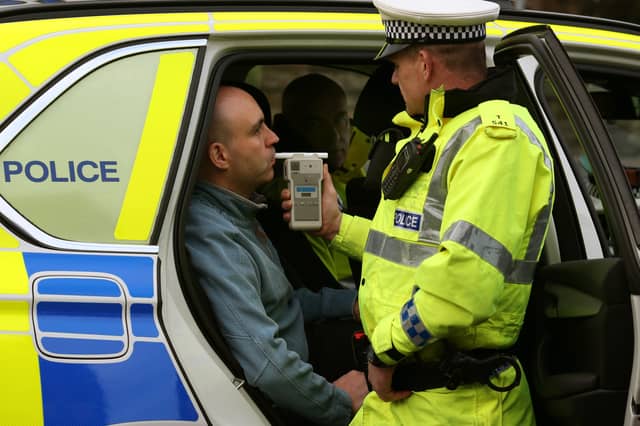

I don’t know if anyone else has noticed but lately I have been struck by how few marked police traffic cars I have seen on the trunk roads of Scotland, especially at night.
Not so long ago, you would frequently see the familiar ‘Battenberg’ marked cars either patrolling just on the speed limit, as if daring you to overtake, or parked up at some busy intersection as a high-viz deterrent.
Now it seems, like most other components of our criminal justice system, specialist road policing has fallen victim to financial cuts. No apologies for banging on about budget cuts, and when you read that the Metropolitan Police are planning to disband their entire road policing division, the famous ‘Black Rats’, you know it’s serious.
Best drivers in the country
To be sure, roads policing is expensive, the equipment has to be the best and the training of the drivers is intensive with a high dropout rate. The officers you see driving the big patrol cars are amongst the best trained drivers in the country.
To pass out as a class-one advanced police driver or motorcyclist, you must not only pass a theoretical exam with a very high mark, but undertake a series of practical high-speed road tests where driving skills are tested to the limit. Road-craft, observation skills and vehicle handling must all be mastered to an incredibly high standard.
But, of course, it’s all very expensive, and there is a school of thought that new technology, speed cameras and the like, can regulate the roads more cheaply. I don’t believe this to be true for, as recent tragedies show, the need for effective prevention and detection of traffic offences remains high.
Fast cars but no skill
Mainly due to better vehicle design and improvements in emergency medicine, fatal road accidents have fallen over the years, but as shown by the recent fatal crash on the A66, in which five young men in a car travelling on the wrong side of the road and two police officers were killed, the dangers on our roads persist.
It seems we now have a new generation of what were once called ‘joyriders’, young men with fast cars but no driving skills or judgment, who are motivated by social media hits to carry out the most dangerous of high-speed stunts. More commonly, in many of our suburban areas, groups of masked youths on souped-up electric bikes are causing mayhem.
Police now routinely confiscate and destroy illegal bikes, but stopping them on the street, safely and without endangering the riders or the public, is a highly specialised and risky business requiring great skill.
Forty years ago, such people were a menace on our roads and, like many crime types, we have now come full circle – our roads and pavements have once again become crime scenes.
If we are to prevent the kind of disaster we saw on the A66 from happening again, we must have the expertise deployed to do it.
The principles of road safety are built on three pillars: education, engineering, and enforcement. To address this re-emerging threat of dangerous lawlessness on our roads and pavements, we must have the tools and expertise out there for everyone to see.
Tom Wood is a writer and former police officer