
Obituary: Lena Martell, singer who topped charts with One Day at a Time
Lena Martell, singer and entertainer. Born: May 15, 1940 in Possilpark, Glasgow. Died: October 5, 2026, aged 86
“I got lucky, I suppose,” was Lena Martell’s modest assessment of a wide-ranging career in entertainment. The woman hailed as “Scotland’s Shirley Bassey”, who has died after a short illness, is best known for her rendition of Marijohn Wilkin’s and Kris Kristofferson’s One Day at a Time. Her full-voiced take on the gospel country standard topped the UK charts for three weeks in 1979, making her the first female artist from Scotland to score a solo Number One single.
Her Guinness World Records achievement sits alongside another less illustrious distinction. With no other hit singles to her name, Lena Martell is often hailed as a one hit wonder, a dubious status which belies her long and fertile career and 20 million global album sales.
By the time she graced Top of the Pops in her easy listening prime, she was already a household name as the host of a succession of primetime light entertainment TV shows, reaching weekly audiences of 12 million and winning Scottish Television Personality of the Year 1970-1.
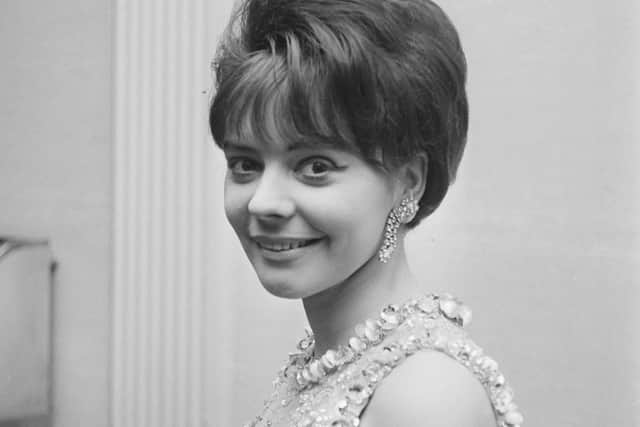

She released 30 albums – six of them hitting the Top 40 – across her career which began as a teenage singer in her brother’s Dixieland jazz group and then with Jimmie McGregor & the Gay Birds, house band at the Barrowland Ballroom, but was cut short by health and financial issues which compelled her to follow the advice of her hit record and take one day at a time.
In her time, she graced the cover of NME and moved in illustrious circles, understudying Barbra Streisand in the Broadway production of Funny Girl and touring with Sammy Davis Jr on Frank Sinatra’s recommendation. But she was no fan of celebrity, describing herself as “a very private person, a loner because I'm constantly in transit”, nor comfortable with showbiz glitz and glamour.
“For me, the worst part of my job is having to look in the mirror to put on my make-up,” she said. “I've always lacked conceit. I am so grateful at having a voice, that I just accept what I look like.”
Yet she was smart enough to spend the last of her funds on a new hairdo and a fresh pair of nylon stockings in order to audition for London’s Bagatelle Club on her return to the UK in the early ’60s.
Her rich alto voice resonated around the world but she found her most dedicated audience at home. Barbara Dickson, another of Scotland’s most underrated vocalists, paid tribute, saying “she had a lovely melodious quality to her voice and I remember my late father admiring her quiet talent”.
Martell was assured but never flashy, the ideal twinkly television host, ready to laugh with and sometimes at her guests with her repertoire of impersonations.
“I see in myself a clownish element and I only enjoy entertainers who are amusing,” she said. “When I sing, I always smile. A smile is a good way of exercising the face and relaxing the muscles down to the throat. It makes it pleasant for people looking on, and for the singer, it helps get the right vowel sounds.”
Lena Martell was born Helen Thomson in Possilpark and brought up in nearby Hamiltonhill in north Glasgow. Predating fellow Glaswegian Lulu as a precocious talent, she sang professionally from the age of 11, going on to win TV talent show Find the Singer and score her first record contract aged 16. Through her teens, she shuttled between gigs in the States and back home, where she sang alongside Annie Ross in London’s West End and and toured with the likes of Matt Monroe and Morecambe & Wise.
By the time she released her debut album Someone New Someone Blue in 1964, The Beatles had served notice on Martell’s style of cabaret singer but she had other irons in the fire, starring in the one-off broadcast Lena’s Show in April 1967.
Throughout the ’70s, she rivalled Lulu for visibility as a TV light entertainment host, fronting two series of Presenting Lena Martell, which featured guests as diverse as US protest singer Tom Paxton and Eurovision winners Brotherhood of Man, as well as Music With Martell, Lena’s Music and the primetime Make the Music Speak for which she was backed by the New Scottish Radio Orchestra. Reviewing the show for the Radio Times, poet Hugh McDiarmid said “her ability to sound like Louis Armstrong while looking like a school hockey captain is disconcertingly unique”.
This was Martell’s purple patch. She produced a prolific run of albums for bygone labels Pye, Ronco and Pickwick Records, and was a significant draw at the London Palladium before the cruise ships beckoned.
But she was rocked by financial problems, declared bankrupt in the early ’90s after the collapse of a property company she owned. She spent much of the next decade in semi-retirement, caring for her mother, a period she described philosophically as “a journey of discovery I wouldn’t have missed for anything”.
She fought off cancer for a second time in the late ’90s and settled in Bishopbriggs with her longterm partner David.
The 2000s were kinder. She returned to recording, with a string of albums released by her new champions Scotdisc, and took to the stage once more, welcomed with open arms at her spiritual home, Glasgow’s Pavilion Theatre, whose manager Iain Gordon hailed her “as the last of Scotland’s music hall greats, a real superstar, a big voice and a big stage presence”.
In 2008, she underwent triple bypass surgery and marked the end of a momentous year with a show at Barrowland, a full circle moment for the dedicated singer who would regularly frequent the neighbouring Barras market, perusing the stalls, disguised behind dark glasses, ever the discreet star.
Obituaries
If you would like to submit an obituary (800-1000 words preferred, with non-copyright image), contact [email protected]
Comments
Want to join the conversation? Please or to comment on this article.