
New Scottish drug breakthrough paves way for 'one shot cure' for malaria

The research could lead to a one-shot cure
A new drug breakthrough by Scottish researchers has paved the way for a “one shot cure” for malaria.
Chemists and bioscientists from the University of Glasgow led the development of a promising new drug which could help combat the spread of treatment-resistant malaria.
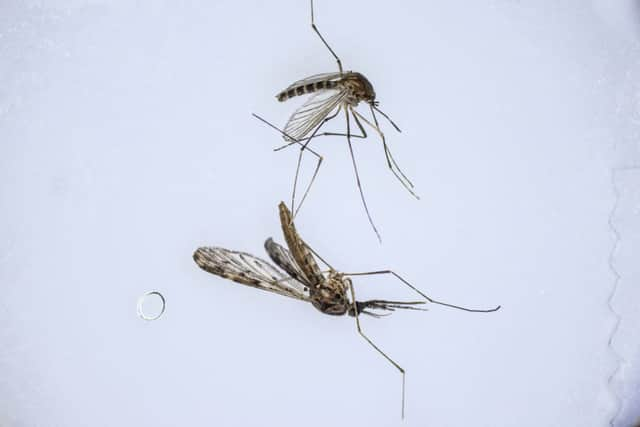
The breakthrough development is the first to adapt an approach from cancer treatments to tackle malaria. It works by permanently disabling a protein that Plasmodium falciparum, one of the mosquito-borne parasites which spreads malaria, uses to duplicate itself inside the human body.
In a paper published in the Journal of Medicinal Chemistry, the researchers outline how the treatment could be more effective than current medications at all stages of malaria infection.
Nearly a quarter of a billion cases of malaria are reported around the world every year, killing more than 600,000 people annually. The new drug could help to overcome the growing problem of Plasmodium falciparum’s resistance to artemisinin, the current frontline treatment for malaria infections.

The development of the drug was part of doctoral research by PhD student Skye Brettell, of the School of Chemistry at the University of Glasgow, who is the paper’s first author.
She said: “These are really robust results, which show that the drug can withstand the challenges it might face inside the parasite, and that the parasite is unlikely to develop resistance to it. That’s very exciting, because preventing resistance is a high barrier to clear for anti-malarial drugs.
“Although more testing is required, we’d expect from what we’ve seen so far that the molecule would be effective at all stages of the parasite’s life cycle, which is something that isn’t possible with artemisinin. Our hope is that this molecule could be the basis of a one-shot cure for malaria in the future.”
Andrew Jamieson, Professor of Chemical Biology at the University of Glasgow’s School of Chemistry, is one of the paper’s corresponding authors. He said: “During the pandemic, global progress against malaria stalled as access to treatment became more difficult, while parasites simultaneously developed increasing resistance to current drugs.
“We wanted to see whether a type of drug called a covalent kinase inhibitor, which has been used successfully in some cancer treatments, could provide an entirely new way to tackle malaria parasites. A fresh approach to medication could help us shore up our defences against malaria in the years to come.”
The new drug works by targeting a protein calledPfCLK3, which plays a vital role in the parasite’s ability to splice RNA. By firmly attaching itself to the protein, the drug molecule essentially turns off the parasite’s method of replicating itself in the bloodstream, killing it before it can spread.
The researchers ran the drug through an extensive battery of tests of its properties. Colleagues at the University of Edinburgh helped them test the drug on isolated proteins. Using mass spectrometry, they showed that the drug was permanently binding to its targets. Further tests on live samples of Plasmodium falciparum demonstrated that washing the parasites after six hours did not remove the effect of the drug.
In collaboration with Columbia University in New York, they also demonstrated that parasites were unable to develop resistance to the drug over time.
The researchers are now seeking additional funding to conduct advanced toxological studies and to work on stabilising the drug for use in the human body.
Comments
Want to join the conversation? Please or to comment on this article.