
Exclusive:Last surviving real tennis court of its kind in Scotland under threat

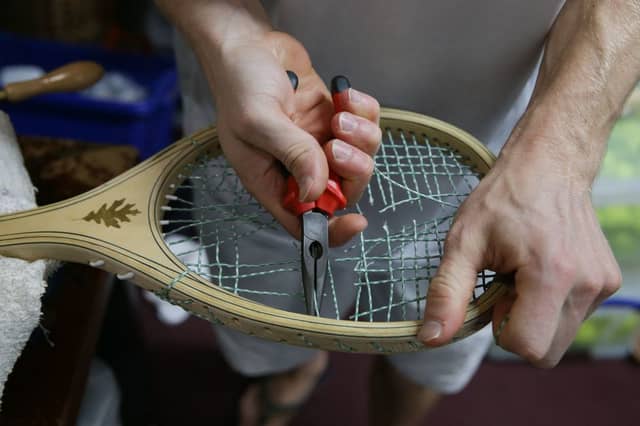

Owner of last remaining real tennis court of its kind says situation is ‘regrettable’
It is a unique part of Scotland’s sporting heritage which once attracted players from the world over.
But decades after it last played host to a match of the so-called sport of kings, the future of the nation’s last surviving real tennis court of its kind is increasingly uncertain.
The Edwardian era court in the South Ayrshire town of Troon was once a major tourist draw, particularly during the post-war years when the seaside enclave was a thriving holiday destination.
Commissioned by the Clarks, a wealthy family who made their fortune in the Paisley threadmaking boom, the court was designed by Joseph Bickley, who oversaw the creation of more than a dozen similar facilities around the world.

While some continue to host matches to this day, such as his court in Holyport in Berkshire, the Troon example has long since fallen into disrepair. The only other real tennis court in Scotland is found at Falkland Palace, where James V used to play, but it has no roof and is of a different specification, with the Troon example recognised as the ‘standard’ which commands its own building.
In Troon, a former hotel adjoining the court was turned into a care home in the early 1990s, around which time the court itself fell out of use. It was latterly used by the care home owners for storage, but suffered severe damage during storms two years ago.
Now, with the care home also closed, the owner of the site told Scotland on Sunday he is pressing ahead with redevelopment plans. He described the current situation as “regrettable,” and stressed that without a “seriously wealthy benefactor,” the court was not viable.
However, some enthusiasts of the game have expressed dismay at the prospect of losing a slither of sporting and architectural history.
Real tennis, described by some as akin to playing chess with a tennis ball, was popularised in France, where courts were built in Versailles and Fontainebleau. The game found favour with James V, who oversaw the construction of a court at Falkland Palace.
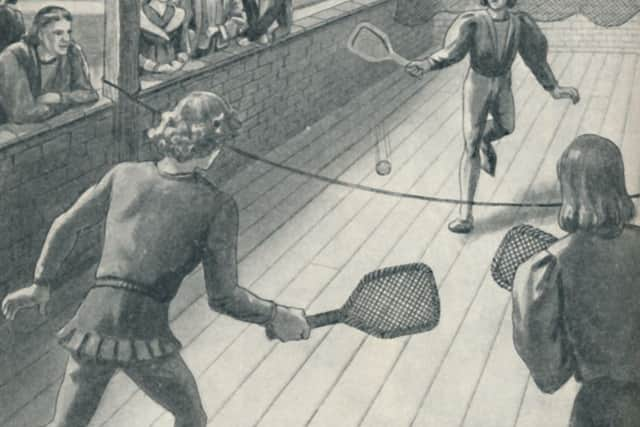
It remains the only active real tennis court in Scotland, although it is without a roof, and differs from the design of standard courts. For that very reason, said Ian Falconer, a prominent Scottish real tennis player and supporter, the importance of the Troon court is clear.
“It’s a sport that’s a part of our heritage, and although the court in Falkland Palace is great, you can only really play a few dozen times a year, and if it’s raining, forget it,” he explained. “With the popularity of padel, which is now massive, I think there’s a real opportunity for Troon, because once you get good at that, real tennis is the logical next step.
“It was originally built with the blessing of Royal Troon because they thought it would be somewhere for people to come in the winter time, and something for local people to do when they couldn’t play golf.
“Now, it’s just hanging on by its fingertips, and once it’s gone, it’s gone, which would be a real shame. There have been a few new courts that have been built in the past decade, such as in Australia and the US, so there’s been something of a renaissance.”
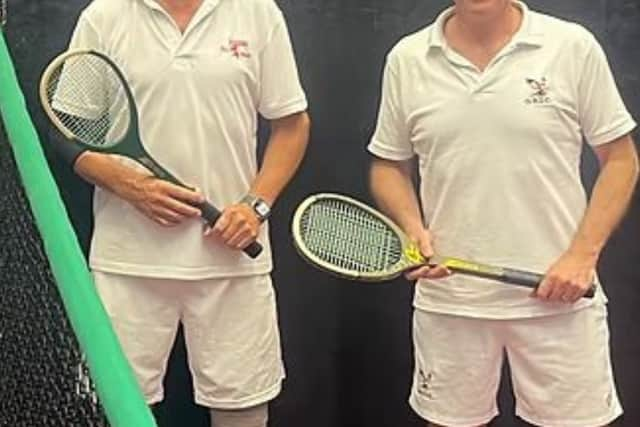
It is not the first time the court’s future has been in peril. In 2004, the site’s owner, Richard Johnstone, applied to demolish the building, but the plans prompted a backlash from supporters of the sport from around the world, and were ultimately rejected by South Ayrshire Council.
Mr Johnstone said that at the time, offered the court for “peppercorn rent” to the Tennis & Rackets Association - the sport’s governing body - and other enthusiasts on the basis that they would finance its restoration and maintenance, but said they were unable to raise funding.
Over two decades on, he expressed doubt that the situation would be any different. “They promised they would raise the significant sums required to repair and restore it,” he explained. “Unfortunately, they raised nothing.”
He went on: “The last time we put in a planning application was just over 20 years ago to do something pretty similar to what we’re trying to do now - create an up to date care home with retirement flats.”
Asked if those plans would involve the demolition of the real tennis court building, Mr Johnstone, who has owned the site since 2000, added: “I think that’s the application we’ll be putting in.
“Unless you have a seriously wealthy benefactor who’s happy to throw the money at not only restoring it, but maintaining it, it’s not viable. I don’t know if there’s somebody out there, but I’m scared to even say I would be interested, because I wasted years with people who promised everything and delivered nothing.”
A complicating factor is the real tennis court building’s C-listed status, with Historic Environment Scotland recognising the structure for its historic value rather than architectural interest. Mr Johnstone said he owns four listed buildings in total, three of which he has restored. But the impasse surrounding the real court building, he explained, was problematic.
“Basically any other use than real tennis was ruled out for this building,” he said. “Placing such restrictions on a category C listed building is impossible for the owner. If it had been A-listed and deserving of the use restrictions then public funding would have been a lot easier.”
Mr Falconer accepted that the situation was "difficult" given the court’s state of disrepair, meaning it was unclear if it could be restored, or whether a replacement court would be required.
But amidst the rapid surge in popularity of padel, and Troon’s proud sporting history, some believe there is still a chance for the South Ayrshire court to be restored to its former glory.
“The Troon court works because it’s integrated in such a fantastic sporting community - how many golf courses are there within five miles of it?” said Simon Talbot-Williams, court development director for the Tennis & Rackets Association.
“I think the funding would come from people here, or abroad, but people who are interested in the connections between the two sports. In terms of the availability of benefactors to put resources into these kinds of things, there is a lot of support.”
Comments
Want to join the conversation? Please or to comment on this article.