
Drink in the revelations on this lush island in the Atlantic
.jpeg?crop=3:2,smart&trim=&width=640&quality=70&enable=upscale)

A unique terraine and climate make Madeira a treat for all of the senses.
In the cool calm of the lobby bar of the Savoy Palace hotel in Funchal, I sip a glass of Madeira as the pianist gently heralds the night and I reflect on a day of revelations.
The rich fortified wine conjures up the vineyards on this small lush island in the Atlantic Ocean. The grapes mature on vines clinging to the steep hills. They are trained to head height which allows other produce to be cultivated in their shade in the tiny fields.
At Blandy’s Quinta de Santa Luzia Vineyard in the suburbs of the capital, Funchal, it’s a slightly different set-up where most vines are grown in more familiar shoulder-high rows. This quinta was acquired in 1826 by John Blandy who in 1811 established one of Madeira’s best-known wine businesses. While we tour, Hugo Noite introduces us to the main grapes used to make Madeira and how they are cultivated. We walk the terraces, learn about the watering systems and how they deal with pests. This is an intimate insight – it’s a winemaker speaking and there are tales of his own grandfather’s farm where he helped with the vines as a boy.
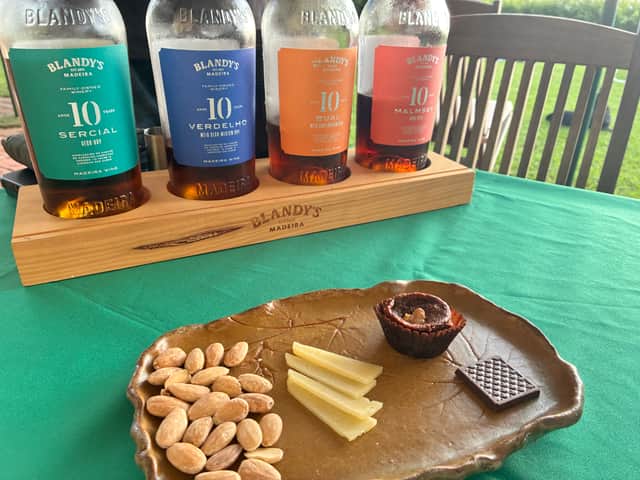
As the sun sets we sit on the terrace and taste ten-year-old Madeiras, each with a snack which brings out flavours: Sercial with almonds, Verdelho with cheese, Bual with honey cake; Malmsey with chocolate.
Grapes, however, are not Madeira’s only agricultural claim to fame: an amazing range of plants grow on the island, which is just 320km off the African coast.
Visit the bustling Mercado dos Lavradores, the Funchal farmers’ market, and find a wide selection of island produce – mangoes, tamarillo, bird of paradise flowers, as well as fish. On a Madeira Food on Foot Tour we snack on passion fruit, papaya, custard apple and mango as well as the vivid pink flesh of dragon fruit.

Tour one of the botanic gardens and see some of the plants – from bougainvillea and cactus to laurel and heather – that are supported by Madeira’s unique combination of climate and terrain.
The island is 35 miles long and 14 miles wide, rising from sea level to 6,106ft (1,862m) in approximately seven miles which means dramatic roads. Although, with countless bridges and about 160 tunnels, driving is less challenging than when I visited in the 1990s.
What I hadn’t appreciated on previous visits, is that Madeira grows 17 varieties of banana and has an important sugar cane crop. The Museu da Banana da Madeira in Lugar de Baixo is a fact-packed introduction. A long-time centre for research and supporting producers, the museum opened in 2022. With a feast of information on the island’s banana cultivation, history and traditions, my pub quiz answer bank is royally topped up. Who knew bananas grow on a giant herb – not a tree – or that only one bunch is produced by a plant in its lifetime?
Madiera’s other surprising crop is sugar cane. Rum – made from the cane spirit – features on Madeiran drinks menus, especially as the key ingredient in Poncha,
the honey, lemon and sugar cane rum cocktail. Sugar cane “honey” also features in biscuits and traditional honey cakes.
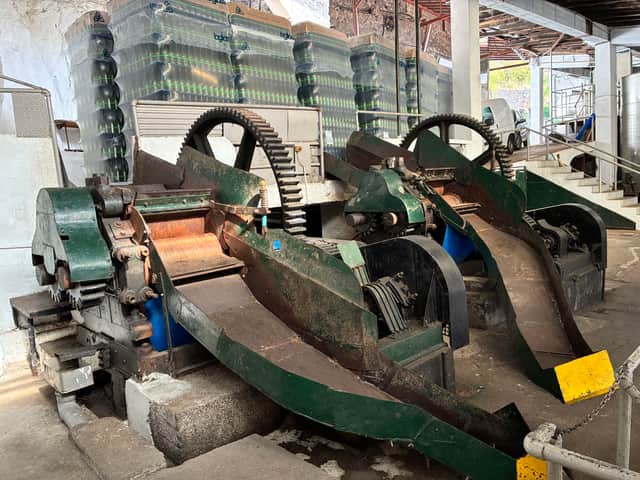
I head west along the coast to Calheta, historically a sugar cane hub, one of the island’s early economic drivers. On the seafront, the chimney of one mill remains, while the site of another is a luxury hotel, leaving Engenho da Calheta as the last working mill.
Perched on the side of the ravine leading down to the beach, it is open to the public. Apart from in April and May, the mill equipment – threshing machine, fermentation tanks, stills and boilers – lies silent, but you can taste produce and watch a video about the process.
In contrast, the Calheta seafront is dedicated to tourists: a town sign to pose beside, a harbour bobbing with pleasure craft and a popular beach with the island’s only golden sands – imported from Morocco.
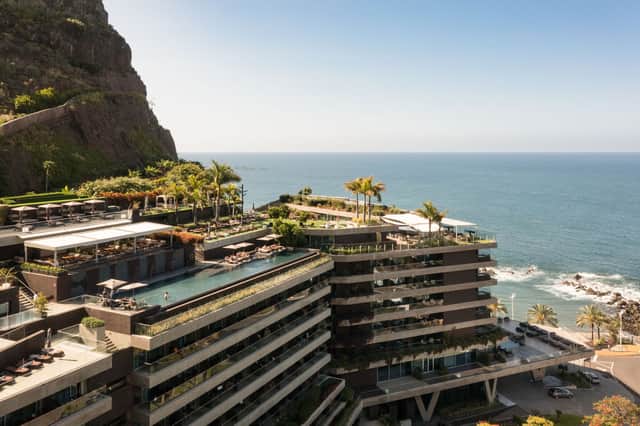
The Saccharum Resort and Spa, on the site of a former mill at the end of the promenade, is part of the same group as Funchal’s Savoy Palace and just as luxurious but with extra emphasis on wellness.
Perfectly placed for hiking and levada walks, it also has on-site spa and fitness facilities including a rooftop infinity pool with stunning outlook.
The hotel plays with its sugar cane history – taking inspiration for its decor and restaurant names – and has a gallery of fascinating old pictures illustrating the industry’s traditions.
Lunch at Calhau Beach Club is an excuse to try rolls filled with beef grilled Madeiran-style on skewers, but the garlicky shrimp and avocado tacos are the perfect seafront food.
The third revelation in Calheta is a 15th-century church – Igreja Matriz Espirito Santo.
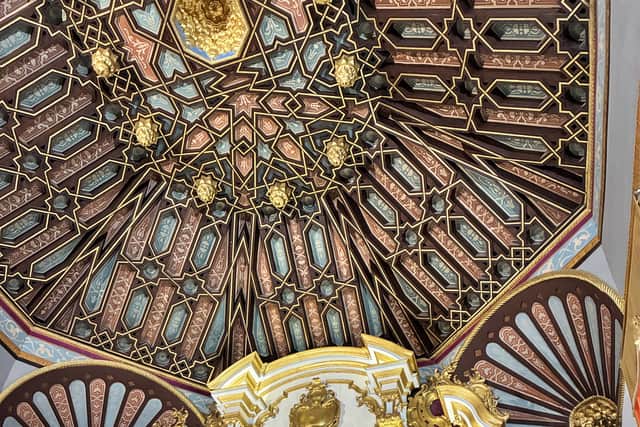
I had read about its amazing Mudéjar-style ceiling, but guidebooks warn it is rarely open. However, I find an open door and a cleaner at work. Not only is there the magnificent geometric pink, blue and gold ceiling, but also azulejo tiles of Biblical scenes, Flemish paintings, ornately gilded altars and intriguing carvings of Jesus and the Apostles high on the wall in the nave.
For a taste of modern art I head to Mudas, home to Madeira’s contemporary art collection. Opened in 2004, this stunning award-winning building designed to fit into the rugged hillside above Calheta is as much an attraction as the collection. Look beyond the sharp lines of the basalt blocks and there are references to levadas, terraced fields and fishing (with windows perfectly positioned for looking out for whaling ships).
It houses the works collected by the authorities since landmark exhibitions in the late 1960s. The shows were provocative when Portugal was under Salazar’s rule and fortuitously some of the art was kept and is the foundation of the Mudas collection.
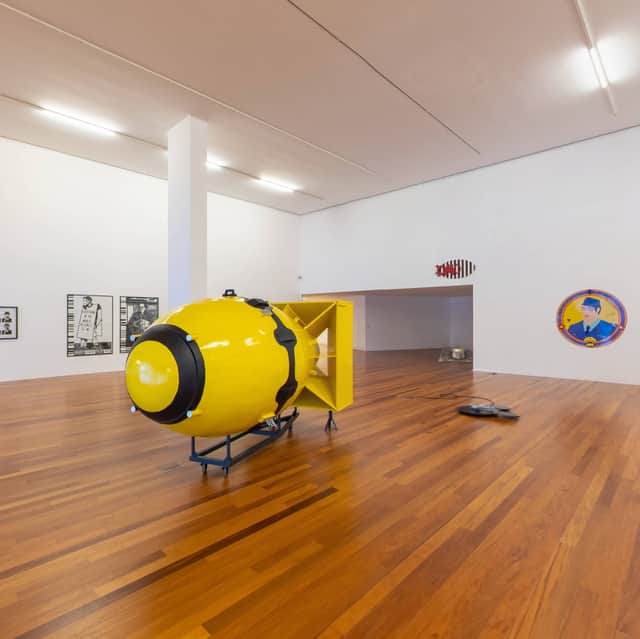
Usually there is an exhibition drawn from the permanent collection and shows by invited artists but as Mudas is briefly exhibition free I head to a gallery it administers in the nearby village of Prazeres. Here I discover more about the island’s artistic traditions through thoughtful work by Carla Cabral ... and find another beautiful church.
Factfile
Savoy Palace, Avenida do Infante 25, Funchal. Rooms from 300 euros a night, www.savoysignature.com/savoypalacehotel/en/; Saccharum Resort and Spa, Rua da Serra D’Água 1, Arco da Calheta. Rooms from 195 euros a night. www.savoysignature.com/saccharumhotel/en/
Jet2 operates flights from Edinburgh and Glasgow (and other UK cities) to Funchal, www.jet2.com
Madeira Promotion Bureau, www.visitmaderia.com; Blandy’s Vineyard, blandyswinelodge.com; BAM - Museu da Banana da Madeira bam-centrodabananadamadeira.pt/en; Madeira Food on Foot Tours, madeirafoodonfoot.com; Mudas cultura.madeira.gov.pt/en/mudas-museum-of-contemporary-art
Comments
Want to join the conversation? Please or to comment on this article.