
Exclusive:Chinese student at Scots university charged with photographing US military aircraft
FBI say student was arrested in airport ahead of one-way flight back to Scotland
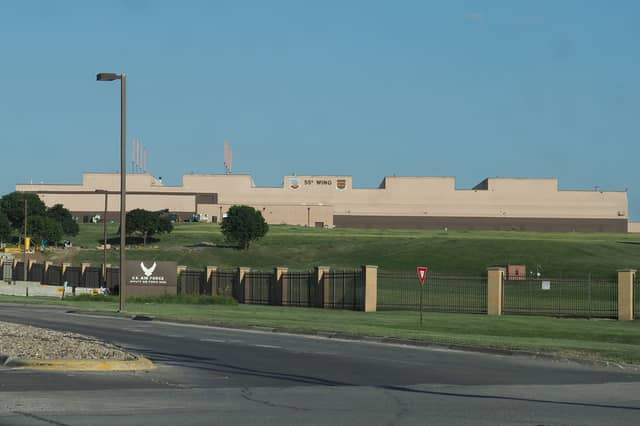


A student at one of Scotland’s most prominent universities has been accused by US authorities of taking unauthorised photographs of aircraft at a military air base, Scotland on Sunday can reveal.
Tianrui Liang, a Chinese national who is currently studying at the University of Glasgow, has been charged with taking a series of images at Offutt Air Force Base, home to the US Strategic Command, without permission.
According to the US Federal Bureau of Investigation (FBI), the 21 year-old photographed several aircraft at the base in Nebraska, including a Boeing RC-135, a reconnaissance aircraft, and a Boeing E-4B, known as the ‘Doomsday plane’ on account of its ability to serve as a survivable mobile command post for senior US military and government officials during national emergencies.

A complaint charging Liang with the violation of what is known as title 18 of the United States code, section 795 - legislation which prevents anyone from photographing, sketching, drawing or mapping “vital” military and naval installations or equipment without permission - was authorised by US magistrate judge Ryan Carson, on 3 April, with the US District Court in Nebraska issuing a warrant for Liang’s arrest the same day.
Liang, who is understood to be studying aeronautical engineering in Scotland, was arrested at John F Kennedy Airport in New York on 7 April, where he had a reservation for a one way flight to Glasgow via Frankfurt. He is expected to appear in court later this month.
The details of his arrest and his alleged offences are outlined in court filings that were initially lodged with the US District Court for the Eastern District of New York, which includes an affidavit by Noah Heflin, a special agent with the FBI.
In it, Mr Heflin states that was “sufficient probable cause” to believe that Liang photographed Offutt Air Force Base in Nebraska without the approval of the base commander. The base, located south of Omaha, is the host station for the 55th Wing, the largest such unit in the US Air Force’s (USAF) Air Combat Command.
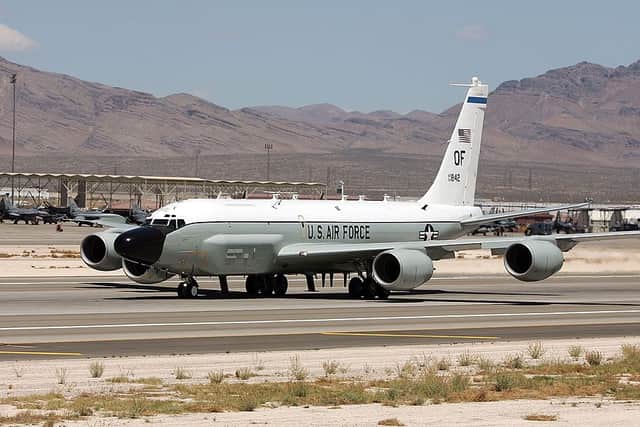
According to the document, the alleged offence, said to have taken place on 31 March this year, came to light after the USAF’s Office of Special Investigations (OSI) was notified that an individual in the vicinity of the base was taking photographs of its aircraft and flightline, with a witness reporting a man in a vehicle holding a camera with a telescopic lens while an aircraft was on the runway.
Mr Heflin’s affidavit states that Liang flew to Vancouver in Canada on 26 March and met a friend, who is a student at Columbia University in New York. They then drove the friend’s car across the border into the US two days later, travelling from Seattle, Washington, to Billings, Montana.
It claims that after Liang’s friend departed to fly back to New York on 29 March for his studies, Liang drove the vehicle to Ellisworth Air Force Base in South Dakota - where he had wanted to photograph the B1-B aircraft, a strategic bomber, only to find out that it had been moved - and then on to Offutt Air Force Base.
The document states that Liang admitted he had photographed several aircraft while at the latter base, and that a “planespotter” website had provided him with instructions on locations where individuals could take pictures of various flightlines, including the Offutt base.
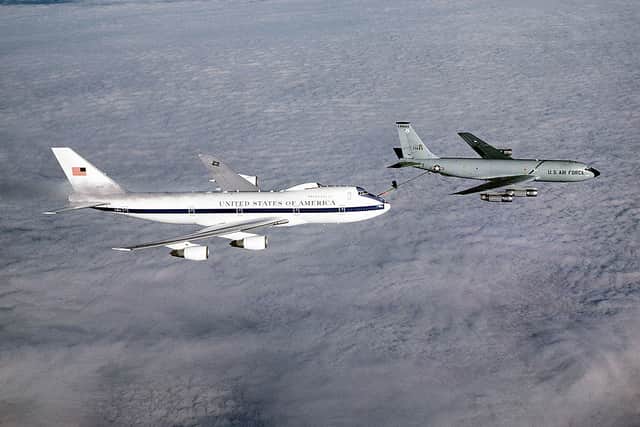
The affidavit by Mr Heflin, part of the counterintelligence squad at the FBI’s field office in Omaha, adds that Liang said he knew it was illegal to take pictures of planes on the ground, and that he claimed he only did so he could see the “status” of the plane, and that it was “only for his own personal collection.”
Mr Hefflin’s affidavit claims that Liang then planned to drive to Kansas City in Missouri, before renting another vehicle to travel to Tinker Air Force Base in Oklahoma to photograph a Boeing E-4, with plans to then drive to Dallas, Texas, and fly to New York. It claims he was scheduled to leave the US on or around 13 April to fly back to Scotland.
The full complaint against Liang remains under seal. According to a court filing by Jonathan Mosseau, who is also a special agent at the FBI, access to the document has been restricted “in light of concerns regarding the ongoing investigation into a named co-conspirator.”
Liang was arraigned on 8 April before a court in New York, where he was initially released from custody on bail with conditions after a magistrate judge rejected the US government’s motion for detention. The conditions specified that Liang would surrender his passport, and not leave New York or Nebraska. It also specified that he should not go near any US military base.
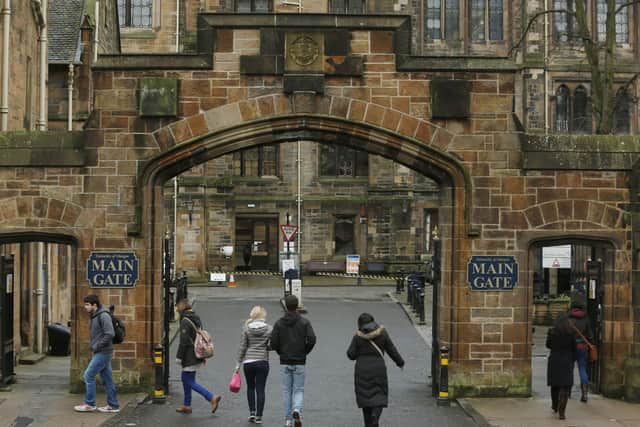
However, an order laid down by judge Robert F Rossiter Jr in the US District Court in Nebraska the following day agreed with the government’s argument that Liang was a “considerable flight risk.” He has since been taken into custody.
According to the court documents, Liang was present in the US on a non immigrant B1/B2, which is designed for temporary, short-term visits, combining tourism and business purposes.
Liang’s lawyer, Jeffrey Thomas, from the Federal Public Defender’s Omaha office, did not respond to enquiries.
The US Attorney’s Office in Nebraska said it cannot comment at this time.
A University of Glasgow spokesperson said: “We do not comment on ongoing police matters or individual students.”