
Bass Rock gannet colony may soon thrive once more after devastating avian flu outbreak

A Firth of Forth gannet colony – one of the UK’s most important seabird colonies – may be thriving once more following a devastating outbreak of avian flu.
A team of researchers, including experts from the Scottish Seabird Centre and Edinburgh Napier University, have been using technology to better understand the health of the famous colony of northern gannets on Bass Rock in East Lothian.
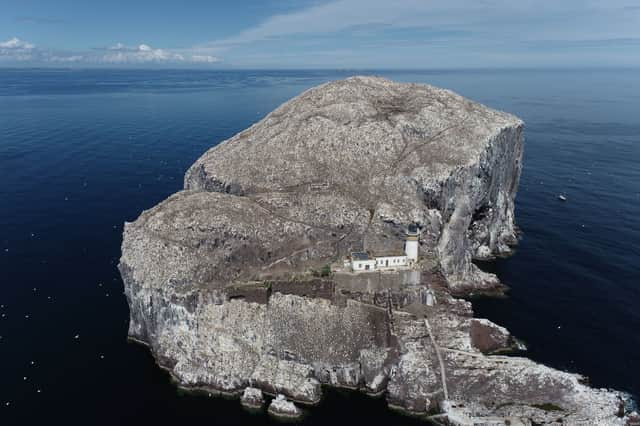
In a first for Bass Rock, a 2025 drone survey captured detailed images of the entire colony, enabling a manual count of approximately 52,459 nesting sites.
This suggests that over 100,000 gannets may currently breed on the island each year.
Although these findings indicate that numbers may have stabilised since the sharp declines seen after the 2022 avian flu outbreak, the population remains 30 per cent below its previous size.

Researchers have also been monitoring how successfully gannets are raising chicks using remote ground-based cameras.
Early results suggest breeding success remains low following the disease outbreak. This has been said to be possibly due to the loss of experienced adult birds and the ongoing challenges seabirds face at sea.
Emily Burton, Conservation Manager at Scottish Seabird Centre, said: “It has been devastating to see the impacts of avian flu on seabirds in recent years, including on the Bass Rock where the gannet population has plummeted by almost a third.
“Our research suggests that the colony may now be stabilising, although breeding success remains low. It’s critical that every effort is made to reduce pressures on these incredible birds to help them recover.
“Working to look after the gannets on Bass Rock is a true privilege – it’s an astonishing island and home to one of the world’s great wildlife spectacles that we must conserve for future generations.
“I am grateful to our partners and funders, including the Scottish Marine Environmental Enhancement Fund, who have supported this vital research.”
Professor Caroline Nichol, who works within the School of Geosciences’ Airborne Research and Innovation facility at the University of Edinburgh, said it has been a “great journey” bringing the latest in UAV and camera technology to provide the data for counting gannets on Bass Rock.
She added the team are delighted with the 2025 results and are looking forward to the coming years.
Dr Sue Lewis, from Edinburgh Napier University, said: “It has been a real privilege to contribute to this research at Bass Rock alongside colleagues from the Scottish Seabird Centre, UKCEH and the University of Edinburgh.
“By combining drone surveys with remote camera technology, we’ve been able to gain an unprecedented level of insight into breeding success across the colony.
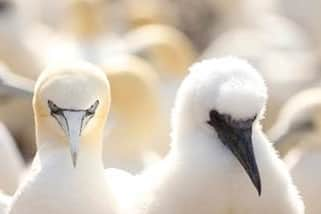
“The drone imagery has allowed us to estimate population size with far greater clarity than previously possible, making the counting process much more accurate and efficient, while the cameras have provided a uniquely detailed view of breeding behaviour - from freshly laid eggs and hatching chicks to subtle indicators of adult health, such as eye colour linked to potential avian influenza exposure.
“Following the devastating impacts of 2022, these technologies have been invaluable in helping us better understand how the colony is recovering, and it has been incredibly rewarding to be part of that effort.”
Bass Rock, or simply the Bass, is a volcanic rock island in the outer part of the Firth of Forth, off the North Berwick coast. Its world-famous colony of Northern Gannets has made the site a renowned eco-conservation area.
Comments
Want to join the conversation? Please or to comment on this article.