
Martyn James: Is your cabin bag going to cost you a small fortune?
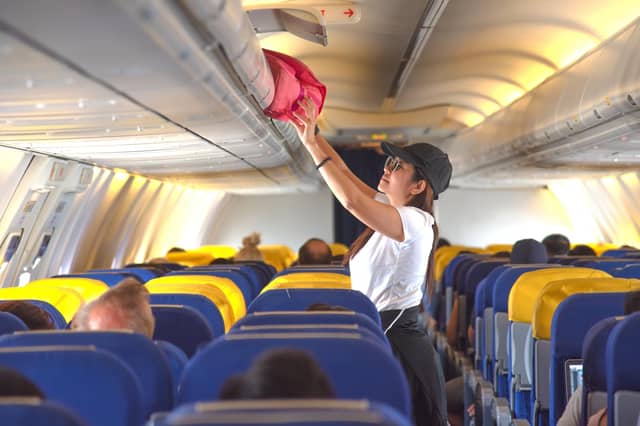

Make sure you know the airline’s rules before you pack your carry-on luggage, writes Martyn James
If you’ve taken a flight recently then you may have noticed a bit of a kerfuffle at the boarding gates. While waiting to board a flight to Spain, I heard a very well-spoken lady using some very unladylike language as she argued with a member of the airline staff (note: never, ever do this).
Over at another gate I watched a family burst into tears as they nearly missed their flight over a technicality. Meanwhile me and my fellow travellers all desperately tried to squish our cabin bags in to what the industry calls ‘baggage sizers’ – the metal luggage prisons that airlines use to check our bags are not oversized.
The luggage wars are well and truly under way.
It’s recently been reported that Ryanair has been paying bonuses to staff for every oversize cabin bag they spot – and are considering increasing this incentive. Meanwhile, other airlines are allegedly paying £1.20 to airline staff who do the same.
So why this sudden crackdown on passengers and their carry-on luggage? And what are the rules?
Airlines all have specific rules around the size of your cabin bag (the bigger one) and your hand luggage (the smaller one). Despite what it may say on your suitcase, there is no definitive size for cabin bags, though as a general rule the standard is 56 x 45 x 25cm for the cabin bag and 40cm x 30cm x 15cm for an under-seat (hand)bag. There are also weight restrictions too, with most cabin bags limited to a maximum of 7kg to 10kg.
Standard sizes are all well and good, but airlines can set their own, more restrictive rules around the size of both types of carry-on luggage. So before you travel, it’s vital that you understand their rules – and the consequences of not meeting them.
You’ll need to measure the height, depth and width of your carry-on bags. Missing off the wheels when you check the height is one of the more common mistakes. But the biggie is over-stuffed bags. I admit that I have come a cropper with this. Having a bag that meets the criteria when empty doesn’t mean it does when you’ve jammed it full of holiday items. Remember that the bag must fit in to that unyielding metal box if you want to board your flight.
…Because if you don’t then you’ll have to pay a hefty fee and potentially have the item of luggage condemned to the hold too.
Then we have pricing. Airlines have introduced a bewildering range of charges for carry-on bags. These are often advertised at the ‘starting price’. But by the time you book a flight they can be around the £40 mark on the budget airlines. Premium ticket holders may get bigger or free bags.
The Civil Aviation Authority has a list of airline charges, but bear in mind the sliding scale for luggage prices means many charges will be higher.
So how did we get here? Airlines often have a bad reputation for their rules and pricing. But we must all take some responsibility here. I’ve seen some blatant, shameless breaches of the rules over the years. For every passenger who does this, the rest of us face having our bags squished into lockers or put in the hold.
There are safety concerns too. There’s a real art to how airlines work out the weight of their passengers and luggage – and distribute it to ensure your flight remains aerodynamic.
Having said that, in recent years rising hold luggage costs forced passengers to abandon big bags completely, choosing to travel relatively lightly. This has led to endless problems fitting all the carry-on luggage in to the lockers. This has, in turn, led to the current situation where our non-compliant cabin bags are being strictly policed.
The law of unintended consequences is likely to continue too as the EU mulls banning cabin bag charges. But, of course, that means we’ll all pay more. Just in other ways.
Martyn James is a leading consumer rights campaigner, TV and radio broadcaster and journalist. Visit martynjamesexpert.co.uk.
Comments
Want to join the conversation? Please or to comment on this article.