
ID. Polo review: New electric presses all the right buttons
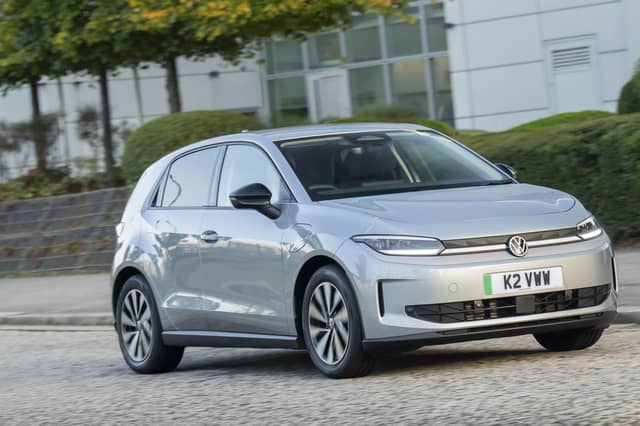

Volkswagen has produced a newcomer to its EV range that does a brilliant job – just like its petrol version, writes Jim McGill
You’re probably aware that Volkswagen’s early entrance to the world of electric cars, with its ID. 3, wasn’t what you would call a resounding success. With its flawed infotainment systems and near-total absence of buttons, it generated a wall of bad praise and negativity. Personally, the strange thing is I actually found the early ID. 3 model had a lot going for it. It was, and remains, a stylish-looking car; was fairly priced; was as practical as you’re ever likely to need, and drove well. But oh, the software and lack of buttons.
Over time, Volkswagen gurus gradually addressed many of the flaws and the ID. 3 shifted closer to the car it should have been at its initial launch.
Now we have the latest evolution and in a bold, but not surprising move, the newcomer is badged ID. Polo. Such is VW’s belief and confidence it now has the electric platform to genuinely appeal to buyers that the ID. Polo is the first to wear a nameplate already used by a combustion-engined model. And yes, in your local VW showroom you’ll see the new-era electric car sitting alongside its petrol Polo sibling, which is expected to continue on sale for a few more years yet.
The ID. Polo enters an already competitive electric supermini sector, going head-to-head with the likes of the Renault 5, Mini Cooper Electric, Hyundai Ioniq 3, plus VW Group rivals the Skoda Epiq and Cupra Raval. It’s competitively priced, starting at £22,225 for the entry-level ID. Polo Life with a 114bhp motor and 37kWh battery. The question is, does it have what it takes to hold its own, or even beat, the sector leaders? Only one way to find out.
Ok, tell me more about the ID. Polo
Built on VW’s MEB+ platform which also underpins the Skoda and Cupra listed above, as well as the forthcoming and larger ID. Cross, the ID. Polo is an appealing car right from the start. It immediately feels like a ‘grown-up’ VW, rather than one which has been pared back to meet budget cost.
Sitting at just over four-metres in length, the ID. Polo has switched to front-wheel drive and its stance on the road is enhanced by strong horizontal elements across the front and rear lights which accentuate its width. Visually it looks very attractive both from the front and the rear – the front gets a horizontal graphic and a glass-covered light strip, while the neat, clean rear is dominated by another stylish light strip and ID. Polo badging below the VW logo. Viewed from the side though, sadly it becomes rather anonymous.
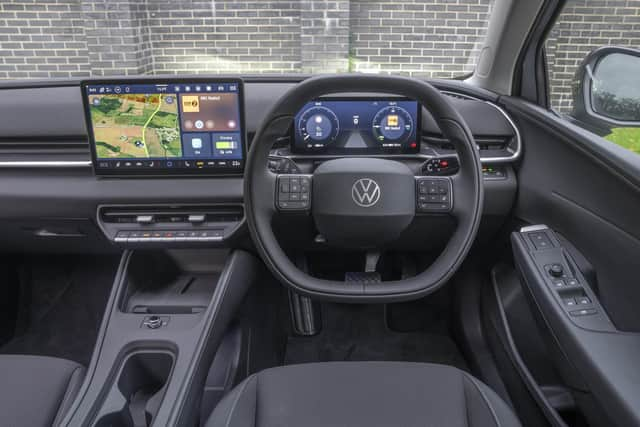
But the headline-grabbing news is... buttons are back. Sitting below the centrally-positioned infotainment screen lies a new strip of physical buttons which all operate with a reassuring resistance. These aren’t just buttons; they’re quality buttons. Clearly VW designers took it to heart when they were criticised for ditching them in the original ID. 3. In the ID. Polo, they’re making a statement: “When we get it right, we nail it”. And they have. Not only that, but there are also proper buttons on the steering wheel, plus four proper electric window switches. Who knew? A specific button for each window. Genius. It’s clear, Volkswagen has listened to their customers and responded positively.
Batteries, performance, range and charging
You can choose from two different battery sizes on the ID. Polo, 37kWh and 52kWh. Only the larger is currently on sale. The smaller 37kWh battery, which I haven’t driven yet, won’t arrive till closer to the end of the year.
The 52kWh battery is mated to an electric motor which generates 208bhp. It’s good for a 0-62mph time of 7.1secs and will carry on to a max of 99mph. That top speed remains the same across the range. Whisper it. An ID. Polo GTI is also on the cards, with details imminent, Expect an output increased to closer to 223bhp.
As for range, depending on battery and trim level you’ll get anything between 200 miles and 281 miles. With the larger battery fitted to my test car, its range betters that of the Renault 5 by more than 30 miles. Impressive. In fact it’s the most of any current electric supermini.
When it comes to charging, there’s a maximum charge speed of 105kW for this bigger battery and 88kW for the 37kWh model. That means a 10-80 per cent charge in under 25 minutes.
Worth mentioning the 37kWh battery will be available with a choice of 114bhp and 133bhp, with range expected to be round 205-miles. Performance? VW quotes 10.6 and 9.5secs respectively.
What’s it like inside?
Impressive. There’s a high level of quality across the interior which elevates the ID. Polo above most of its electric rivals. This is a comfortable cabin to be in, both for driver and passengers. Little things, such as the cloth used across the door cards and dashboard, illustrates the high level of tactility. Overall it’s a crisp, certainly not over-complicated interior.
There’s a 12.9-inch touchscreen and 10.25-inch digital instrument cluster, the latter can be configured with the ’retro display’, which looks really good. And all you need to do is hit the ‘View’ button on the dash.
Both screens are incredibly clean and sharp to read, with the large centrally-mounted infotainment screen easy to operate. Naturally, both Apple CarPlay and Android Auto are standard, as is a wireless charging platform. Look closely and you’ll spot what’s labelled as ‘Driv Data’. Essentially it’s a trip meter which logs your driving time and mileage covered. It’s crystal clear to read. But what’s rather quaint is the digital numerals rotate as if they’re on an older-fashioned drum mechanism. They don’t just update 1, to 2, to 3 etc. The ‘2’ slowly slides up from the foot of the readout as the ‘1’ disappears through the top. Cute.
At the foot of the infotainment screen there are two simple-to-operate digital buttons to control the front heated seats, plus a home button. But yes, the big news is that below the screen and beneath a couple of air vents sits the strip of climate control switchgear. Here you can easily adjust the temperature for both driver and front passenger, the fan flow, the air conditioning, the heated rear window and windscreen demist. And all function with a reassuring Audi-like clicking action. The mechanism definitely feels as though it’s been lifted from a more expensive car.
There’s an interestingly-shaped steering wheel, which is flattened at both the top – where it’s intended to deliver better visibility of the driver’s screen – and bottom, and the gear selector is the now familiar rotary VW item on the right of the wheel. Simple and intuitive to use. The left stalk handles the indicator and wiper controls.
There’s plenty of space for front occupants, while rear-seat space is a tad neat. Legroom may be a pinch for long-limbed rear passengers, but here we have to remember that the Polo is still a small car. We need to be realistic. But yes, adults behind adults will be a squeeze. Ok for kids in the back though.
Bootspace
Bearing in mind what we just said relating to size, the ID. Polo’s bootspace is actually larger than that of the Golf and ID.3, and they’re both in the class above the supermini. The reason for this is the ID. Polo’s switch to front-wheel drive which has resulted in a deep boot with a split-floor. You can carry 441 litres of kit. Fold the rear seats down and that climbs to 1,240 litres.
What’s it like to drive?
Right from the off it feels grown-up, and in my test car – the ID. Polo Life Launch Edition 52kWh with its 208bhp – it felt more like a ‘warm’ hatch. It’s a nippy wee thing. It feels neat, especially when you head out to your favourite A-road where it thrives on the twisty stuff. It actually thrives on being chucked about, There’s a pleasant and effortless shove when you apply the throttle, and is perfectly at ease whether you’re in Eco, Normal or Sport mode.
It’s fun, refined and enjoyably easygoing. There’s next to no body roll, thanks mainly to what VW calls a “comparatively rigid anti-roll bar”. That’ll keep things firm and planted then. Plus the ID. Polo gets its own specific suspension that features a combination of MacPherson struts at the front and a torsion beam set-up at the rear. Apparently this is to deliver “precise and predictable handling”. I’ll not argue with that.
Equally it’ll sit happily on the motorway at the legal cruising speed. The ID. Polo’s brand new suspension is extremely refined for a supermini and when gobbling up the miles it was always stable and sure-footed.
But where it really shines is in town. Here the ID. Polo is in its element. There’s a reassuring air of finesse about everything it does, from the well-weighted, fast and precise steering which makes coping with town centre traffic and navigation a dawdle, to the pliant ride which counters the UK’s poor road surfaces with disdain. In fact it’s so comfy you feel like you’re driving a car with a longer wheelbase than it actually has. I guess that’s exactly what VW hoped for. There’s a well-judged brake regeneration system. In its standard form it feels very much like traditional engine braking. Lift off the throttle and it eases in gently. You can get a bit more regen by shifting to the ‘B’ setting via the gear selector, and it comes close to delivering true one-pedal driving.
As for the driver assistance systems, they’re almost most noticeable by their absence. Of course they’re there – things like Driver Attention and Lane Keep Assist, plus other safety tech – working away quietly in the background, but there’s none of the annoying and irritating bing-bonging in the cabin. Top marks for that, VW.
Prices and trims
The good news is the entire ID. Polo range benefits from the Government Electric Car Grant of £1,500. Prices will start at £22,445 when the cheaper battery models are introduced. The larger 52kWh battery Polo is available from £26,830 with the grant applied.
As for trims, two versions are available, Life and Style, with an additional Launch Edition available on each. As you would expect, the Launch Edition models come with more kit as standard, with the Life version gaining two-zone air conditioning, heated front seats and heated multi-function steering wheel over the standard model. The Style Launch Edition includes a panoramic glass roof, massage front seats, area view camera, travel assist, park assist pro and rear privacy glass.
But that doesn’t mean the ‘standard’ Life and Style cars are short of goodies. The ID. Polo Life highlights include parking sensors, driving mode selection, rear-view camera, 12.9-inch infotainment screen, wireless phone charging with AppConnect, a height-adjustable boot floor and 17in alloys. The standard Style version includes IQ.Light LED matrix headlights, illuminated logos and front light bar, interior ambient lighting with ID.Light, sports comfort seats in the front, 18in alloys, and ‘play’ and ‘pause’ accelerator and brake pedals.
Warranty and Service Intervals
The ID. Polo gets a three-year or 60,000-mile total warranty, plus the industry-standard eight-year or 100,000-mile warranty for the battery. Service intervals are every two years with unlimited mileage.
Verdict
In many ways, this is the car the ID. 3 should have been right from the start. But what we should celebrate now is the fact the ID. Polo is actually here. And it does a brilliant job.
It drives and feels like a proper Volkswagen, is roomier than rivals such as the Renault 5, has a slightly more premium feel in the ergonomic cabin, and finally has tactile and simple-to-use buttons and toggles for primary everyday functions.
Some might say it looks plain from the outside. Certainly its exterior styling isn’t as sharp, retro or cutting edge as like, say the Renault 5 or Cupra Raval. But maybe that was always VW’s intention: for the ID. Polo to look familiarly understated. In fact, just like a Polo.
And if that floats your boat and you’re in the market for an electric supermini, it’s finally time to head to your nearest VW showroom.
The Facts
ID. Polo Life Launch Edition 52kWh
Price: £28,830 (As tested, less Govt ECG of £1500, £27,330)
Engine: 52kWh battery, front electric motor Transmission: Single-speed auto, front-wheel drive Power / Torque: 208bhp / 214lb/ft Top Speed / 0-62mph: 99mph / 7.1secs Range: 281-miles Charging: 10-80% in 24-minutes at max 105kW CO2: 0g/km Unladen weight: 1576kg Dimensions (L/W/H in mm): 4053 / 1816 (excl mirrors) / 1530
On sale: Now
Comments
Want to join the conversation? Please or to comment on this article.