
Pioneering new Scots study to tackle aggressive form of bowel cancer
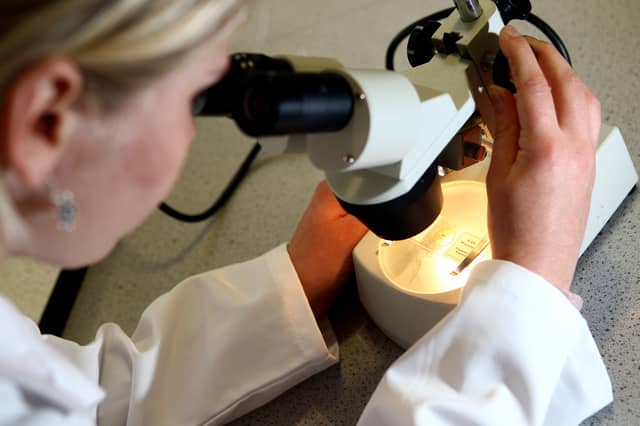

The new research will focus on the BRAF mutation-caused form of colorectal cancer, which is estimated to affect around 10-15 per cent of bowel cancers
A pioneering new Scottish study is aiming to better understand, and improve treatment, for patients with an aggressive form of bowel cancer associated with some of the poorest survival rates.
Scotland has the highest mortality rates of bowel cancer in the UK, and it remains the second most common cause of cancer death, claiming around 1,700 lives annually.
The new research will focus on the BRAF mutation-caused form of colorectal cancer, which is estimated to affect around 10-15 per cent of bowel cancers. It will examine how two existing treatments, encorafenib and cetuximab, could be used to tackle the disease earlier.
Dr Mark White, of the Cancer Research UK Scotland Centre at the University of Glasgow, said: “The ability to analyse tumour samples before and after treatment provides invaluable insight into how cancers adapt and resist therapy.
“By understanding these changes, we hope to identify new strategies to improve outcomes for patients.”
While these treatments have already shown promise in treating advanced colorectal cancer, neither their impact earlier in the disease’s development nor how they potentially change the biology of the cancer, have been fully explored.
The research aspect of the study, led by Dr White, will examine the cancer before and after the treatments in patients taking part in the FOxTROT4 clinical trial which will use advanced technologies to assess the cellular adaptions. FOxTROT4 is part of the FOxTROT clinical trial platform led by the Clinical Trials Research Unit at the University of Leeds and will be among the first worldwide to evaluate the safety and effectiveness of this drug combination in patients with BRAF mutant colon cancer before they undergo surgery to remove tumours.
The research will employ breakthrough technology which maps changes in tumour cells with unprecedented precision. By using this approach, researchers can examine tumours more effectively, offering a unique opportunity to observe how cancers respond in real time.
This new method will also allow scientists to track gene activity across cells and zoom in on individual cells to see what genes are switched on and where they are in the body. A major focus of the project is uncovering why resistance to targeted therapies develops – a key focus for cancer research. Previous work using sophisticated laboratory models demonstrated that tumour cells can rapidly adapt to treatment by altering their biological state.
FOxTROT chief investigator, Professor Jenny Seligmann of the University of Leeds, said: “This is a valuable opportunity to maximise what we can learn from a clinical trial. By studying tumour samples before and after treatment, we can begin to understand how these cancers adapt, evolve and develop resistance to therapy.
“The commitment of patients participating in the trial, together with the expertise of research teams, will help generate knowledge that could shape future treatment approaches for this particularly challenging form of bowel cancer.”
Cancer Research UK director of research, Dr Catherine Elliott, said: “From understanding cancer’s triggers to developing world-first vaccines and testing anti-cancer drugs in studies like this one, we’re developing more personalised, precise and powerful prevention techniques to stop cancers before they start.”
Comments
Want to join the conversation? Please or to comment on this article.