
NHS Grampian scandal: Bombshell report reveals ‘aggressive’ and ‘rushed’ surgery

The report criticised the ARI department for ‘excessively high’ mortality rates.
A bombshell report into avoidable deaths at NHS Grampian has exposed “overly aggressive” decisions of surgeons, “rushed” operations and surgery on patients despite clear suspicion of advanced or inoperable disease.
The 2022 Wigmore report was finally released on Friday night following pressure on NHS Grampian to share the findings of the review which was partially leaked by whistleblower and Aberdeen surgeon Dr Mohammed Habib last week.
The full report lays bare the circumstances surrounding the 19 avoidable deaths found in a sample of 45 patients who underwent hepato-pancreato-biliary (HPB) surgery at Aberdeen Royal Infirmary between 2015 and 2021.
It found “excessively high” mortality rates in HPB surgical cases and that five of the 19 cases were “definitely avoidable”.
Meanwhile, it has emerged that NHS Grampian is looking to bring in a private company to deal with the backlog of reviews into deaths and serious harm.
More than 100 ‘significant adverse event reviews’ are outstanding at the crisis-hit health board.
NHS Grampian said it was publishing the report “in the interests of absolute transparency” after the leaking of some details by Dr Habib, whose intervention led to the announcement of a KC-led inquiry, the resignation of chief medical officer Professor Sir Gregor Smith, widespread claims of a cover-up and patients in the Aberdeen cancelling hospital appointments.

The report reviewed 45 liver and pancreas patients and found that 19 of these patients “were considered to have died of avoidable consequences of surgery or intervention”.
Of liver surgery at the hospital, the 2022 report said: “Decision making was overly aggressive on occasions and did not appear to take the context of the patient, their comorbidity and their disease into account.
“There were cases where there was clear radiological suspicion of advanced or inoperable disease that still proceeded to surgery and resulted in complications or death.”
Five of the 19 deaths were classed as “definitely avoidable”, a further eight had “strong evidence of avoidability” and four cases had more than a 50 per cent chance of being avoidable.
The report added the overall approach to liver surgery “appeared rushed” and there was “a poor appreciation” of factors that could lead to more risks, such as age, chemotherapy treatment and alcohol use.
The report by Professor Stephen Wigmore from Edinburgh University also said there were occasions where “major restrictions” were overseen by non-specialist anaesthetists and monitoring was “not recording frequently on anaesthetic charts”. When this was recorded, anaesthesia was sometimes “excessively high” which “may reflect inexperience or lack of specialist knowledge”.
It also criticised the "inadequacy of surgical technique” in liver surgery, particularly amongst the patients who bled to death in the operating theatre.

The report said that efforts to limit haemorrhaging were “rarely mentioned in operation notes” and “there appeared to be an inappropriately high tolerance of blood loss before assistance was sought”.
Meanwhile when it comes to pancreatic surgery, the review said patients were often rushed into theatre “without adequate planning” and said there was a “recurrent theme of high blood loss”.
Overall the hepatobiliary department was criticised for making “the same mistakes around decision making [and] lack of planning”, and said that “technical issues with surgery were made repeatedly suggesting a lack of team learning from prior adverse events”.
In November 2022, Professor Wigmore returned to review hepatobiliary surgery and cases from 2021 and 2022 when the service was “under enhanced scrutiny” and following some changes in personnel within the surgery team.
He looked at 38 pancreatic and billiary cases and 27 patients requiring liver surgery.
Two liver patients died, one of which was judged to be avoidable. A third case was deemed to be a “near miss” after the patient recovered with medical management.
A further two pancreatic surgery patients died, including one which was avoidable.
Professor Wigmore found there had “definitely been improved outcomes” compared with his earlier review of patient safety that September, saying that liver and pancreatic mortality had declined. However, he said the figures were “still higher or close to the upper limit of acceptable mortality”.
He said the” exact reasons for this improvement are unclear” but added a change in personnel may have contributed to the improved picture.
The report said: “One surgeon has been redeployed within NHS Grampian and is no longer undertaking HPB surgery. Another surgeon is on long-term leave.”
He said the HPB service had been run predominately by two surgeons who have undertaken dual consultant operating and “provided support for each other”.
Professor Wigmore added: “There have been several instances where patients with potentially serious complications have been “rescued” through expedient intervention from the HPB team. These interventions undoubtedly reduced the impact of these complications.”
He said blood loss of a number of pancreatic and liver resections was “extremely” high and may be influencing patient recovery.
Health board chief executive Laura Skaife-Knight said: “We have welcomed the independent review into hepatobiliary at NHS Grampian and will cooperate fulsomely and in a way that is nothing other than open and honest.
“As well as taking steps to ensure that relevant records potentially relevant to the review are preserved, today we are publishing the September 2022 and November 2022 Professor Stephen Wigmore reports in the interests of absolute transparency.”
She added: “I recognise the significant concern the events of the last week have caused our patients and local community.
“However, I would encourage anyone who needs our care to come forward at the earliest opportunity. Please continue to engage with our healthcare services and attend appointments and operations as normal - our priority remains patient safety.”
Patient Safety Commissioner Karen Titchener is due to be questioned by Holyrood’s health committee on Wednesday morning. Health board bosses, including Ms Skaife-Knight, are also due to appear at this committee.
In documents lodged with the parliament ahead of this meeting, Ms Kitchener said: “The commissioner’s office is aware of plans to commission an external company to review approximately 100 outstanding significant adverse event reviews.”
She also acknowledged that the Healthcare Improvement Scotland report into the health board came about because of “persistent, serious concerns about safety, quality, governance and leadership, many of which had already been raised with NHS Grampian”.
Two whistleblowers are also going to be questioned by Holyrood’s health committee.
One of them is Dr Izhar Khan, who said: “It would be remiss of me not to bring to the attention of the committee that the current problems faced by NHS Grampian are not recent.
“The roots of the current situation lie in management not listening to clinicians for many years, which has resulted in the damning report by Healthcare Improvement Scotland.”
He said there was an “atmosphere of fear of retribution” amongst colleagues who raised concerns about senior health board management.
Dr Khan also alleges that he was “subjected to intimidation” by the health board’s director of workforce before interviewing for a new medical director in 2014.
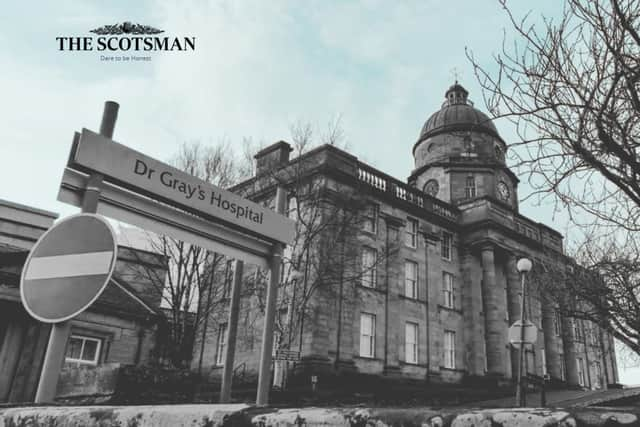
He said the Healthcare Improvement Scotland review into NHS Grampian, published earlier this month, was “one of the most damning reviews I have come across” and said he believes Dr Gray’s Hospital in Elgin is “not fit for purpose to deliver acute services for the people of Moray”.
He said: “For years senior management has not listened to clinical advice and on occasions when advice was given, often it was ignored.”
On Friday the Scottish Conservatives also demanded that “every failed SNP health secretary” be “dragged into parliament” over the NHS Grampian scandal.
Party leader Russell Findlay says First Minister John Swinney, former first minister Humza Yousaf and former health secretaries Michael Matheson and Neil Gray should be forced to give evidence to Holyrood’s health committee.

He said: “Every failed SNP health secretary must be dragged into parliament and forced to explain what they knew about untold numbers of NHS Grampian patient deaths.
“Patients and bereaved relatives deserve to hear directly from Swinney and from each and every health secretary in the full and open glare of the health committee.
“John Swinney’s inquiry already looks like a cynical tactic to kick this latest scandal into the long grass, but we won’t allow that to happen.
“It would be outrageous for them to maintain their silence and even worse if they use Swinney’s inquiry as an excuse to dodge scrutiny.

“If Swinney thinks that the chief medical officer should become the token fall guy to save the skin of SNP politicians, then he’s sorely mistaken.”
Mr Findlay says it is particularly important that Mr Yousaf and Mr Gray answer key questions about what they knew and whether or not they escalated any concerns to anyone higher.
He added: “Humza Yousaf was health secretary when a bombshell report revealed 19 avoidable deaths and Neil Gray repeatedly ignored whistleblowers.
“They’ve got a lot of explaining to do.
“After two decades of SNP rule, their rotten culture of secrecy, lies and cover-up has been allowed to pollute many of Scotland’s public bodies.”
Comments
Want to join the conversation? Please or to comment on this article.