
One word a day: A fresh take on how to stop the decline of Gaelic
From listening to BBC Radio nan Gàidheal to just saying ‘halò’ in the street, everyone can get involved.

Scotland’s efforts to sustain and revitalise Gaelic stretch back well over a century.
From legislative milestones to expanding education, to throwing millions of pounds behind new centres to protect the language, efforts have been bold to keep the native tongue alive.
Yet the latest national push to support Scottish Gaelic is to take a slightly different approach: commit to saying one word a day.


The campaign, called Gach Latha (which means “every day”) aims to show the language being spoken in communities, online and in workplaces, inspiring more people to use the language with confidence.
Private, public and third sector bodies are being urged to join the initiative by pledging to incorporate Gaelic words and phrases into every working day in some way.
Organisations that have already given their backing to the initiative include the Scottish Chambers of Commerce, the University of the Highlands and Islands (UHI), True North Advisors and Inverness Chamber of Commerce.
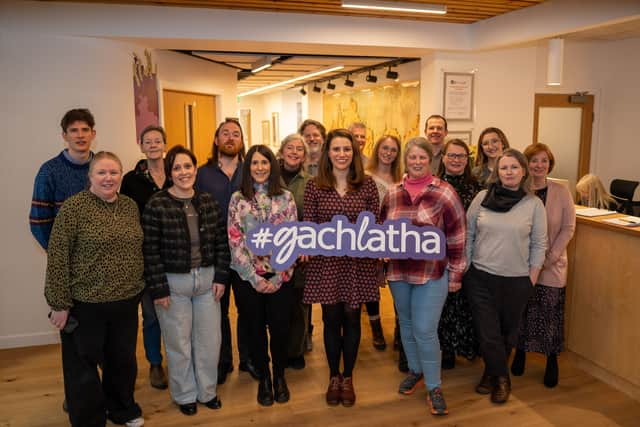
The new campaign is being spearheaded by Bòrd na Gàidhlig, Scotland’s Gaelic body, which marks its 20th anniversary in 2026.
Chief executive of Bòrd na Gàidhlig Ealasaid MacDonald said there has been an encouraging growth in the number of people learning Gaelic in Scotland.
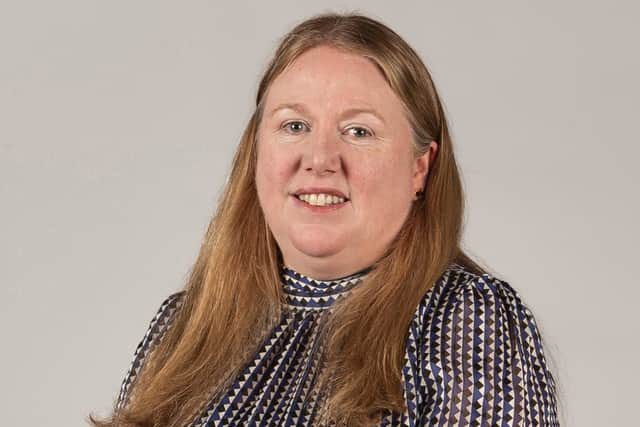
“We are inviting people and organisations across Scotland to join this movement to use Gaelic every single day,” she said.
“When we have a language that is fragile, we have to use it every day. Gaelic is a national, social, economic and cultural asset. It returns so much for Scotland in many different ways, some we can't even quantify.
“It is important that people, whether you speak it, or know just a little, understand what a value having a language like this does for the country. It’s a core element of how we showcase Scotland to the world.”
Ms MacDonald, from South Uist, listening to BBC Radio nan Gàidheal to watching BBC Alba and saying greetings in Gaelic to people in the street can be a way to get involved in the campaign.

As of March 2026, 18 local authorities out of Scotland’s 32 host Gaelic Medium Education, a free, immersion-based educational option available to school children.
These include council areas in Ayrshire, Lanarkshire, Perth and Kinross and Angus as well as most in the Central Belt and Highland.
Comhairle Nan Eilean Siar, otherwise known as the Western Isles, is actively seeking to secure status for the Outer Hebrides as a core Gaelic-speaking region by leveraging the Scottish Languages Act 2025 to designate ‘Areas of Linguistic Significance.’
The initiative aims to combat declining usage and promote the language. Census statistics from 2022 showed for the first time, Gaelic speakers in Comhairle Nan Eilean Siar were in the minority, with 2,600 fewer speakers recorded compared to 2011. There are now 11,426 speakers in the islands – a fall from 52 to 45 per cent over the period.
However, the same figures showed 130,161 people in Scotland had some Gaelic skills in 2022, an increase of 43,105 from 2011.
As of late 2023, more than 1.8 million people signed up to learn Scottish Gaelic on Duolingo since its launch on the app on St Andrew's Day 2019.
Bòrd na Gàidhlig is the principal public body in Scotland responsible for promoting Gaelic development, culture, and education, aiming to ensure the language is used daily across the country. Established by the Gaelic Language (Scotland) Act 2005, it advises Scottish Ministers and leads the development of the National Gaelic Language Plan.
Comments
Want to join the conversation? Please or to comment on this article.