
EX-MSP calls for single reform commission for universities and colleges
Des McNulty, the former MSP and academic, has made the call in a letter to SNP minister Alyn Smith

A former Labour MSP and academic has called on the new tertiary education minister to set up a new commission to reform colleges and universities together.
Des McNulty has appealed to Alyn Smith to create a Tertiary Commission, linking funding to regional economic needs and bringing all institutions into a single reform programme.
His report sets out that Scotland’s university and college funding model is unsustainable.
Mr McNulty, of the University of Birmingham, claims ministers must move beyond short-term financial support and fundamentally reform how post-school education is funded, managed and held accountable.
The former convenor of the Scottish Parliament's Finance Committee is arguing for a Tertiary Commission to overhaul funding and performance arrangements across universities, colleges and apprenticeships.
Writing to Mr Smith, he says: “This letter is intended to help you to deal with the funding crisis now facing Scottish universities and colleges.
“It begins by outlining the reasons for the current crisis and then goes on to suggest five steps that you could take to improve the situation.
“This can be achieved as we detail by better aligning funding, institutional planning and accountability with national objectives and the different needs of regions and communities.”
His proposed model, set out in a report commissioned by the think tank Enlighten, would see public money increasingly tied to contributions made by institutions to regional economic development, skills and social inclusion.

The bleak financial outlook of Scotland colleges and universities has been a major talking point of the sector over the past two years.
The joint Universities Scotland and Scottish Government Future Framework report cited a £200 million shortfall in funding affecting universities.
Some 10 of 17 universities assessed by the Scottish Funding Council were in deficit in 2024–25, up from nine the previous year.
Scottish higher education has grown increasingly reliant on overseas student income to subsidise research and undergraduate teaching.
As set out by Mr McNulty, non-EU fees accounted for almost half of Scottish university teaching income over the previous five years, compared with less than a third a decade earlier.
Scotland’s four ancient universities generated a combined surplus of £98.3m while the remaining institutions collectively recorded a £7.7m deficit.
Mr McNulty argues this is creating a two-tier university system in Scotland and a crisis that cannot be dealt with in isolation.
He argues that the post-school education system should be treated as a whole.
The former Scottish Labour MSP says funding should be allocated according to regional needs rather than applying a uniform model across Scotland.
Universities and colleges, he says, should plan collectively with regional partnerships, employers and public bodies.
The Scottish Funding Council should produce a coherent plan within two years for institutions to operate within their funding allocations and make funding conditional on measurable outcomes.
Institutions should be benchmarked against international comparators, he also claims, with intervention where necessary to protect or expand provision serving national and regional needs.
Mr McNulty, who worked at the University of Glasgow, including as Dean for Public Policy and Assistant Vice-Principal, has written his report as a letter directly to Mr Smith.
Mr Smith said:
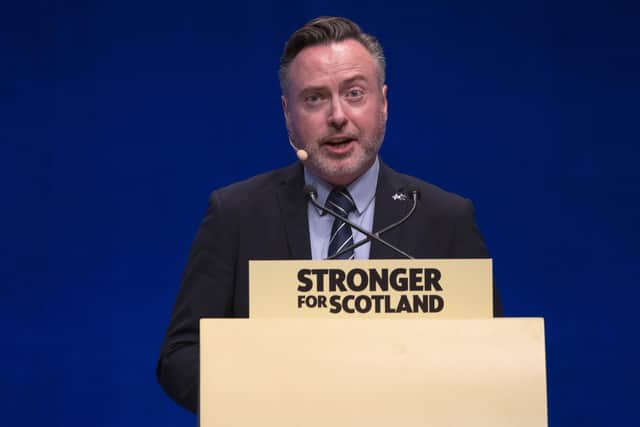
Tertiary Education Minister Alyn Smith said work is “already underway”.
He said: “Our ambitions for tertiary education are rightly bold, and transformation is ongoing with Universities Scotland and Colleges Scotland to ensure a sustainable future for both sectors, to be fit for the needs of learners and the economy of the 21st century.
“Transformation is also at the heart of our reforms to create a more joined-up skills and post-school education system, and Scottish Funding Council will have responsibility for all apprenticeships from April 2027 as part of delivering this.”
Comments
Want to join the conversation? Please or to comment on this article.