
Scotland's nobility meet in Edinburgh where past titles meet with present-day expectations
A private gathering at the famous New Club marks the growing public interest in Scotland's neglected aristocracy
Later this year, Scotland's inherited nobility will meet for their yearly gathering, coinciding with growing public fascination with the historic titles that have survived through centuries of political turmoil.
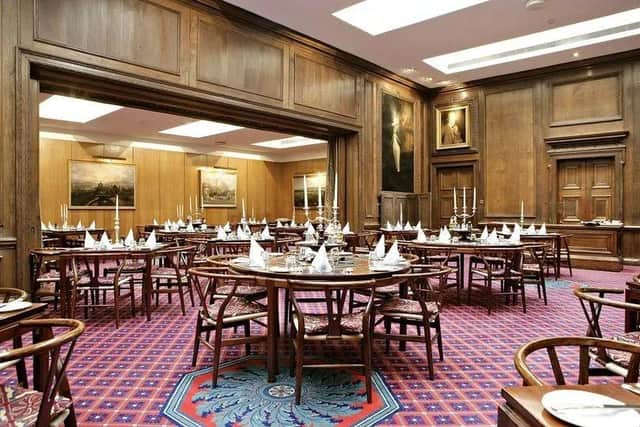
The annual meeting of the Registry of Scots Nobility, which will take place on September 23 at the exclusive New Club on Princes Street in Edinburgh, will bring together peers, baronets, and minor barons whose titles date back to medieval Scotland — and even before the controversial Act of Union with England in 1707.
This year's theme responds to a pressing modern concern: the public image of Scottish nobility in the age of social media and instant access to information. This conference takes place at a moment when sources like Wikipedia and Debrett's Peerage have dramatically increased public access to information about Scottish titles, a situation that marks a vast change from even a decade ago.

“There is unprecedented public fascination with Scottish nobility,” the informant in the Registry said. “People more and more want to know who these titleholders are and the role they play in Scotland today.”
The expert panel includes heraldry expert Dr Bruce Durie, curator of the Scottish Barony Register Alistair Shepherd, and lawyer Michael Yellowlees, who will each clarify the intricate legal frameworks that regulate the inheritance of titles.
Political storm clouds
The plan for an internet registry followed mounting concerns that emerged over the Scottish independence referendum in 2014, during which time Scottish National Party leaders publicly considered the establishment of a Scottish republic as part of the European Union — a prospect that could seriously undermine the legitimacy of all hereditary titles.
“The majority of EU republics do not recognise heraldic authorities or titles,” according to one of the Registry's spokesmen. “Scotland's cultural legacy has long been of great concern, historically.”
The conference will further discuss the evolving role of baron's courts and the state of traditional baronies and their lands despite the reality of these titles no longer being attached to land ownership in the traditional sense.
Last year's gathering heard how the question of Scottish nobility has captivated Scots for over 400 years, with heated debates about whether holders of coats of arms should be considered noble alongside the established peerage, baronetage and baronage.
Ancient heritage under modern scrutiny
The Registry is exclusively dedicated to titles created before 1707 in the name of the Scottish crown, qualifying those titles created afterwards as British or UK peerages rather than genuine Scottish distinctions. Contrarily, all those titles enrolled are inheritable, and additionally, Scottish legal systems often allow inheritance through female descent more often than in English law.
The Scottish nobility is differentiated from the English equivalent in several important ways based on its distinctive features. Scottish titles more frequently pass through the female line, representative of the older Scottish principles of law that gave more prominence to female heirs over English ones. Scotland's most junior rank is comprised of lords of parliament rather than barons, in comparison with the English peerage system, while Scottish minor barons occupy a unique station in the nobility unrelated to the traditional peerage system.
Before the creation of the Union, minor barons sat in the Scottish Parliament and enjoyed significant influence both legally and socially, and their votes for the Act of Union were recorded separately from those of the elected boroughs. The Act of Union had far-reaching implications for Scottish customs, requiring the removal of several age-old customs as well as the transfer of the Scottish court to London during the reign of James VI.
What is significant is that, while there were intersections involving the Scottish nobility and the clan systems — such as the role of the Chief of Clan Campbell played by the Duke of Argyll — these were exception rather than the rule. Most Scottish clan chiefs are not peers or minor barons in possession of titles, and the medieval Scottish nobility, centered from the thirteenth through the seventeenth centuries in Edinburgh, Stirling, and Falkland, operated essentially outside of the tartan-wearing clan culture often associated with modem Scottish identity.
The institution went digital based on fears that Scotland's sovereignty would undermine traditional titles' recognition. The shift aimed at ensuring that those historic differences would be retained in permanent record regardless of any political changes.
The annual meeting will be held at 10am on Tuesday, September 23, in the New Club on Princes Street in Edinburgh.