
Who’s the Vylan of the piece?
In the wake of the Bob Vylan controversy, Douglas McConnell takes a look at Glastonbury, free speech and Scots law
The 2025 Glastonbury Festival made headlines far beyond the music world when punk-rap duo Bob Vylan led the crowd in chants of “Death to the IDF”.
Broadcast live before being removed by the BBC, the incident prompted condemnation from political leaders and ignited a criminal investigation in England.
The controversy reopened complex questions about hate speech, protest and legal thresholds, especially in light of Scotland’s newly enforced hate crime legislation. My colleague, David Duncan, wrote earlier this year about how Scotland’s new hate crime laws apply to individuals. But this is something different – a public performance, broadcast to thousands, where the audience isn’t just incidental, it’s central.
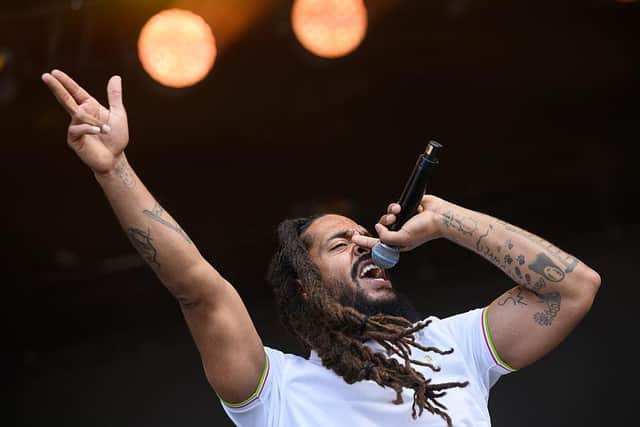

Although the chant occurred in England, it provides a useful lens through which to examine how Scotland’s Hate Crime and Public Order (Scotland) Act 2021, in force since April 2024, might address such speech. The Scottish legislation consolidates and updates previous hate crime statutes. It criminalises conduct that is: Threatening or abusive; and Intended to stir up hatred against groups defined by protected characteristics, including race, religion, sexual orientation, disability, transgender identity, age, and variations in sex characteristics.
It also introduces specific “stirring up hatred” offences, which require not only abusive or threatening language but clear intent to incite hatred. Notably, the Act includes built-in protections for freedom of expression, aiming to safeguard genuine political discourse and critical commentary that doesn’t cross into incitement.
Bob Vylan’s chant against the IDF (Israel Defence Forces) presents a legal grey area. The IDF is a state military body, not itself a protected group. But if a court interpreted the chant as a stand-in for hostility toward Jewish people, it could potentially fall within the law’s scope under religious or racial hatred provisions.
In Scotland, the key prosecutorial questions would be: Did the performer intend to stir up hatred, not just express opposition to Israeli military policy? Was the chant directed at a protected group, or clearly framed as political dissent? How would a reasonable observer interpret its tone, content and impact?

The performers could argue the chant was rooted in protest against state violence, not hostility toward any religion or ethnicity. This would engage the Act’s freedom of expression defence, which allows controversial views so long as they don’t provoke hatred.
While English law criminalises stirring up racial or religious hatred under the Public Order Act 1986, its focus is whether the speech is likely to stir up hatred, not whether it was intended. Scotland’s Act, though broader in scope, has a higher evidentiary threshold – proof of intent.
Nonetheless, the Scottish law’s clarity and breadth could arguably make prosecution more viable, depending how courts interpret the chant’s intent and implied meaning. Scotland’s newer framework was designed to tackle modern hate expressions, including online speech and performance.
This controversy also taps into Scotland’s wider cultural debates, and boundaries between “cancel culture,” accountability, and censorship. Some view legal mechanisms as protections for vulnerable groups, while others fear the potential chilling effects on protest and dissent.
Had the Glastonbury performance taken place in Scotland, prosecution under the 2021 Hate Crime Act would be possible, but far from guaranteed. Intent, interpretation and context would all be crucial. The law is designed to protect against dangerous hate speech while safeguarding freedom of expression, but navigating that line requires careful legal and cultural judgment.
In the court of public opinion, the chant has already been met with disapproval. In a Scottish court, the outcome would be far more nuanced.
Douglas McConnell is a Partner, Duncan & McConnell Solicitors