
The hidden economic cost of bluetongue to Scottish farmers
-(1).jpg?width=96&crop=1:1,smart)
When livestock suddenly cannot move as planned, it disrupts the entire rhythm of the farm business
As a livestock farmer based in the Scottish Borders, bluetongue has gone from being something unfolding elsewhere to something we are becoming increasingly concerned about on our own farm.
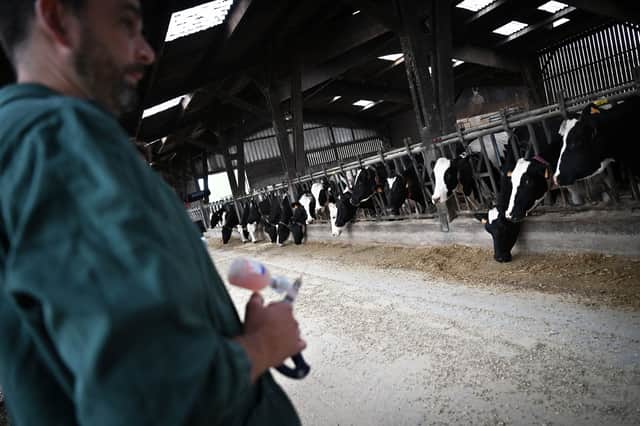

Bluetongue Virus 3 (BTV-3) is a viral disease affecting susceptible livestock, including cattle and sheep, which is spread mainly by biting midges. As of the start of this week, 76 animals across 16 holdings in south west Scotland have been confirmed positive for BTV-3.
While the obvious concern is the disease itself, for farmers now living with movement restrictions in Dumfries and Galloway and parts of Ayrshire, the impact is quickly becoming an economic one too.
When livestock suddenly cannot move as planned, it disrupts the entire rhythm of the farm business. With autumn trading just ahead, the timing could hardly be worse. This is the point in the year when trading, breeding choices, and forward planning all come into sharp focus. A restriction on movements does not simply put those decisions on hold. It can change the economics of the entire business.
-(1)-(1).jpg?trim=338,119,1472,97&crop=&width=640&quality=65)
We should not underestimate how quickly those individual costs can accumulate across a sector. Holding livestock longer means extra feed, extra housing, extra labour, while a delayed sale can squeeze cash flow and stall the purchase of replacement stock. For breeding businesses, disruption at the wrong point in the year can have consequences that last well beyond the period of the restriction.
And those effects do not stop at the farm gate - when enough businesses are affected at once, the impact travels through the supply chain, affecting marts, vets, hauliers, abattoirs and processors too. What begins as an animal-health issue can therefore impact the resilience of Scottish food production and become a much wider economic issue for rural Scotland.
That is why the arrival of bluetongue in Scotland needs to be considered in terms of its economic footprint, as well as its epidemiological one.
NFU Scotland has written to the Scottish Government, setting out the concerns we are hearing directly from farmers and calling for the economic impact of the restrictions to be recognised.
Farmers understand why disease controls are necessary. None of us want bluetongue to spread through Scotland’s livestock population. Movement restrictions and surveillance all have a role to play, but vaccination remains the best protection and farmers speak to their vet and make plans to vaccinate. Priority should be given to livestock in the South and South-West and to breeding stock, but vaccination is important across Scotland. High uptake will help protect individual herds and flocks, neighbouring farms and the wider livestock sector.
It is also fair to ask why more animals were not vaccinated before the virus reached Scotland. But vaccination is not a switch that can simply be flicked once an outbreak arrives. Decisions have to be made based on the level of protection required, vaccine availability, cost and the practicalities of vaccinating large numbers of animals.
What matters now is getting the vaccine to the animals that need it and making sure the response works.
But there is another question we cannot ignore: who pays the price when disease controls disrupt a farm business? If a farmer is prevented from moving or selling livestock to protect Scotland’s wider herd and flock, the financial consequences can be significant. Farmers have a responsibility to manage disease risk, but where exceptional restrictions are imposed as part of a wider disease-control response, is it reasonable for those individual businesses to carry the full additional cost?
The challenge for government is therefore twofold: contain the disease and make sure the businesses bearing the brunt of the controls are not left carrying an unfair share of the cost.
That is why NFU Scotland is calling for practical measures, including support with testing for animals leaving Temporary Control Zones, help with vaccination in affected areas and a workable route for animals that need to move but cannot be vaccinated in time.
Last week, NFU Scotland held a series of local bluetongue meetings across Dumfries and Galloway to hear directly from affected farmers and provide the latest information. The strength of attendance and the questions being raised demonstrated the level of concern across Scotland’s agricultural communities. Farmers need clarity about what the restrictions mean, how long they may last and what support will be available if they create significant financial losses.
While we are in the thick of an outbreak, it is difficult to step back and assess the full economic impact. But what we have already seen is how quickly the costs and disruption of movement restrictions built during last year’s outbreak in England. It was never simply the value of animals that became sick, but the accumulated cost of movement restrictions, testing, vaccination, additional time on farm and disrupted trading.
There is also a wider question about what happens if bluetongue becomes a recurring feature of livestock farming rather than a one-off outbreak. If vaccination, testing, movement controls and additional biosecurity become regular costs of doing business, they will inevitably become part of the economics of producing beef, lamb and milk in Scotland. That matters because Scottish livestock farming is already operating under significant financial pressure.
Bluetongue may prove to be a contained outbreak. I sincerely hope it does. But if it becomes more widespread, we need to be ready for the economic consequences as well as the disease itself. We cannot wait until restrictions have been in place for months before confronting these consequences.
Farmers must play their part by protecting their livestock, including through vaccination. Government must play its part too, by ensuring disease controls are practical, information is clear and those required to bear exceptional costs for the wider good are properly supported. Getting on top of bluetongue is in everyone's interests. So is making sure Scotland has a strong viable livestock business when we do.
Comments
Want to join the conversation? Please or to comment on this article.