
Future of crofting on the Machair, and the growing threat from geese

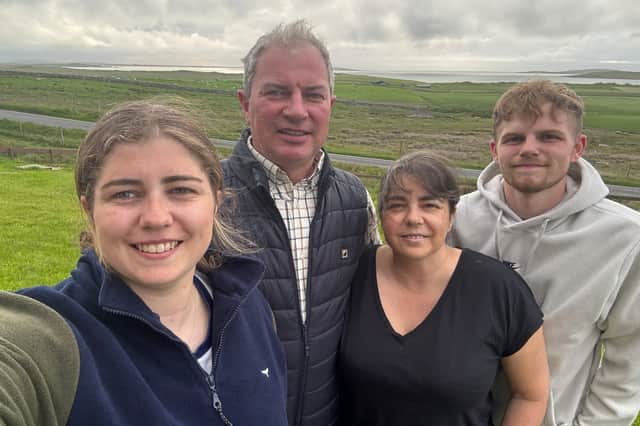
The machair is a landscape shaped by crofting, with biodiversity woven into generations of traditional practice. But as pressure from geese grows, can the people who created this habitat afford to keep working it? Megan Williams meets NFU Scotland member Donald Norman Macdonald on North Uist.
At Clachan Sands on North Uist, crops grow alongside wildflowers, cattle graze the machair and the Atlantic is never far from view. For Donald Norman Macdonald, this is simply crofting. But the landscape he works is anything but ordinary.

“It’s a whole range of different habitats. It’s not just one. There’s boggy areas for the flowers, dry areas and sand dunes, so there’s lots of different bits to it,” he says.
The machair is not an untouched wilderness. Its distinctive character has been shaped over generations by traditional cropping, grazing and periods of fallow. The relationship between people, livestock and land has created a rich mosaic of habitats, supporting an extraordinary range of wildlife.
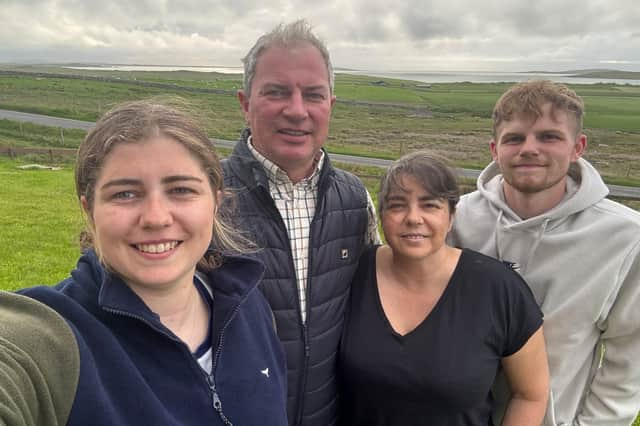
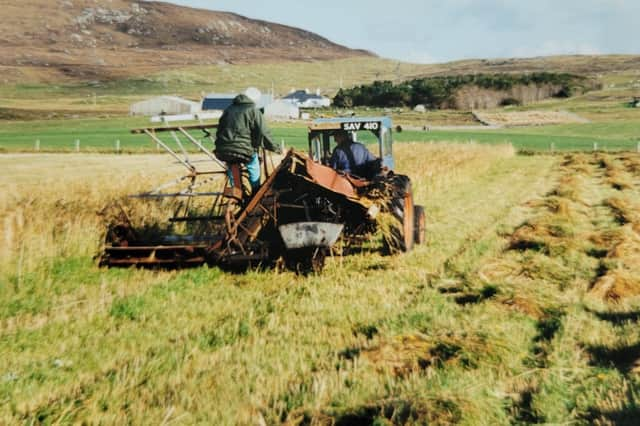
Donald farms around 30 hectares of machair, about 10 hectares of which is ploughable. He follows a cycle of two years of cropping around five hectares, followed by two years of fallow.
Among the crops is a traditional small oat, sometimes known locally as black oat, particularly suited to the machair’s calcium-rich soils.
“It’s the type of seed that only really grows here,” he says. “It’s quite a unique thing.”
Crofters retain seed from one harvest to plant the next, maintaining a locally adapted crop that has become part of the islands’ agricultural heritage. The oats are cut as a whole crop, baled for silage and fed to cattle over winter. The cattle, in turn, return nutrients to the soil through their manure, helping sustain the next cycle of production.
“The cattle are the base of the whole thing. The whole thing is linked: the machair, the ground and the cattle. You take one thing out of the equation and it all falls to bits. The cattle are the key to it,” Donald explains.
Seasonal grazing is equally important. Around April and May, the cattle move off the machair to higher pasture, giving flowers time to bloom and set seed and allowing wildlife to flourish.
“It gives the birds and the bees and the flowers a chance to flower and seed.”
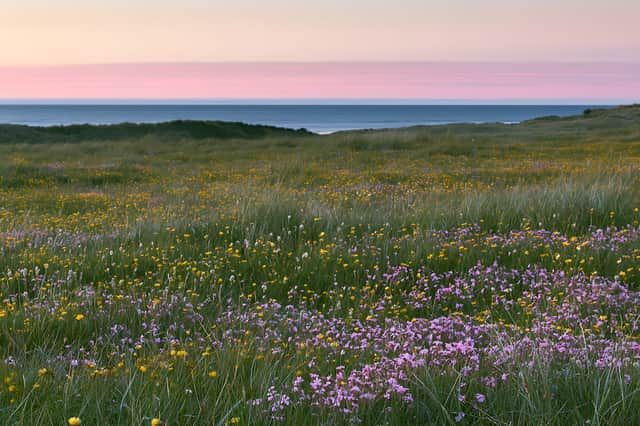
The benefits are visible on the ground. Donald recalls waders following machinery as he cuts the grass and has counted 712 lapwings in a single field.
“We have so many ground-nesting birds because we don’t have foxes, stoats, badgers, beavers or weasels,” he says.
It’s a good example of how farming and nature don’t just support one another - but actually depend on one another. The species-rich grasslands of the Outer Hebrides have developed through decades, and in some cases centuries, of management by crofting communities. Without that continued intervention, the balance of these habitats can become out of kilter.
But maintaining this relationship is becoming increasingly difficult due to growing pressure from resident greylag geese, whose love for the machair is devastating fields of crops. The damage goes beyond the loss of a harvest as farmers like Donald will often leave part of their crop unharvested to retain seed for the following year. But, over recent years, this is more and more challenging as the geese destroy regardless. The concern is that repeated losses will push more people to abandon the crop altogether. With less cultivation comes less seed retention, and the traditional farming practices that maintain the machair begin to disappear.
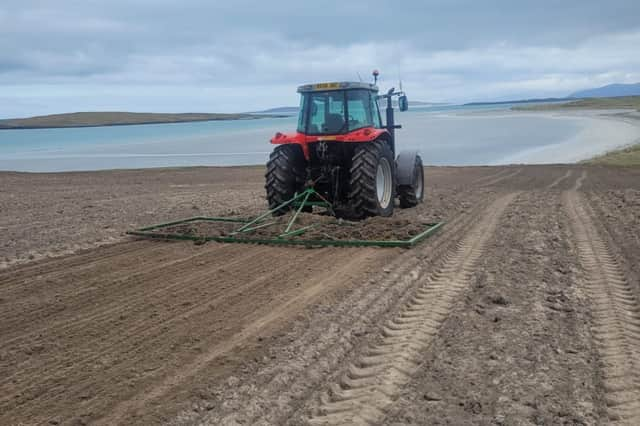
At the National Goose Forum in February, the Uist and Barra Local Goose Management Group reported that there was insufficient landrace seed available to plant that year’s crop. Some crofters had enough for their own use but no surplus, while others had too little, or none at all. Donald has seen the consequences first-hand. Geese strip seed from growing crops and flatten plants, making harvesting impossible. He recalls how, last year, two plots on Berneray, north of Uist, were destroyed overnight.
“It was the first time probably in living memory that they didn’t have any,” he says, referring to the seed retained for the following year’s crop. The crofters had to find an alternative, buying triticale to replace their traditional oats.
“There are a couple of crofters that are just saying that they’re just going to pack up. They’ve had enough. It’s not worth the anxiety,” Donald says.
The consequences extend beyond individual businesses too. If cropped areas are left unmanaged, the grass can become rank, changing the open, diverse habitat that generations of crofters have helped create.
Meanwhile, the geese themselves are well established on the islands, where relatively mild winters and access to food allow them to remain year-round. But there has been some progress. Government funding for greylag management on Uist and Barra has risen to £30,000 this year, which Donald says has made a difference.
As a member of the local goose management group, he’s also involved in efforts to coordinate action.
“It’s a teamwork effort between everyone who’s affected,” he says.
But the question remains whether current funding gives crofters enough confidence to continue, for Donald and many others, the issue is about having the confidence to keep putting seed in the ground, knowing that the support needed to manage goose numbers will be there beyond a single year.
NFU Scotland is working to ensure the challenges facing crofters on the islands are recognised and acted upon. The Union has been calling for better-resourced, multi-year support for goose management, arguing that rising costs and growing goose populations threaten not only crofting businesses, but also the traditional farming practices that sustain some of Scotland’s most important habitats. “In the grand scheme of things, we’re not really asking for a lot of money,” Donald says.
But that investment protects far more than a crop. The machair’s biodiversity has developed alongside generations of crofting, and its future depends on the people who continue to work it.
Comments
Want to join the conversation? Please or to comment on this article.