
Expert trio gives us well-rounded views on circular economy
.png)
Stephen Emerson introduces the latest Sustainable Scotland podcast produced in partnership with Zero Waste Scotland.
The challenge of how to make business more sustainable amid dwindling resources and a changing climate is one of the biggest issues faced by economies around the globe today.
However, Scottish businesses are already engaging with the practical challenges – and financial benefits – of a move to a circular economy.
Zero Waste Scotland is at the forefront of helping businesses access the benefits of circularity through practical support and guidance, including the publication of a series of priority sector Roadmaps to drive circular change across Scotland’s economy.
Its recently published paper, built environment Roadmap to Circularity, sets out how sectors can move towards more circular practices, with an industry-led Mission Board now working to drive that plan forward.
The potential benefits within the sector, both for the environment and the economy, are profound. Construction and demolition activity account for around half of all waste produced in Scotland and was responsible for around 10 per cent of the country’s greenhouse gas emissions in 2022.
In the latest online edition of The Scotsman’s Sustainable Scotland podcast, we spoke to three experts working on the front line of the circular economy on how they are helping Scottish businesses adapt.
Dr Jane Beasley
CIRCULAR ECONOMY DELIVERY DIRECTOR AT ZERO WASTE SCOTLAND
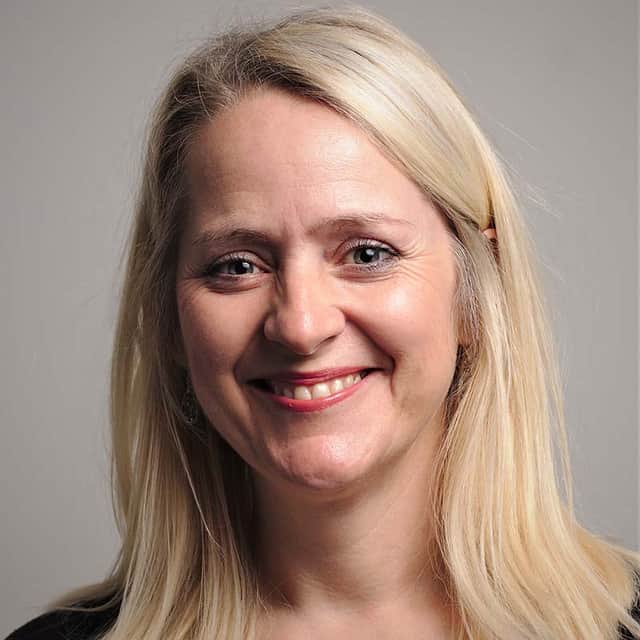

“Businesses are recognising the need to do things differently and look for new opportunities to gain market advantage, build resilience into supply chains – or even just to help them survive. And circular practices are very much part of the solution.
“The challenge isn’t convincing businesses that circularity matters, but helping them take a first step to move from general awareness to specific actions that businesses can take forward, and implement in a really successful manner.
“Our Business Information Hub helps businesses identify and implement circular economy opportunities. It has free practical guidance and toolkits to help organisations build some confidence to be able to take action.
“Our goal is to equip businesses with the ability to unlock the solutions so that they can then take forward circularity and reap the benefits.
“The construction sector is a good example. We supported IndiNature, which uses renewable hemp fibre for low-carbon insulation products and has done phenomenally well. They provide rural employment opportunities, they support local supply chains, and they’re really demonstrating the potential of circular solutions.
“We helped BAM Construction, one of Scotland’s leading construction firms, who were really keen to embed more circular practices across their supply chain, in identifying opportunities
to reduce material use, to design out waste and cut carbon emissions before construction even begins.
“This work has helped uncover significant waste, cost and carbon savings, and demonstrates how circular thinking at the design stage can deliver results.
“Businesses should start looking at the circular economy in the same way that they would look at issues like health and safety. It should be a core part of their everyday business, because if they don’t, the opportunities that they are missing are significant.
“So, it does feel a little bit like a no-brainer for Scottish businesses to take forward. But the challenge for businesses is how to make that transition to the point of benefits being realised.”
Lorraine Wood
HEAD OF SECTORS AT ZERO WASTE SCOTLAND

“A lot of businesses already recognise the value of becoming more resource-efficient and circular, but they’re not always sure where to start or what the next step should be.
“The built environment Roadmap to Circularity sets out a framework for action, and it’s not just looking at construction practices. It also identifies a series of interventions ranging from material reuse hubs and sustainable procurement practices to new metrics, standards, finance and policy measures.
“And these all provide a common sense of direction and a shared understanding of where effort needs to be focused. And then the Mission Boards help turn those plans into delivery.
“That means providing strategic leadership, helping remove barriers, and creating collaboration across organisations that might not traditionally work together because we know that no single organisation can deliver a circular economy on its own.
“The benefits are both commercial and operational. Businesses that use materials more efficiently, reduce waste, reuse products and keep resources in circulation for longer are often able to lower purchasing costs and reduce disposal costs.
“Many organisations are looking at how they can reduce their exposure to volatile material prices and supply chain disruptions. Circular approaches such as designing for reuse, remanufacturing materials, or extending product life cycles can help businesses become less dependent on virgin resources and more resilient to market pressures.
“We’re also seeing productivity and innovation benefits because looking at resources differently often encourages businesses to rethink their products, services, and processes, which can unlock new revenue streams, improve efficiency and create opportunities for new business models.
“Businesses see the benefit not only in reducing waste, but also in improving resource security, creating new commercial opportunities, and responding to growing client demand for more sustainable, efficient buildings.
“In five years’ time, I’d like to see a sector where designing out waste, reusing materials, and considering whole-life value are just normal parts of decision making.”
Dr Jocelyne Fleming
PUBLIC AFFAIRS AND POLICY LEAD AT THE CHARTERED INSTITUTE OF BUILDING, DEPUTY CHAIR OF CIRCULAR BUILT ENVIRONMENT MISSION BOARD

“Across Scotland there is a growing recognition of the economic benefits of doing these things – and not only the environmental ones.
“Where I think the challenge lies is in the practical capacity to take that on.
“So, I think it’s not a lack of recognition, it’s just about creating the correct environment to make this as feasible as possible for businesses of all sizes across the country.
“Construction is an industry that is at the absolute centre of so many social objectives that we have in Scotland and globally.
“So, I don’t want to take lightly the volume of challenge and change that the industry is taking on. I’m quite often presented with the notion that it’s a reticent industry to making those changes, which I don’t think is the case.
“The people that I speak to every day are very willing to innovate. They want to do the right thing economically for their business, which is taking on these circularity principles.
“I think it’s just that they’re at the interface of so many different rapidly changing landscapes. A lot of the time these businesses are just trying to survive, let alone thrive. So we need to keep all of these really great ambitions and the delivery goals we have in the context of what the day-to-day challenges are for the industry.
“If I’m going out and speaking to the people who are in the industry that I work with every day, I think the takeaway for me would be that there are organisations such as Zero Waste Scotland that are developing tools, and advice is available. So to engage with it, and to not think this isn’t for me or I’ll get to it.
“To see themselves in this conversation and not only feel like they can contribute here, but that they are subject matter experts whose perspectives will be absolutely integral to embedding these principles in the sector.
“We can’t do it without them.”