
Collaboration key for farmers and fashion industry to build on wool’s ten-year high - The King’s Foundation
“Consumers are becoming more aware of the importance of the provenance of a garment and the journey it has taken before becoming their own”
A decade on from the first-ever wool conference at Dumfries House, the price of wool has this month reached a ten-year high, offering hope to sheep farmers across Scotland seeking a welcome boost to their income streams.
A collaborative approach to elevate the wool industry is why The King’s Foundation - King Charles III’s flagship nature and sustainability charity - is working with The Great British Wool Revival to host an innovative two-part summit, today and tomorrow, at Dumfries House in East Ayrshire. Those in education are our focus today, while industry figureheads will gather tomorrow in our first-of-its-kind “clip-to-consumer” event.
Tomorrow’s Industry Day will bring together British farmers, designers, brands, fabric supply chain mills innovators and creatives to discuss the provenance of, challenges with, and the uses for, British wool. The event will feature an innovative farmer-to-maker “matchmaking” element, designed to strengthen collaboration and understanding from field to fibre while championing the use of British wool.

Dumfries House hosted a wool conference in September 2016 with the Campaign for Wool to unite global industry leaders, promote sustainable wool, and establish strict animal welfare standards. The event culminated in the historic signing of the Dumfries House Wool Declaration, spearheaded by the then Prince of Wales to protect sheep welfare and the environment and draw attention to this wonderful natural resource. We have moved forward in many ways since then, but producing, buying and utilising wool is still seen by too many as complex and expensive, with farmers remote from the end product and fashion designers and consumers unable to navigate the disconnected supply chain while consumers are lost among a bombardment of fast fashion dominance. It’s time to unite and recognise that, in the long term, the positives of a natural, renewable, and biodegradable material can hugely outweigh any perceived negatives.
While collaboration is paramount, the willingness to embrace traceability and the bravery to diversify are both crucial, along with helping consumers appreciate wool as a fibre of the future and not the past.
Consumers are becoming more aware of the importance of the provenance of a garment and the journey it has taken before becoming their own. Projects such as The King’s Clip, which saw The Natural Fibre Company produce a unique yarn from the fleeces of three flocks of sheep at Dumfries House to create oversized scarves as part of one of The King’s Foundation’s postgraduate luxury apparel training programmes, demonstrated the positive environmental impact of a localised supply chain in the fashion industry. Students on all of our many textiles and furniture-making programmes at The King’s Foundation follow the same ambitious standards of traceability, ensuring that we can reduce our carbon footprint and be transparent about provenance of materials and fabrics, while also empowering buyers to align their purchases with their values.
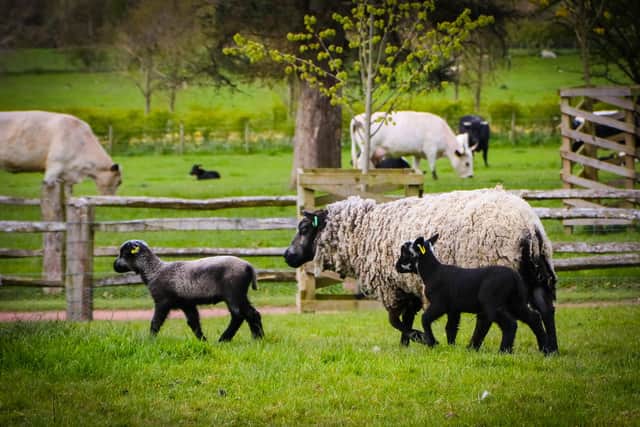
Commercial sheep farming, where the focus is on meat production, might remain the dominant form of sheep farming in Scotland, but our country’s fibre farming scene is rapidly expanding, shifting toward regenerative, traceable, and heritage textiles – all of which are demonstrated daily through our farming and education activity across Dumfries House estate.

Utilising the properties of wool is hugely beneficial to our aspiring fashion designers and manufacturers, who will graduate from The King’s Foundation’s programmes well-equipped to showcase in the fashion and textiles industry the breathability and longevity of the material.
However, you need only look to the ingenuity and skill of our traditional craft skills students in the workshop next door to the estate’s textile training centre to see that wool’s effortless insulation against Scotland’s cold climate, its aesthetic appeal and the fact it is fire-retardant means it can be applied effectively as wall and ceiling insulation in any kind of construction, restoration or building retrofit. Our cosy Shepherd’s Hut prototype, constructed by students learning all-important traditional craft skills, is an excellent testament to this usage – traditional and trailblazing in one breath.
Encouraging signs of progress and co-operation in the wool industry are appearing right on our doorstep, with specific breeds being sold directly to artisans and regional farmers collaborating on new product launches. A prime example of this is in the Galloway and Southern Ayrshire UNESCO Biosphere, where farmers and crafters have joined forces to convert local Scottish Blackface sheep wool into premium, sustainable knitwear. This circular economy project revitalises hill farming by transforming once-undervalued wool into high-end slow fashion.
To further support these efforts, British Wool introduced the Scottish Wool certification logo at the end of April. This initiative verifies items crafted from 100 per cent Scottish wool, allowing both brands and consumers to easily recognise authentic local materials. The scheme directly addresses the rising interest in traceability as more people move away from fast fashion in favour of sustainable interiors and apparel.

With market values for wool hitting a ten-year peak this month – an increase of 29 per cent since September 2024 – the demand for domestic natural textiles is undeniable. We encourage everyone, from farmers to designers, makers and consumers, to work together to sustain this momentum and secure the long-term future of British wool.
Jacqueline Farrell is executive director of The King’s Foundation, based at Dumfries House in East Ayrshire
The Great British Wool Revival Summit: From Clip to Consumer – Industry Day will take place tomorrow, Wednesday 20 May, on Dumfries House estate, near Cumnock.
Comments
Want to join the conversation? Please or to comment on this article.