
Work by 19th century forgers who faked documents by historical figures on show at National Library of Scotland

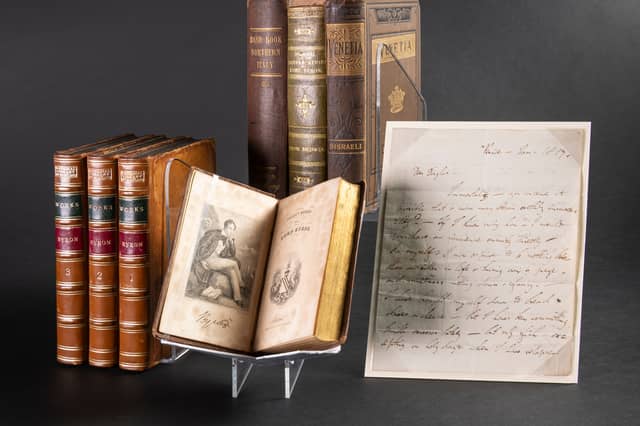

The letters are famous forgeries
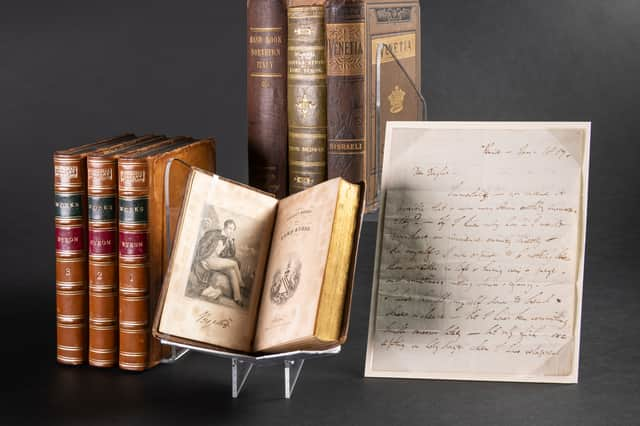
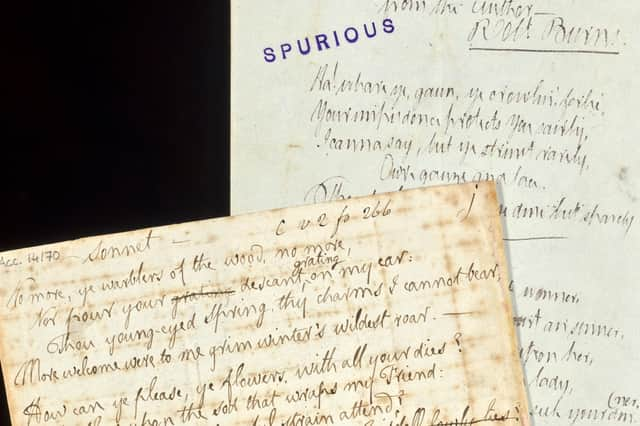
They are letters penned by 19th century forgers, who created fake documents in the hand of well-known names including Mary, Queen of Scots, Robert Burns and Sir Walter Scott.
Now, an exhibition at the National Library of Scotland is to display letters created by Edinburgh forger Alexander “Antique” Smith, who was jailed for a year for his crimes in the late 1880s and “Major Byron”, aka George Gordon de Luna Byron - a forger who claimed to be the son of Lord Byron and a Spanish aristocrat.
“Major Byron” also forged documents he claimed were created by other major Romantic poets, including Percy Bysshe Shelley and John Keats.
Finally, the display features “work” by the Sobieski Stuart brothers, who forged both a lineage and historical documents in the mid-19th century. They falsely claimed direct descent from Bonnie Prince Charlie and fabricated a manuscript that supposedly provided detailed descriptions of tartan patterns from clans across Scotland.
Fakes and Forgeries features a range of material from the Library’s archive collections which has historical interest because of, rather than in spite of, its inauthenticity - and challenges the public to be able to tell fakes from the real thing.
Smith’s forgeries were uncovered after the Edinburgh Evening Despatch newspaper - a predecessor of Scotsman sister paper The Edinburgh Evening News - published some of them amid questions over their authenticity and a reader , who had had dealings with Smith in his work as a law clerk, reportedly recognised his handwriting. He was tried and found guilty.
Manuscripts created by Smith, and others, still occasionally appear on the market where they can potentially catch out collectors. Pretending to be the poet’s son, Major Byron managed to gain access to materials written in Byron’s hand and created forgeries of such quality that they even duped Byron’s own publishing house, John Murray.
Chris Cassells, the National Library’s head of archives and manuscript collections, said: “It is the practice of many institutions to actively and knowingly collect forgeries – and we are no exception. As forgers such as Antique Smith and Major Byron have become so notorious, their ‘work’ has become collectible in its own right. And like it or not, they are part of our literary history.
“The circulation of forgeries remains an issue for collecting institutions such as the National Library of Scotland. As such our curators must stay vigilant when adding literary and historical documents to our collections: to separate the fakes from the real deal.”
Mr Cassells said he believes it is an “opportune time” for an exhibition on fakes.
He said: “A decade ago, ‘post-truth’ was the word of the year. Little were we to know that ten years on we would find ourselves in the era of ‘post-reality’. Deepfakes and generative AI have undermined our ability to tell fact from fake and we’re now grappling with a world where seeing is not necessarily believing. But, while the technology has changed, the history of fakes and forgeries goes back centuries.
“And many of the preoccupations that drive the creators of deepfakes today – obsessions with celebrity, power, money – are the same that drove the forgers of the 19th century.”
Fakes and Forgeries is on now at the National Library of Scotland, and runs until April next year. Entry is free.
Comments
Want to join the conversation? Please or to comment on this article.