
Tributes pour in to Scottish Opera’s ‘true man of theatre’
John Lawson Graham enjoyed a career with Scottish Opera that spanned five decades



Tributes have poured in for a "true man of the theatre" who enjoyed a five-decade career with Scottish Opera - from performing to staging.
John Lawson Graham leaves behind his wife, Patricia Hay, with whom he performed many roles on stage.
Mr Graham began working with the company as a performer shortly after its founding in the 1960s and later, as associate director, he worked on more than 20 Scottish Opera productions.
He first in 1963, when he auditioned for the chorus of Otello in front of Sir Alexander Gibson and Ainslie Millar - who had co-founded the national company a year earlier.
He later recalled the moment in Scottish Opera’s 50th Anniversary book: “The pianist didn’t turn up, so I had the great privilege of Alex playing for my audition aria. I was so nervous that when he put down the chord at the beginning, I didn’t recognise it. What a great start!”
Despite that, he was offered the role of the Herald, which he sang then and again in 1964 and 1967.
Throughout the mid-1960s, Mr Graham was a resident bass-baritone at Scottish Opera, appearing in La bohème, Madama Butterfly, Cinderella, and Peter Grimes, and as Guglielmo in Così fan tutte. In 1969, he sang the role of Priam, King of Troy, in The Trojans, one of the defining productions in Scottish Opera’s history.
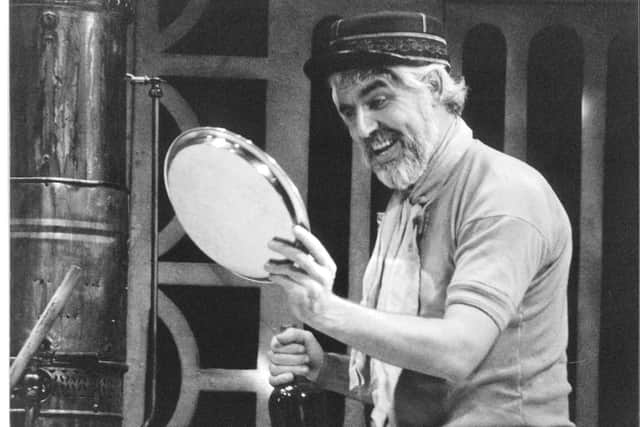
In the 1970s, he turned increasingly to character roles, where his gifts as an actor shone. He played Robin Starveling in five revivals of Britten's A Midsummer Night's Dream and took on the famous non-singing comic role of Frosch, the drunken jailer, in Die Fledermaus.
From 1976, he moved from performing to staging. As associate director he worked on more than 20 Scottish Opera productions, among them Die Meistersinger von Nürnberg, Macbeth, Jenůfa, Der Rosenkavalier, Pelléas et Mélisande, Lucia di Lammermoor, and Tosca; he helmed a tour of this last production to New Zealand. Later, he transitioned into the role of opera planning administrator, where he became a “living archive” for the company.
Through his own initiative, Mr Graham kept handwritten volumes recording every Scottish Opera performance from its early days, listing casts, conductors, and variations when understudy performers went on stage.
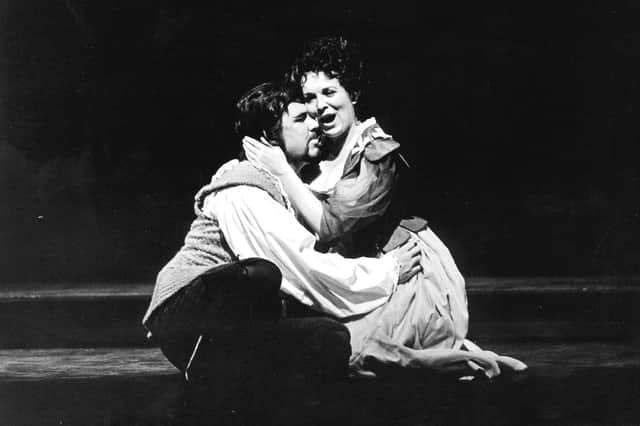
He first performed with his wife in 1968 when Ms Hay made her debut as Cherubino alongside Mr Graham’s Antonio in Le nozze di Figaro. The pair also performed as the engaged couple Masetto and Zerlina in Don Giovanni and as the archangels Raphael and Gabriel in Haydn’s The Creation in the early 1970s.
Their partnership later shifted seamlessly from fellow performers to director and leading lady when Mr Graham directed Ms Hay in the starring role of Rosina for Scottish Opera’s 1980 production of Il barbiere di Siviglia.
Scottish Opera general director Alex Reedijk, who also worked directly with Mr Graham during his time at New Zealand Opera, said: “John was a truly decent man: gentle, sophisticated and kind, with an avuncular twinkle. In his day he was the quiet linchpin of the company, holding everything together behind the scenes.
“We have lost another great figure in Scottish Opera’s history, and we will all miss him very much.”
Musicians took to social media to pay tribute to Mr Graham, who died on November 14.
Brian Bannatyne-Scott said: “He was a great mentor to me when I was a young company bass at Scottish Opera from 1982-1985, and a voice I heard often when growing up. I particularly remember Donner in the first Ring Cycle at the end of the 60s and early 70s.”
Keith Warner said: “A very special human being. A great positive force. Kindness abounded. Someone who really knew opera, told the truth, and knew how to tell the truth. I remember him well from way back then, and admire him greatly. This is hugely sad.”
A spokesperson for Scottish Opera said: “We are deeply saddened to share that John Lawson Graham died peacefully on Saturday 14 November, surrounded by his family. He was a much-loved figure in the history of Scottish Opera and a true man of the theatre in every sense.”
Comments
Want to join the conversation? Please or to comment on this article.