
Tilda Swinton and Stephen Unwin on reviving Man To Man at the Traverse in Edinburgh: 'it's been astonishing'
Almost 40 years after they first worked together on a production of Manfred Karge’s solo play Man To Man, Tilda Swinton and director Stephen Unwin are bringing an updated version back to Edinburgh’s Traverse Theatre. Interview by Joyce McMillan
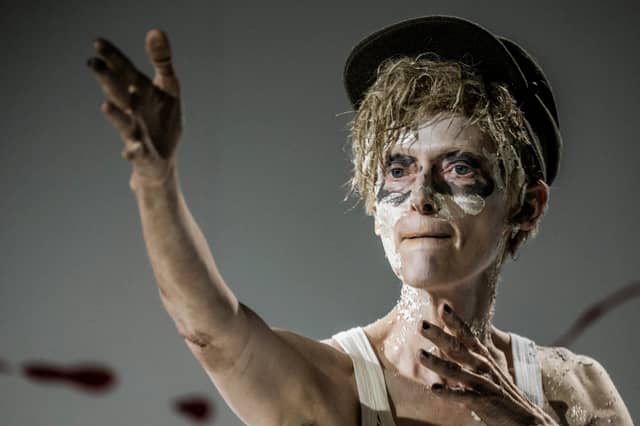


A strange thing happened to Tilda Swinton, when she sat down for the first time in almost 40 years to work on the script of Manfred Karge’s solo play Man To Man. In the years since the play’s English-language premiere at Edinburgh’s Traverse Theatre in 1987, Swinton had focussed almost entirely on her stellar film career, from her early work on the remarkable films of Derek Jarman, through a best supporting actress Oscar for 2007 film Michael Clayton, to popular roles as the White Witch in the Chronicles Of Narnia, and the Ancient One in Marvel’s Cinematic Universe; and since the late 1980s, she had taken on no stage roles at all.
Yet when she began to work on the text, she found that it was all still there in her memory, almost word-perfect, 39 years on. “It was a strange moment,” says Swinton, “particularly since I had been suffering from quite severe brain fog after a bout of Covid, and I was concerned about relearning it. Yet there it all was, within a couple of days.
“And right from the start, working on this new staging, it’s been both like slipping into something very familiar, as if I was still exactly the same person who first performed it at 26; and yet knowing at the same time that everything has changed – we’ve progressed, the world has progressed, history has progressed, yet the force-field around the play is the same, instantly recognisable.”
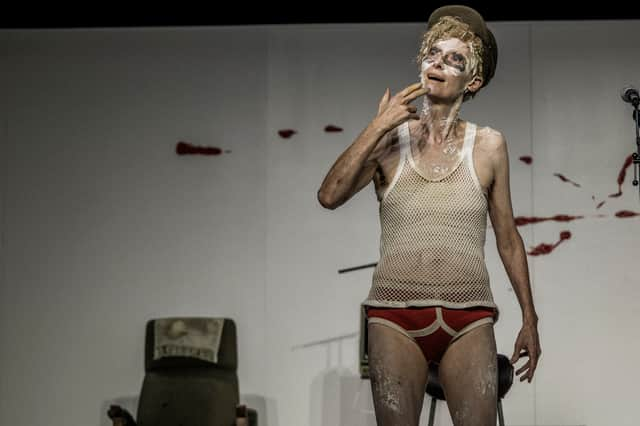
Manfred Karge’s play is certainly a remarkable text; and this current production has been co-produced by the Royal Court Theatre – which hosted the London transfer of the first Traverse production – as part of a 70th anniversary celebration of some of the outstanding shows seen there since 1956. Set in eastern Germany, and beginning around the 1930s, the play tells the story of a woman called Ella Gericke who is widowed at an early age, and who decides – out of economic necessity – to take on her husband Max’s name and identity, and his job as a crane driver.
Ella therefore lives through all the traumatic crises of mid-20th-century Germany in this strange transformed state; eager to keep her head down and attract no attention, yet unable always to escape the pressures of history and politics. The original 1987 version of the play – translated by Anthony Vivis – ended in the 1970s; but this year’s new version includes not only a new scene added by Karge in the early 1990s, to reflect the fall of the Berlin Wall, but also a brand new scene, which the 88 year-old Karge wrote earlier this year, reflecting on the rise of the far right in Germany, and the renewed threat of fascism across Europe.
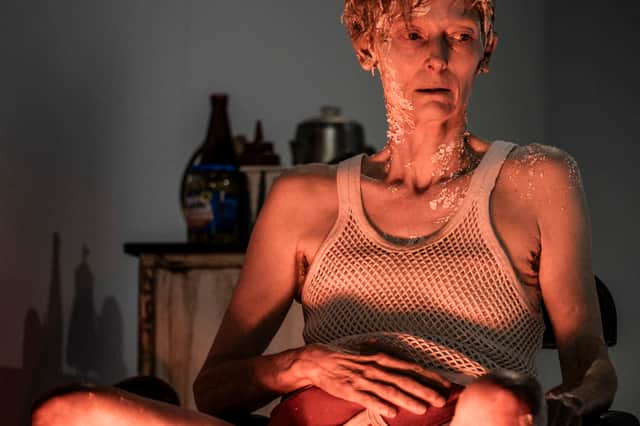
“It really is completely wonderful to be working with Tilda again, on this play, after all these years during which we went our separate ways,” says award-winning stage director and writer Stephen Unwin, who was Jenny Killick’s young associate director at the Traverse during the theatre’s memorable mid-1980s explosion of new work.
“Back then, we were just clever kids who I think didn’t yet fully understand some aspects of this play. Man To Man seemed a bit like a history play, looking back on a political trauma – Nazism, the horrors of the the holocaust and world war – that belonged to our parents’ generation, not ours; and we felt that the idea of Ella taking on her husband’s identity, pulling on his clothes, doing his job, was quite cool and empowering.
“Whereas now the threat of fascism and war in Europe and elsewhere is back with a vengeance, and as a working-class “man”, Ella seems like a representative of all the “left behind” people who now seem most likely, once again, to turn to far right parties. And of course the gender debate has been completely transformed; today, for Ella to become a man suggests entering the “manosphere”, adopting or at least tolerating the horrible attitudes that we associate with Andrew Tate and figures like that, and that are completely damaging to women.”
Swinton strongly agrees. “Yes – there’s this key scene where Ella has just begun her life as Max, and she has to go to the pub and drink beer and schnapps, and the other men force her to show that she’s “a German man” by eating pork. The overtones of that are horrible, and the way it’s linked to “being a man”; and I think that at 26, I didn’t fully appreciate the extent of Ella’s sacrifice, in giving up her own gender and sexuality.
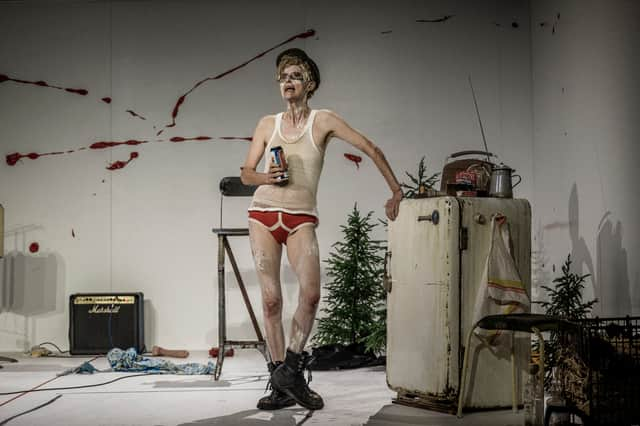
“She gives up her femaleness and beauty, she gives up her chance of having children, and finally – out of love for another person – she gives up her original passport, and with it her last chance of ever returning to that life. So I’ve become much more aware of the sadness of it; to me, now, it’s a proper tragedy.”
And since it opened at the Royal Court last month, Ella’s “tragedy” – delivered in full-on expressionist style by the whole creative team, including original designer Bunny Christie and lighting designer Ben Ormerod – has been attracting an extraordinary response. “Every night,” says Swinton, “I’m outside the theatre signing autographs for an hour or more, for what seems like an 80 per cent international crowd, mostly young. There are people from America, Russia, Ukraine, Brazil, all over Europe. They all say “this is our story”, and they all want to see the show staged in their country.
“I think it’s because the play so strongly addresses issue of identity, and what it is to find yourself in a state of resistance, even though all you ever wanted was to live your life in peace; it’s also profoundly about alienation, which isn’t only the province of workers who are struggling economically.
“So here I am, as if we had done that first production just two months ago, pulling on the same boots and the same Y-fronts, on almost the same set, with the same team; and yet doing a play that’s absolutely for today. It’s been an astonishing experience, so far; and now, bringing it back to the Traverse – for us that’s truly coming full circle, and bringing it home.”
Man To Man is at the Traverse Theatre, Edinburgh, from 29 October until 7 November, and in Berlin and New York in February 2027.
The Scotsman’s arts newsletter is now sent twice a week - subscribe today
Enjoying the Arts & Culture journalism on scotsman.com? Make it easier to find by selecting us as a preferred Google source
Want the latest Scottish headlines sent directly to your phone? Sign up to our new WhatsApp channel here
Comments
Want to join the conversation? Please or to comment on this article.