
Rankin: I owe my photography career to my Glaswegian ‘thrawn’
Rankin’s new book is a ‘career of contact sheets’


Photographer Rankin has claimed he owes his illustrious career to his Glaswegian heritage, which he says has helped him not to put celebrities “on a pedestal” and access the person behind the public image in his iconic portraits.
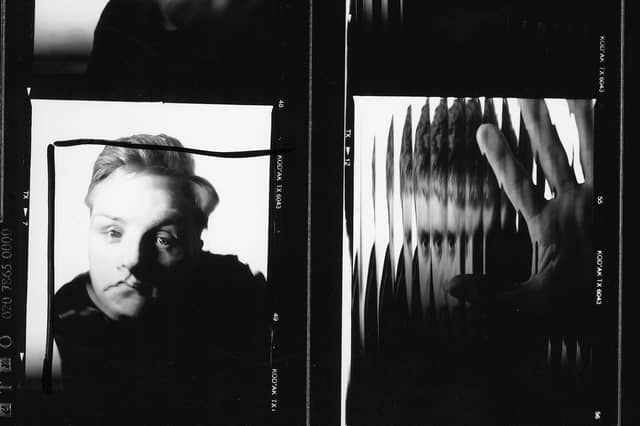
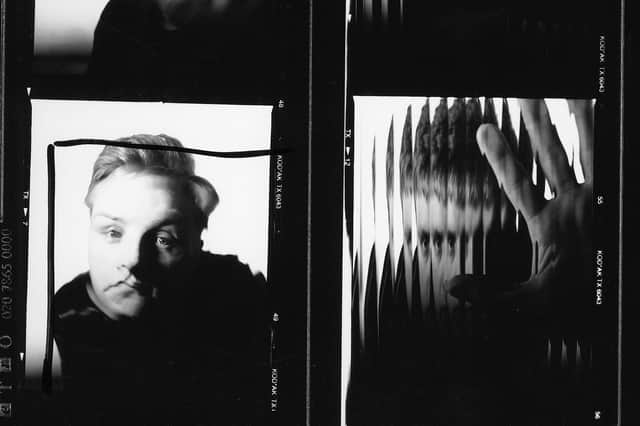
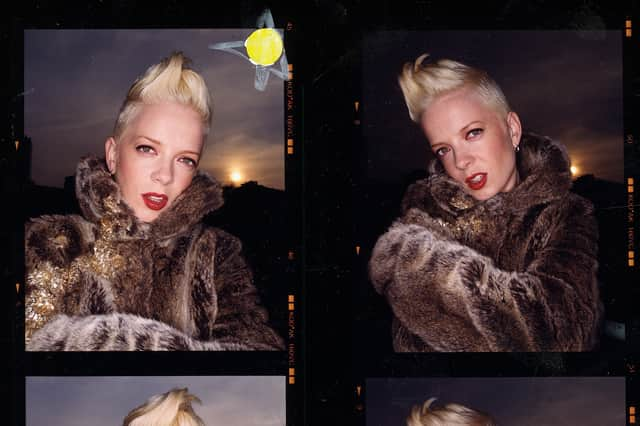
In his new book, Contact, Rankin has opened up his archive through the contact sheets from across his career shooting on film, including shoots with Scottish stars Sharleen Spiteri and Shirley Manson, as well as never previously seen images of David Bowie and Kate Moss, alongside Björk, George Michael, Madonna, Mick Jagger and Chloë Sevigny.
Rankin, who was born in Glasgow and lived in Scotland until he was ten, said his parents had taught him to “treat everyone the same”.
He said: “The thing about being born and growing up with Glaswegian parents is you literally have that ‘thrawn’ inbuilt in you, it’s in your DNA. One of the best things my parents did for me was they gave me this innate ability to not put people on pedestals, because if you grow up in Glasgow, you don't, no-one gets put on a pedestal. You treat everybody the same. It gave me that ability to have a human conversation and also see people for who they were as a human.
“That's why I think there are a lot of Scottish creatives and inventors, because we're almost brought up to be a little bit objectionable. We're natural contrarians. Also, I think because I'm from that background, I've always had this really inquisitive nature. That has really served me well.”
In 2001, Rankin was one of ten photographers selected to capture an image of Queen Elizabeth II as part of her Golden Jubilee celebrations.
He said: “One of the things that was really important to me is that I photographed the person, not the position. I wanted to respect the position, because I think that you earn respect when you do it for that long. But it was the person - the woman - who I was trying to photograph and I think that was why my picture of her was was so successful, because I photographed Elizabeth, not the Queen.”
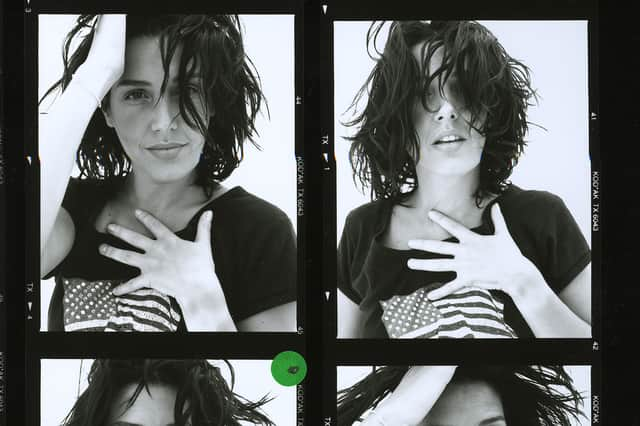
The book, which is described as “a career’s worth of contact sheets”, including “near misses, rejected frames, spontaneous gestures and sequences that reveal what happened immediately before and after the image we know”, charts the photographer’s career from his early days at college up to 2006, when he switched from film to digital photography.
It includes some self portraits he took as a 19-year old studying at the London College of Printing, as well as some pictures he captured as a documentary photographer early in his career.
“I really didn't have any idea I was going to pick up a camera until I got to 19 and I had no formal training in art,” he said. “I just got lucky that I was in halls of residence with a load of art students and they were encouraging me to do something creative. I think that that approach meant that I came from a very unique place.
“Some pictures at the back of me that are that are at least 40 years old. It's me, posing, when I was at college. It’s quite funny.”
Rankin said he had been inspired to create the book after bringing his archive out of storage.
“I decided to bring it all back into my studio because I felt like I wasn't having a really active relationship with it - it was like it's been in prison,” he said. “I have been thinking about shooting on film and how much I loved that. I do think digital is amazing and I love shooting on digital. It's been extraordinary for my practice because it does exactly what I need it to, which is it allows the person I'm photographing to see what I'm doing.”
Contact, however, showcases the polar opposite, with many of the images having never been seen before after being rejected by the subjects at the time.
Rankin said: “Using machine learning and generative artificial intelligence is so soul destroying. Contact is like an antidote - really a kind of medicine for for me dealing with all of that stuff - because it's really taken the industry by storm.”
A recent tongue-in-cheek AI-generated magazine and art project by Rankin, called Faik, which he showcased in a magazine and a London exhibition, explored how artificial intelligence impacts photography, authorship, and creative industries.
He said: “Seeing all this AI slop happening and people generating images that basically are not true, I thought an optimistic thing to do would be to show how [on film] two or three people were making things in the room - and the contact sheet really does that. It allows you to really feel the contact that person is having with the other person or the people that are working together. You can almost hear the conversation.”
The book also captures a series of iconic photo shoots at the pinnacle of his career, a period he describes as a “golden age of film”.
He said: “It was a great period and in a way, it was the last golden age of film. It was a very optimistic time. Most of us all had had relationships with each other - I knew fashion designers, I knew artists, I knew painters, I knew musicians and it was kind of a melting pot in the UK - not just in London, but it was happening in Manchester, Glasgow and Edinburgh. It was really interesting how many cross pollinations happened.
“It was a very creative time, that period up till 2006. In fact, I think really what happened was digital and the digitisation of media came along and the monetisation of that killed that kind of creativity. I think we're just about to hit another kind of period of creativity because people are rejecting a lot of this stuff, which is really really good.
He said he now plans to shoot portraits on early “wet plate” technology cameras from the 1870s - taking just one picture per person in a project he is calling One Shot.
“I want to go back to the 1870s and 1880s and shoot on wet plate because I'm now excited to find out something new about photography, discover something that I haven't actually learned how to do. So my next project is going to be on really, really old old kit.
“I'm quite excited to to go back and and try and learn this new thing that's literally centuries old,” he said. “I want to do a portrait session, it's just one picture per person and that's my that's my shot today. And if it's a f**k up, it's a f**k up.”
Comments
Want to join the conversation? Please or to comment on this article.