
No new sponsor to replace Johnnie Walker as Fringe bosses draw up plans to demand tourist tax funds

The Fringe Society admitted it has not found a replacement sponsor for Johnnie Walker
No new sponsor has been found for the Fringe to replace Johnnie Walker, Fringe chiefs have admitted, as they draw up plans to demand tourist levy funds from Edinburgh Council.
The Edinburgh Festival Fringe Society said it could administer a funding pot made up predominantly from the city’s visitor levy to help festival operators, under proposals being drawn up by the organisation.
The society said it was compiling a comprehensive document which it will present to the City of Edinburgh Council by the end of the year, laying out the issues, problems and funding gaps identified by venue operators and other Fringe stakeholders.
Among the recommendations will be the creation of a fund potentially administered by the Fringe, akin to the Scottish Government's £1.58m Platforms for Creative Excellence (PLACE) Resilience Fund, set up in 2022 to support the return of the festival in the wake of the pandemic. It would include at least £1.1m from the visitor levy, as well as additional money from sources including public funding.
This comes as the Fringe admitted it had not yet found a replacement corporate sponsor for whisky brand Johnnie Walker, which ended its partnership last month, but insisted it would plug the gap with a string of smaller corporate tie ups yet to be announced.
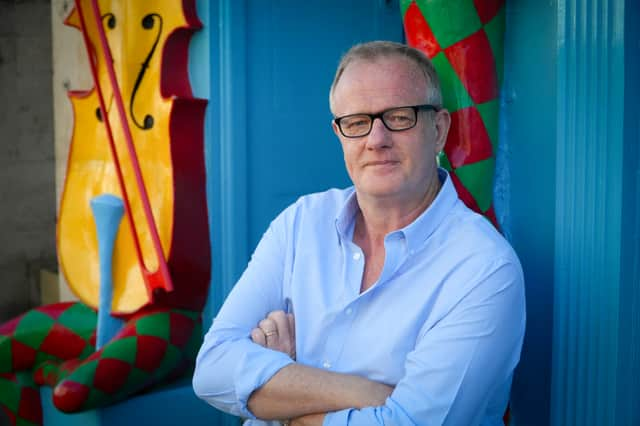
Chief executive Tony Lankester and deputy chief executive Lindsey Jackson spoke to The Scotsman as the Fringe launched its official programme for this August. This year’s programme features work from 3,352 shows across 265 venues from 58 countries , slightly up on last year’s figure of 3,317 shows.
The pair said the funding pot could be made up of “at least” £1.1 million from the Visitor Levy tax, which is due to be introduced next year, as well as public funding and money from other sources.
Ms Jackson said a “collective Fringe proposition” document is being drawn up following consultation with festival stakeholders, ahead of the council forming its Transient Visitor Levy (TVL) forum, with an expectation that it could begin to create funds toward the end of the year. The Society is running a series of workshops with venues to understand “where the pinch points are” and what challenges they are facing.
“From a Fringe Society's point of view, investment from the visitor levy needs to go to the festival, not to the Fringe Society: it’s about what’s happening out there, not what’s happening in here,” said Ms Jackson.
“Also [we’re looking at] where the council needs to take responsibility and use its investment, or reduce costs or improve services, parks, access to clean drinking water, benches, toilets. Those things will all both reduce cost and reduce pressure on the whole environment generally, but will also make it a better experience in August.
“Our intention is, by the end of the year, with the venues, to have a collective fringe proposition and business case that is inarguable in its return on investment, its value for money. For a long time, the council and the city has said, ‘We understand the Fringe’s collective problems, but there's no money to support, we love to help, but we can’t.’
“Now, this is our opportunity, so we will be right there on day one, knocking on the door with a well-evidenced and documented business case that says: ‘This is why this is a long term and sustained return on investment. We all know that the Fringe contributes hundreds of millions of pounds to this city and many businesses, including accommodation providers. It feels like this is the right point at which the city finally has the money to put into supporting and underwriting the infrastructure. We’re not expecting there to be miracles overnight, but we are expecting an early endorsement of the Fringe’s need of value for money in that space.”
Mr Lankester has pointed to a figure of £1.1m, which would be generated from the levy by Fringe performers alone, which he sees as a “minimum” which should be handed back by the council. He said he had met “informally” with venues to discuss synergies and ways the Fringe Society could support helping them to cut costs.
The pot could potentially give venues the chance to borrow funds which would allow them to pay out for infrastructure and other outgoings further in advance, ultimately making cost savings.
Mr Lankester believes the business landscape has changed dramatically since the pandemic.
“The world we're in now is vastly different from a lot of us, five years ago or 10 years ago or two years ago,” he said. “No one can operate now post-Covid in the same way they were operating pre-Covid. It's completely upended every single business model of every single industry on earth. Add to that, the broader economic environment, the introduction of artificial intelligence. All of that, we’re operating in different place now.
“And I think it's incumbent upon every business operating in the landscape to use it as an opportunity to re interrogate all their business and just ask some fundamental questions: In this context, should we be scaling up? Should we be scaling down? Should we be doing more? Should we be doing less? Should we be offering different deals to artists?
“It's not just a simplistic argument about what does the Fringe Society charge for X, or what is the council chance for Y? Those are part of it, but they're broader questions as well. We want to create the space where areas of collaboration can be surfaced. I think it's also worth partnering with the venues - and this is something the Fringe Society can do more of - to help them interrogate their own business models.”
Mr Lankester, who started in the role less then two months ago, has previously spoken about the importance of increased corporate ties in the arts, not least by the Fringe Society. However, The Scotsman revealed in April that a six year deal with whisky brand Johnny Walker had come to an end.
He admits there “probably would have been” conversations with Johnnie Walker owner Diageo with an aim to renewing the sponsorship contract. The Society is targeting financial services, retail and beverage companies for potential deals.
However, he believes the year-on-year income from sponsorships will not be “vastly different” to last year, due to a string of smaller deals.
He said: “There are ongoing conversations, because medium term strategy for me is just to broaden that sponsorship pool so that we go from having five or six sponsors, to 10 or 15 sponsors with dovetail timing, so that they don't all start on the same day in the same year, so that we can even out some of the revenues.
“These things are elongated: there's not going to be a like-for-like replacement for the Johnnie Walker investment for 2025, but there will be other sponsors in the mix that maybe weren't there before.”
He added: “This predates me, but if there were conversations, and if Johnnie Walker decided, for strategic or financial reasons, their money was better spent elsewhere, as the sponsee, as the rights holder, I think we just have to say, ‘that's cool. We get that. Let’s part friends, because maybe we'll walk in the same direction at some point in the future’.”
Comments
Want to join the conversation? Please or to comment on this article.