
The St Magnus Festival at 50: 'An event that's alive to its surroundings'
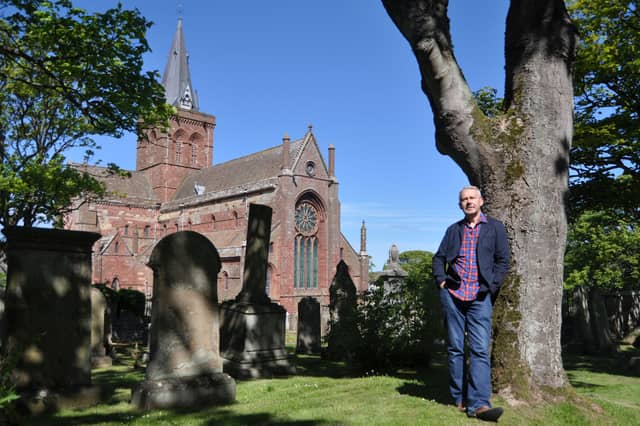

Over five decades, Orkney’s St Magnus Festival has evolved by remaining responsive to place, to artists, and to audience, writes its artistic director Alasdair Nicolson
Fifty years ago, the idea for a festival in Orkney did not begin with a masterplan or a funding strategy, but with a conversation - or more likely, a series of them. Around kitchen tables and in islanders’ living rooms, a small, unlikely coalition began to take shape: local residents and newcomers, among them the young, uncompromising composer Peter Maxwell Davies, newly arrived in the islands, and the Orcadian poet George Mackay Brown.
Between them, they imagined something both improbable and ambitious: a festival of international scope rooted in one of the most geographically remote parts of Scotland. It was not universally welcomed. Support had to be built, arguments made, scepticism addressed. But slowly, through persistence and collective effort, the idea took hold.
At the helm for 16 years now, I can clearly say that half a century later, that origin story and the tenacity needed to nurture this festival still matters - not just as history, but as a way of understanding what the St Magnus International Festival remains today.
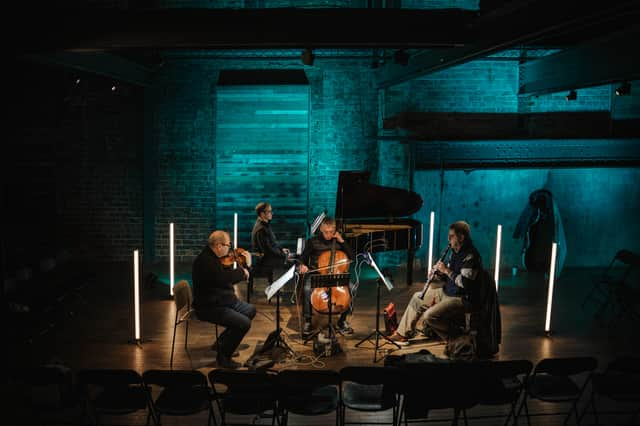
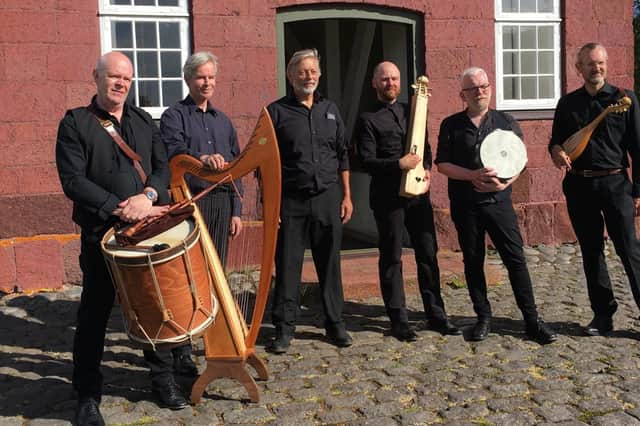
Returning this June for its 50th celebrations, the festival brings together an expansive programme: a newly formed Festival Orchestra opening with music by Maxwell Davies alongside works by Mozart and Sally Beamish; visiting artists including the Marian Consort, the Hebrides Ensemble and pianist Pavel Kolesnikov with Samson Tsoy; a focus on Iceland brings the UK premiere of a new opera, Mörsugur, alongside a rare appearance from Voces Thules, the masters of ancient Icelandic music and stories, singing music that originated in Kirkwall’s 12th century St Magnus Cathedral; and a wide-ranging mix of new commissions, talks and events. Culture here is not imported fully-formed, but grown through a relationship between artists and place.
That relationship is at the heart of what makes composer-led festivals distinctive. From the outset, St Magnus was shaped not by an institution or a building, but by a composer’s sensibility - Maxwell Davies’s belief that music should respond to its environment, and that new work should sit alongside old without hierarchy, that renowned performers should perform on the same stages as members of the community. As a fellow composer, as well as collaborator and performer, I can confirm that that sensibility is still lived day in day out and gives the festival its authenticity and heart. This is a festival that is alive to its surroundings: one that balances the intimacy of chamber performance with the drama of large-scale works, and places the act of making something new and discovering new talent at its centre.
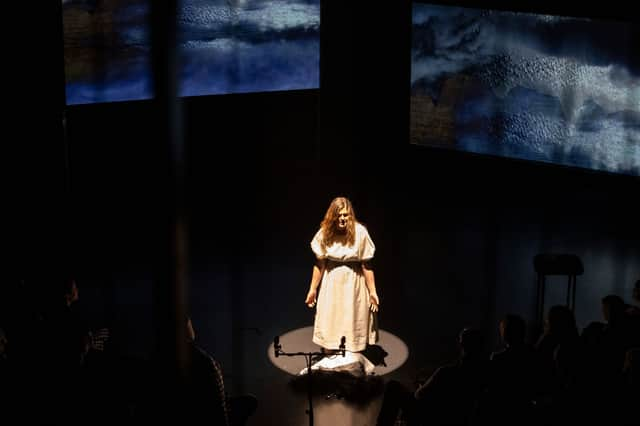
Over its 50 years, this approach has created a particular kind of legacy. Composer-led festivals tend to be agile and outward-looking, able to spot emerging talent early and to take risks that more fixed institutions might avoid. St Magnus has long been known for exactly that instinct - offering early platforms to creatives and performers who would go on to international recognition, while maintaining a strong commitment to commissioning new work.
That spirit also shapes the way the festival exists physically within the islands. From its earliest years, St Magnus has worked without a single, permanent home, instead inhabiting a shifting constellation of spaces, from the medieval grandeur of St Magnus Cathedral to village halls, distilleries, Neolithic sites and former wartime buildings.
This year continues that tradition. Among the venues is Kirkwall’s Auction Mart, temporarily adapted for performance – a continuation of a longstanding pattern, and necessity, of transforming everyday spaces into places of new encounters, and a reminder that the festival has always been shaped by what is available, and by a creative approach to potential.
Within those spaces, this year’s theme, “Air”, feels particularly resonant. Framed through ideas of wind, breath, sound and movement, it reflects something elemental about Orkney life.
It is a theme that moves fluidly across the programme: present in music and performances that respond to landscape and atmosphere, and in the festival’s closing parade, Up in the Air, which carries that sense of motion out into Kirkwall’s streets with newly built kites and new music for the Pipe Band by Steven Blake.
For all that expansiveness, however, we remain closely tied to the textures of everyday life. Composers as festival directors are known for being hands-on and I am no different. It is my huge pleasure to be behind one of the new works this year, which takes as its subject Jasper, the Kirkwall cat - a familiar figure who wandered the high street, slipping in and out of shops and offices, regularly a presence in the festival office stting on my desk, quietly embedding himself in local routines before his death in 2023.
Reimagining his life and his lore as a large-scale work for children and professional musicians, I’ve had the pleasure of creatively reconnecting our community to his story, being attentive to small details, shared experiences, and bringing together a celebration in keeping with its character. Moments like this collapsing the distance between the everyday and the artistic - between the life of the islands and the work on stage - are in the DNA of the St Magnus Festival.
St Magnus demonstrates that longevity need not mean rigidity. Over five decades, it has evolved by remaining responsive to place, to artists, and to audience. New ensembles are created; new work continues to be commissioned; spaces are continually reimagined.
In that sense, the 50th festival feels less like a culmination than a reaffirmation. For ten days in June, Orkney becomes once again a meeting point - where music, story and community intersect across a landscape that is both constant and changing. Then the festival recedes. The spaces return to their everyday uses, the visitors leave, and the islands settle back into their own rhythms.
But something endures. Not as a monument, but as a way of working and a way of thinking about culture as something that can emerge anywhere, shaped by the people who are willing to imagine it into being. Half a century on from those first conversations, that idea still holds. And in Orkney, it still feels entirely natural.
The St Magnus International Festival runs from 19 to 28 June across Orkney mainland and islands, with an exhibition in Kirkwall bringing together memories and memorabilia from the last 50 years. For details, visit www.stmagnusfestival.com
The Scotsman’s arts newsletter is now sent twice a week - subscribe today
Want the latest Scottish headlines sent directly to your phone? Sign up to our new WhatsApp channel here
Comments
Want to join the conversation? Please or to comment on this article.