
Scottish Opera's 'striking' new perspective on Madama Butterfly
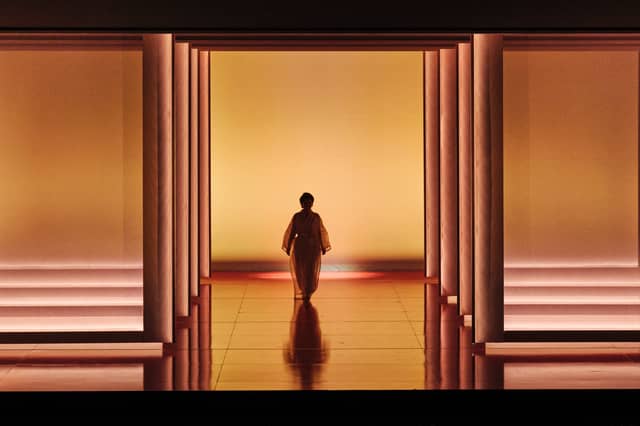

Daisy Evans’s production of Puccini’s classic asks some fundamental questions about the opera, and finds some surprising answers, writes David Kettle
Director Daisy Evans clearly adores Puccini’s Madama Butterfly. She’s even gone as far as calling it one of the most perfect operas ever written. “It’s just so simple and so direct,” she enthuses. “And so devastating. I mean, it’s everything you could want from an evening of opera.”
There’s no denying that it’s one of the most deeply beloved operas in the repertoire. And with its storyline of a Japanese geisha, an American naval officer, their infant son, betrayal, tragedy and separation from her child, it seldom fails to move audiences. It has a particular resonance in Scotland, too, as the very first opera staged by the newly formed Scottish Opera in June 1962.
Evans returns to Puccini’s tragic heroine at Scottish Opera in May and June next year, in a new co-production with Irish National Opera that’s already been lauded across the Irish Sea. But if you’re expecting a by-the-book approach, you might want to think again. Evans’s production asks some fundamental questions about the opera, and finds some surprising answers, while never shying away from the work’s raw emotional power.
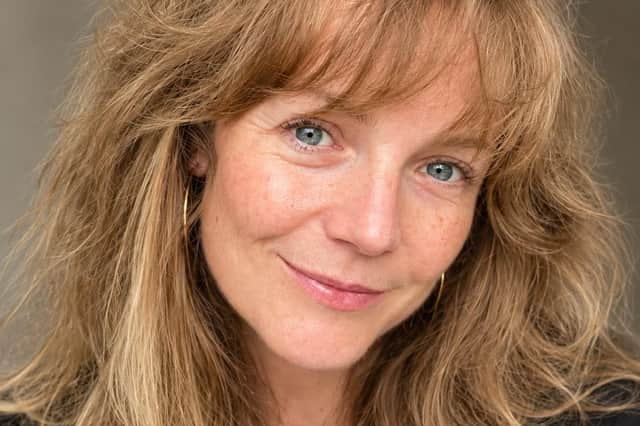
The first of those questions is a big one, about the opera’s central character, Butterfly herself (or Cio-Cio-San), who’s often portrayed as young, vulnerable, naive and cruelly exploited. “I think she’s a much stronger character than people give her credit for,” Evans argues. “She’s passionate, and she’s outspoken – right from the minute she steps on stage, she’s putting her demands out there. I really admire her.”
That’s perhaps an eyebrow-raising claim about a character who seems to devote herself to her love for the US officer Pinkerton, with a tragic outcome we can all probably see coming a mile off. But for Evans, Butterfly’s apparent devotion has a particular purpose. “She’s very open about saying she’s come from a disgraced family. She just wants to get out, and she sees Pinkerton as her ticket out, ideally with her child. When it becomes apparent that she can only get her child out – well, that’s what she does.”
It’s a striking perspective, but also one that isn’t without justification within the terms of the opera itself. And linked to a reappraisal of Butterfly is a similar rethink of one of the opera’s most elusive characters: Pinkerton’s wife Kate. “She’s usually seen as an evil bitch who steals Butterfly’s three-year-old son. But I thought: maybe she’s trapped in a terrible marriage to a man who’s pushing her to produce children, when she can’t. So what might she think about bringing up this boy from Japan? And when he’s older, how does she go about telling him the truth of what happened?”
Evans’s production asks all of these questions in an elaborate flashback, which begins at Pinkerton’s funeral, and which is seen through the eyes of Butterfly’s son Sorrow, now a grown man. “I’ve imagined that before Pinkerton and Kate left Butterfly’s house, Kate grabbed what she could for the boy, put it in a box, and never opened it. Now that Pinkerton is dead, Kate can talk to the son about his true heritage. And Sorrow discovers the history of his mother through these paltry objects in an old suitcase.”
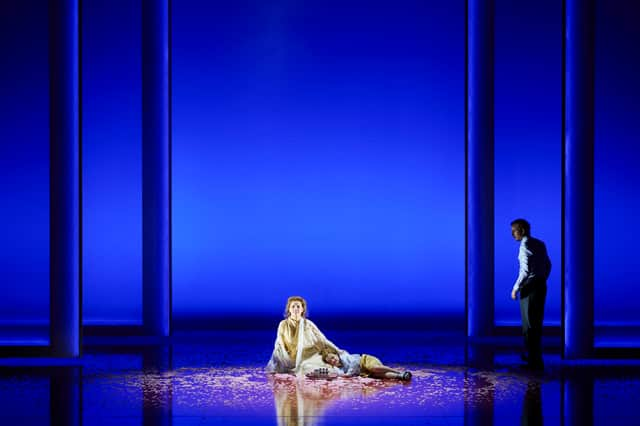
It’s a radical approach to the opera, one that – if anything – serves to strengthen the work’s emotional gut-punch, but one that also poses some perhaps uncomfortable questions about power and exploitation in Butterfly and Pinkerton’s relationship. It also allows Evans to deal deftly with questions of representation within the opera itself. For all that it’s a work that hinges on a Western man's exploitation of a Japanese woman, against a backdrop of imperial power and cultural inequality, it’s inescapable that the opera was created by three Italians – composer Puccini and librettists Luigi Illica and Giuseppe Giacosa – who were looking far across the ocean to Japan, with all the assumptions that that involves.
“Japan is so inherent to the plot and how it unfolds,” explains Evans, “that you just can’t take the opera away from the country. But the story is so universal and so profound that it makes it absolutely worth telling. In a lot of productions, you feel like Butterfly is just thrown under the wheels of imperialism. We wanted to find a way to reposition that, and I feel like we achieved it.”
There’s a similarly nuanced nod to Japan in designer Kat Heath’s use of shifting, strikingly beautiful screens as the main stage device. “The set moves and warps and changes with the emotion as much as it does by location,” explains Evans. “It’s almost another character in the opera: when the world feels small, it becomes small, and vice versa. We can literally squish Butterfly under the weight of her emotion. But I’m very passionate about Madama Butterfly’s music, and the stage changes all come from there: the screens respond to the music as a singer would respond to a conductor. It’s magical.”
With an entirely new cast for the Scottish performances – including Scottish Opera regular Sunyoung Seo in the title role – Evans will be revisiting the production almost from scratch. “It’s still going to be the same staging, but it’ll also be very responsive to the different singers. I’m excited to direct it again – there’s so much to find and to be said with Madama Butterfly. It’s such a beautiful piece.”
And one, Evans admits, with quite a personal resonance. “I think I’m going to find it quite hard because this time round I have a little boy who’ll be three. That’s going to have a big bearing on how I understand Butterfly and her world. But I think it’s testament to Puccini that he understands these issues in the opera, and makes them so universally relevant, and so appealing.”
Madama Buterfly is at the Theatre Royal, Glasgow, on 1, 11, 15, 19 & 22 May 2027; the Festival Theatre, Edinburgh on 27 and 30 May and 1, 3, 4 & 5 June 2027; Eden Court, Inverness, 10 & 12 June; and His Majesty’s Theatre, Aberdeen, 17 and 19 June, see www.scottishopera.org.uk This feature was produced in association with Scottish Opera.
The Scotsman’s arts newsletter is now sent twice a week - subscribe today
Enjoying the Arts & Culture journalism on scotsman.com? Make it easier to find by selecting us as a preferred Google source
Want the latest Scottish headlines sent directly to your phone? Sign up to our new WhatsApp channel here
Comments
Want to join the conversation? Please or to comment on this article.