
Songs of a Lost World by The Cure review: 'grim but cathartic'
Living up to its “doom and gloom” billing, the new album from The Cure is grim but also cathartic, writes Fiona Shepherd
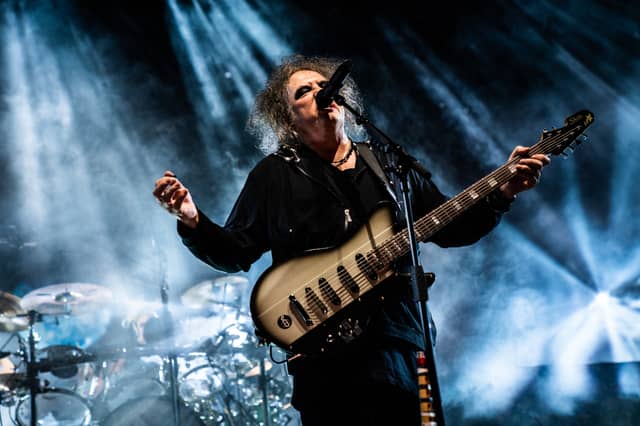

The Cure: Songs of a Lost World (Fiction/Polydor) ★★★
Willie Nelson: Last Leaf on the Tree (Legacy Recordings) ★★★
Amy Duncan: Wake (The LNFG) ★★★★
The Cure’s 14th album, Songs of a Lost World, has been so long coming that it arrives almost as a hallucination, with frontman Robert Smith telling 6Music that the album has been “drifting in and out of my life for a long time”. The band recorded three albums’ worth of material before the pandemic, then road-tested some of the songs on tour, parking the bleaker ones to create a collection which still matches its initial description as “doom and gloom”.
Alone opens the album with a swell of shoegaze sound (they did invent the genre) plus grungey notes on guitar, limpid piano and wilting strings. The pace is slow and inexorable and Smith’s instantly recognisable voice, reedy and desolate, does not feature until halfway into its seven-minute running time, paraphrasing Ernest Dowson’s poem Dregs with the line “this is the end of every song we sing”.
Smith waits in the wings repeatedly through the album, taking his time before revisiting with regret his promise to attend a deathbed vigil on the pretty orchestral pop of And Nothing Is Forever or pitching himself into the stormy hellscape of Warsong with the soothsaying “all we will ever know is bitterness for we were born to war”.
The grim but cathartic I Can Never Say Goodbye mourns for Smith’s older brother Richard, with sombre piano and the sound of rainfall but the commercial gothic rocker All I Ever Am offers a chink of light with its propulsive drumming and fuzz guitar.
Drone: Nodrone, inspired by a drone hovering above Smith’s garden, is a palpable tune, reminiscent of the clatter of Never Enough with added industrial flint and wah-wah wigout. He is out in his garden again on the ten-minute Endsong, indulging in forlorn nostalgia for childhood stargazing with his father. “I’m outside in the dark wondering how I got so old” he muses at the conclusion of what is likely to be The Cure’s swansong. Smith is prone to shifting those goalposts, however, but his latest estimate is that The Cure will bow out on his 70th birthday in 2029.

No retirement plans for 91-year-old Willie Nelson, who releases his 76th album in the company of his youngest son Micah Nelson, with Nelson Jr and compadres creating an intriguing, minimalist musical backdrop on to which Nelson projects his marvellous, weathered, conversational tones.
The Last Leaf on the Tree takes its name from the opening Tom Waits cover, with Nelson acknowledging his position as the last country outlaw standing: “the autumn took the rest but they won’t take me”. He looks to proxy peers, delivering an alternative bluegrass take on Neil Young’s Are You Ready For the Country? and weaving a gentle yarn from Keith Richards’ Robbed Blind, with Doors drummer John Densmore on percussion.
His versions of Beck’s Lost Cause and The Flaming Lips’ Do You Realise?? are fair enough but the moody blues of Nina Simone’s Come Ye and Tex Mex-infused coffeehouse troubadour take on Sunny War’s If It Wasn’t Broken strike deeper, while a new original, Color of Sound, dovetails with a revival of his prescient and plangent 1962 track The Ghost.

Singer and multi-instrumentalist Amy Duncan first recorded Wake in 2003, its songs inspired by the suicide of lyricist David Paton’s twin brother Iain, but it only now receives a belated release on the 30th anniversary of Iain’s death. It is a raw and gentle work, with Duncan’s pure voice mastering the Joni Mitchell-like melodic swoops on Thoughts Of You and A Somehow Finer Feeling and the siren-like Though I Take Your Pill, while My Death Is In My Sight Today is lifted by an Italian piano house break.
CLASSICAL
Gabriel Jackson: The Christmas Story (Delphian) ★★★
In the wake of Gabriel Jackson’s The Passion of our Lord Jesus Christ and its award-winning recording by the Choir of Merton College, Oxford, comes The Christmas Story. Recorded by the same chapel choir, its Girl Choristers and the Oxford Contemporary Sinfonia under Benjamin Nicholas, the narrative - to texts sourced by college chaplain the Revd Dr Simon Jones - extends from Advent to Candlemas, which Jackson addresses with subliminal reference to Heinrich Schütz’s eponymous 17th century precursor. The three-trombones sonority offers the most literal connection. Jackson’s distinctive voice asserts its own authority, the choral writing is enriched by close-knit harmonic density and exotically-charged instrumentations include a rather saucy saxophone. The score shines magnificently in various parts - a truly seraphic O Magnum Mysterium, for instance - but there’s a slight sense of sameness about this music that diminishes its sustained fascination. Ken Walton
JAZZ
Avishai Cohen: Brightlight (naïve/believe records)
Prolifically creative bassist and composer Avishai Cohen, in trio with pianist Guy Moskovich and drummer Roni Kaspi, are joined by guests including saxophonist Yuval Drabkin and guitarist Yosi Ben Tovim in these often lyrical pieces. The opener, Courage, sees the core trio build up a head of steam over the riff laid down by Cohen and Moskovich, thanks particularly to Kaspi’s industrious drum work, while the richly toned Hope features notable contributions from Tovim and flautist Ilan Salem. Saxophonist and drummer both have Cohen compositions dedicated to them – Drabkin gliding along over gently rippling piano, while Roni’s Swing puts the drummer through her paces with gusto. Three covers include the bassist singing over a fiercely up-tempo version of Summertime, a fond, leisurely treatment of Jimmy Van Heusen’s Polka Dots and Moonbeams and – rather less expectedly – an elegantly flowing Liebestraum No. 3 that just might have intrigued Liszt. Jim Gilchrist
Comments
Want to join the conversation? Please or to comment on this article.