
Album reviews: Peter Gabriel | Post Coal Prom Queen | Dara Dubh
Peter Gabriel’s epic new release has some timely things to say about AI and humanity’s relationship with the natural world, writes Fiona Shepherd
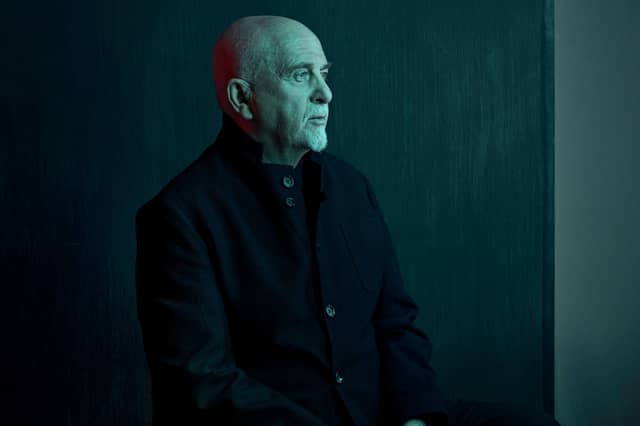

Peter Gabriel: o\i (Real World) ★★★
Post Coal Prom Queen: Music for Nuclear Semiotics/Ceòl airson Samhlaidhean Niùclasach (self-released) ★★★★
Dara Dubh: Go Like Crazy Big Moon (self-released) ★★★★
Michael Cassidy: The Nurse’s Son (Vertical Records) ★★★★
Be prepared to invest time in Peter Gabriel’s new album which, like companion predecessor i/o, comes in two mixes - Bright-Side and Dark-Side, by producers Mark “Spike” Stent and Tchad Blake respectively - with each clocking in at over 80 minutes. This latest whopper features new songs alongside unreleased tracks and outtakes from his three previous albums, spanning the last 30 years.
For Gabriel, it’s about maturation and timing, with a track released every month of the past year on the new moon. Despite the long gestation of some songs - A Hard Lesson dates from the early 90s - he remains timely in his rumination on AI and conversely humanity’s relationship with the natural world on the thoughtful likes of What Lies Ahead.
Been Undone, released on the wolf moon, is a typically philosophical pop song, with brooding organ and heavier electronics in the Dark-Side mix, while Put the Bucket Down is Talking Heads-like in its fidgety Afrofunk rhythm and gnomic lyrics (“I’m becoming a building with a door for a mouth”). Elsewhere, he offers pop soul encouragement on Till Your Mind Is Shining, wordy but calm resistance on Won’t Stand Down and soft support on Yes, It Will Go, with its mournful brass and soothing backing vocals.
As is to be expected, the entire undertaking is immaculately produced. The Dark-Side mix of Who Are We Talking To, in particular, recalls the slick pop funk of Sledgehammer and there are echoes of two equally fastidious studio artists as the album progresses. One By One, a smooth ride with a lot of scenery, recalls the husky nobility of The Blue Nile, while I Belong to the Sky and Sacrament would not be out of place in his trusted collaborator Kate Bush’s later catalogue.
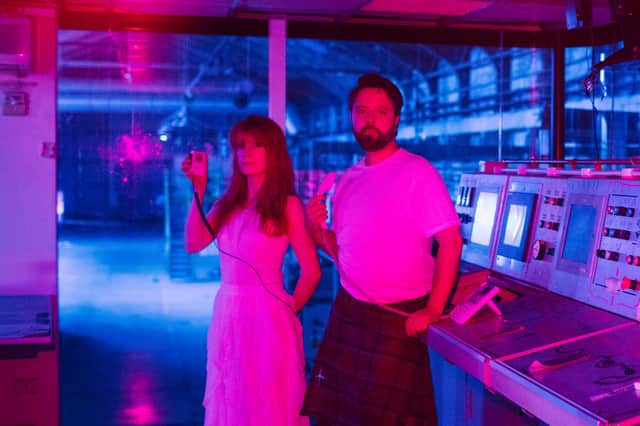
Having previously delivered Music for Megastructures, Hypercapitalists and First Contact, Lily Higham and Gordon Johnstone, aka brainiac Edinburgh adventurers Post Coal Prom Queen, continue their conceptual, collaborative odyssey with fourth album Music For Nuclear Semiotics, calling occupants of the distant future through the prism of Scottish folklore. Their reasoning is that if Gaelic can survive centuries of threats to its survival then surely it is the language for this exploratory venture.
Hence, Josie Duncan’s fragrant tones feature over epic electro pop track Water In My Hands, Mull’s Alasdair Whyte guests on the dreamy synth mantra Essence, Evie Waddell’s staccato vocals are accompanied by jazz drum rolls and a rapturous cascading backdrop on Where Are We? and Colin Stone from Gaelic metal outfit Gun Ghaol brings his Laibach-like intoning to Fairy Witches.
Meanwhile, Belfast-born, Edinburgh-based singer and harpist Dara Dubh is a one-woman Celtic crossover with creativity to spare, using her instrument in unconventional ways to produce a diverse debut album, largely inspired by tales of women in real life and mythology, which touches on folk, pop, rap, jazz, even bossa nova. Her silky vocals build to a strutting declamation on A Pirate Named Valkyrie, the pace of her playing easily matches the racing pop/rock of Belfast Mona Lisa and witty jazz soul knees-up The Girl Who Married Her Car and the rip-roaring Nothing’s A Waste of Time are the talk of the musical playground.
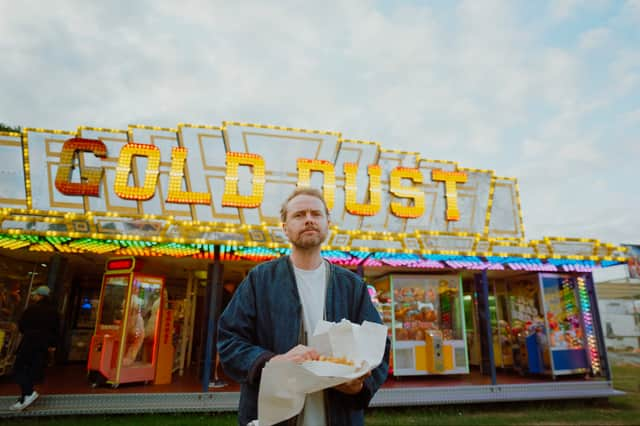
Glasgow songwriter Michael Cassidy comes with a ringing endorsement by Lewis Capaldi but sounds more like a Caledonian Rufus Wainwright on his latest album The Nurse’s Son. Opening track What a Perfect Way for the World to End only gives in to Capaldi-like pop bombast in the closing moments, while the two-minute title track finds space for some ELO pomp. The gallus roistering of Statue on the Hill is accompanied by trad jazz flourishes; in contrast, strings elevate what could have been mawkish indulgence into yearning romance on The Lonely Heart Columnist.
CLASSICAL
Hey for Christmas! (Delphian) ★★★★
It’s Christmas in the mid-1600s. Cromwell has disrupted the constitutional status quo, but in the typical London home family fireside traditions prevail. The 12 days of Christmas are a time for plentiful food, drink and hearty homemade song. That’s the picture Hey for Christmas! adheres to with its high energy sequence of wassail songs, dances and sacred settings, performed by vocal group Siglo de Oro and the instrumental Scots-based Spinacino Consort (directors Patrick Allies and Eric Thomas). The party vibe is infectious, its narrative flitting seamlessly between earthy dances (such as Granny’s Delight from John Playford’s The Dancing Master), folk-based songs, rousing communal ballads (In Winter Cold), Byrd’s moralistic setting of an Aesop fable, but also his devotional motet O magnum mysterium. Like all good parties it ends with a company riot: a rip-roaring English-flavoured title track gatecrashed by a belligerent Scots reel. Ken Walton
JAZZ
Jakob Manz: Supernova (ACT Music) ★★★★★
At 25, saxophonist and European jazz luminary Jakob Manz is the youngest ever artist-in-residence at Frankfurt’s Alte Oper concert hall where this this exhilarating live recording showcases his assurance and lyricism amid an eight-piece band, plus such distinguished guests as pianist Michael Wollny, bassist Kinga Glyk and trombonist Nils Landgren. Manz’s alto sax leads from the outset, its yell heralding the exhilarating funk of Eyes of Crystals, while in Island, his liquid recorder melody over bleeping bass switches to sax as the band builds around him. Shrilling sax alternates with frantically wah-wahing trombone and lithe bass work in Mr M, while Peace features beautiful, balladic interchange between Manz and Wollny. Amid a programme bursting with instrumental colour and contrast, Manz displays notable empathy with vocalists, matching the passion of Max Mutzke’s Welt Hinter Glas and picking up the plaintive tone of Sarah Connor’s Ich Wünch Dir. Jim Gilchrist
The Scotsman’s arts newsletter is now sent twice a week - subscribe today
Enjoying the Arts & Culture journalism on scotsman.com? Make it easier to find by selecting us as a preferred Google source
Want the latest Scottish headlines sent directly to your phone? Sign up to our new WhatsApp channel here
Comments
Want to join the conversation? Please or to comment on this article.