
More than 700,000 specimens of insects and plants to be digitised to 'unlock' critical information

£1.8m of funding has been granted for the digitisation project
Detailed observations on more than 2,000 species of moths collected over a 50-year period are to be digitised alongside hundreds of thousands of other specimens in a multi-million project to allow scientists to “unlock” critical information held in Scotland’s national sciences collections.
A funding initiative from the Arts and Humanities Research Council will see Scotland receive more than £1.8m to digitise around 700,000 specimens of insects and plants over two years. The project in Scotland will see more than 250,000 insects from National Museums Scotland and 388,000 herbarium specimens from the Royal Botanic Garden Edinburgh become digitally accessible to all.
Glasgow Life, The Hunterian, Shetland Museum and Archives and The James Hutton Institute in Aberdeen are also involved in the scheme - which will create a network to add Scotland to the Distributed System of Scientific Collections UK (Dissco UK) project - with more collecting institutions expected to be involved in due course.
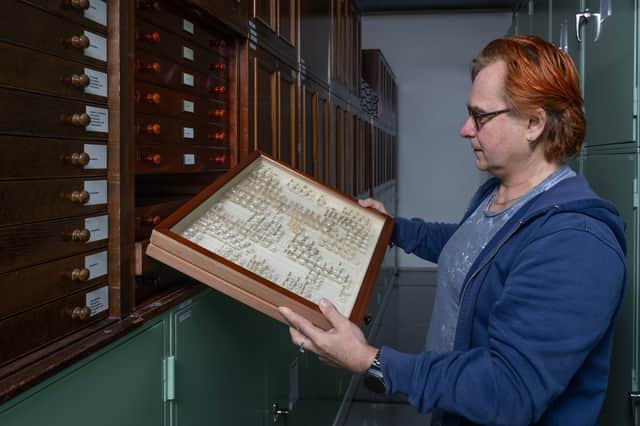

Dr Nick Fraser, keeper of natural sciences at the National Museums of Scotland and project co-lead, said: “This is a really exciting undertaking. It will really activate collections which have been amassed across Scotland for over 200 years.
“Having these records digitally available will allow us to unlock the critical information that these collections hold about changes in biodiversity over time and the impact of climate change on diverse ecosystems both here in Scotland and across the world.”
Among the significant collections to be digitised is the Pelham-Clinton moth collection held at the National Museums Collection Centre in Edinburgh. Edward Pelham-Clinton, who was deputy keeper of the then-Royal Scottish Museum for 20 years until 1980, spent decades travelling Britain and Ireland, collecting over 35,000 moths and butterflies. He filled 64 meticulous field diaries with observations on 2,169 species, building what is believed to be the most detailed personal record of British moths ever compiled.
His collection and diaries, which contain around 250,000 entries in total, cover precisely the decades before moth populations began their dramatic modern decline, making them an irreplaceable before-and-after record of what Britain’s moths looked like when they were still thriving.
Dr Fraser added: “Unlocking the full power of this archive means digitising every page of those diaries and every specimen label. That means that anyone, anywhere, can ask what was flying in a Scottish meadow in the 1950s, and compare it to what is flying there now which, in some cases, may be very little due to expanded human inhabitation and activity”.
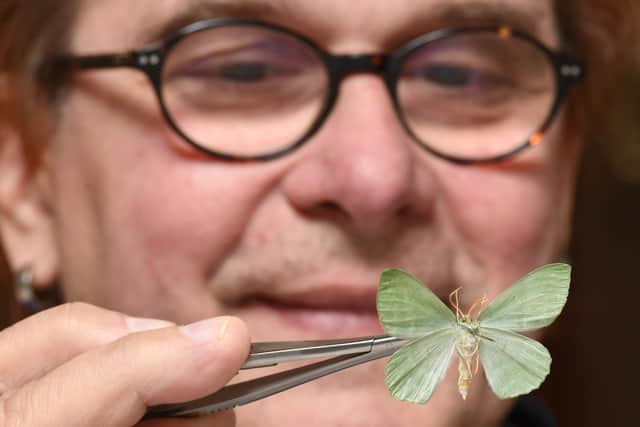
The Herbarium of the Royal Botanic Garden Edinburgh is a world-renowned collection of preserved specimens of the plant and fungal kingdoms used by researchers from around the world. A tiny lichen from the brooding slopes of Ben Nevis to flowering plants of coastal shores, moorland, and cities across the world will all be digitised.
The project, a £155 million, 10-year national programme to digitise and connect the UK’s natural science collections, will also see digital records created for 85,000 plant specimens held by Glasgow Life, 1,200 insects from The Hunterian, 2,400 specimens from Shetland Museum and Archives including plants, algae and 1,400 plant, lichen and moss specimens from The James Hutton Institute in Aberdeen.
Professor Olwen Grace, deputy director of science (collections), curator of the Royal Botanic Garden Edinburgh Herbarium and project co-lead, said: “This project brings together Scotland’s exceptionally rich natural science collections in a united effort to mobilise the biodiversity records they hold.
“Drawing on the leading Herbarium digitisation approaches at RBGE, the project will boost digital heritage in Scotland and help to ensure the broadest diversity of the UK’s collections are made accessible online. “
Comments
Want to join the conversation? Please or to comment on this article.