
Exclusive:Letter reveals the story of tragic Scottish Titanic passenger
The exhibition will highlight the story of Edinburgh passenger Robert Norman


He was an Edinburgh-born passenger on the Titanic, who is remembered for playing the piano during a hymn service held on board.
Now the story of Robert Norman, who lost his life aboard the ill-fated ship, will be brought to light at the UK's biggest travelling Titanic exhibition on show in the city for the first time.
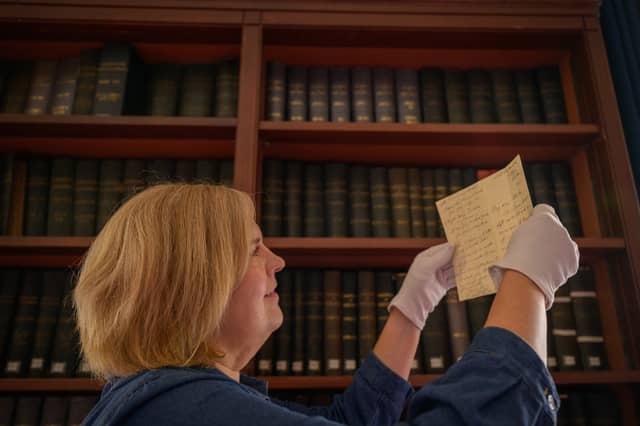
The exhibition will feature a digital copy of a letter written by Mr Norman, who lost his life aged 28 - just days before the ship hit an iceberg. Born in Newington in 1884, Mr Norman attended Merchiston Castle School before becoming an electrical engineer in Glasgow and travelling aboard the ship as a second-class passenger.
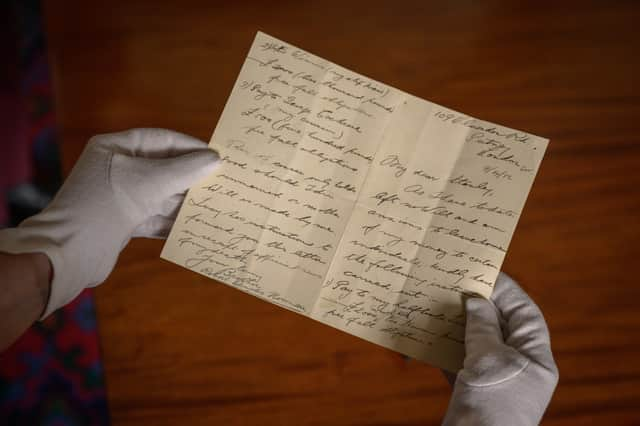
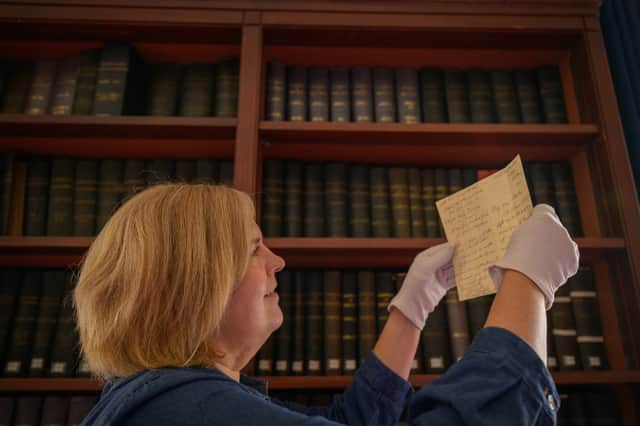
Written on April 9, 1912, five days before the disaster, his letter outlined instructions for the distribution of his estate in the event of his death. The original is held by National Records of Scotland, which has provided a digital copy for display at the exhibition.
The letter, to his brother Stanley, says Mr Norman wants to divide his money between his sister Lucie and his step niece Winnie - who would receive £2,000 each - and his cousin George Cochrane, who was to receive £500.
It states: “My dear Stanley, As I have to date left no Will and am anxious to leave some of my money to certain individuals, kindly have the following instructions carried out.”
Joe Levy, event manager for the exhibition, said the modern era of the disaster mean more details were known about many of the passengers.
He said: “Part of why the Titanic is does stick in people's minds so much is because it's one of the first disasters where it's so well recorded because of survivors' testimonies. At this time, a lot more people are literate, so we’ve got written postcards and letters and accounts that people have made, that maybe 100 years before we just wouldn't have had.
“The fact that we know that Robert Douglas Norman, played piano at a hymn service - that little detail about a specific person is is really significant. Those sorts of personal details might have been missed out in earlier decades or centuries. There's an emotional element to the fact that he played piano at the hymn service. I thought it was just a very poignant story.”
Mr Norman was believed to have been travelling to Vancouver, Canada, to visit his brother when he boarded the ship at Southampton. His body was later recovered by the Mackay Bennett - a cable repair ship built on the Clyde for a US company. Documents show his body were found listed him as wearing “dark trousers and vest; no coat; green striped flannel shirt; no boots”, while he was also found to have had a gold watch and chain, a purse containing various British and foreign money and a pocket knife and diary on him when he died.
He was buried in Fairview Cemetery, Halifax, Nova Scotia on May 6, 1912.
Records show on the night of the sinking Mr Norman had played piano at a hymn service presided over by Reverend Ernest Carter, who told the congregation it was “the first time that there have been hymns sung on this boat on a Sunday evening, but we trust and pray it won't be the last.”
Mr Levy added that the timing of Mr Norman’s letter outlining his will was “part of the folklore of the Titanic”.
He said: “We often think about these things as a bit spooky and I think some people might wonder whether there was a bit of fate there. Obviously there's so many stories like that around the Titanic because people are going to remember those conversations a lot more than maybe in other situations. Everything that people said and everything that happened in the run up to [the disaster] has this different meaning afterwards.”
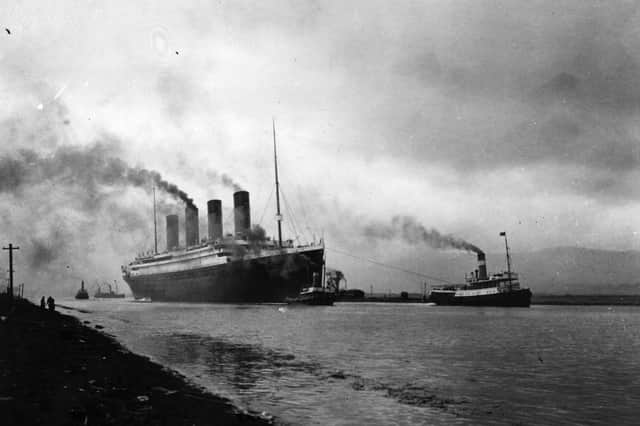
Beyond Mr Norman's story, the immersive exhibition will take visitors on a journey through Titanic's history, from its construction at the Harland and Wolff shipyard in Belfast and life on board during its maiden voyage, to the tragic events of April 1912 and its eventual rediscovery on the ocean floor.
Among the artefacts on display are an original Titanic deckchair, one of only a handful thought to have survived, what is believed to be the largest surviving fragment of the ship's aft Grand Staircase, and a weight ticket from its Turkish Bath, offering a glimpse into one of Titanic's more unexpected luxuries. These will be showcased alongside recreations, visual displays and atmospheric soundscapes bringing the stories of those on board to life.
The ship, which was constructed in Belfast, had a number of Scottish connections, which will be highlighted in the exhibition. First class carpets on the Titanic were made by Scottish company Blackwood and Morton from Kilmarnock anchor windlass was made by the Napier Brothers in Glasgow. Meanwhile, Edinburgh engineering firm Brown Brothers, which specialised in marine technology, created the telemotor which helped steer the ship. John York Hume, from Dumfries, a band member who played as the ship went down, will also be remembered at the exhibition.
At the start of their visit, every visitor will receive a boarding pass representing a real passenger or crew member who sailed aboard Titanic, before discovering their fate at the end of the exhibition.
Tom Rudderham, director of White Star Heritage, said: “Titanic's story has captivated audiences for more than a century, and there's nothing quite like seeing authentic artefacts up close and discovering the personal stories behind them.
“What makes this exhibition even more special is its connection to Edinburgh through Robert Douglas Norman's story and we thank the National Records of Scotland archive team for providing a digital copy of his letter and helping us share an important part of the city's history.”
Jocelyn Grant, head of outreach for the National Records of Scotland, said: “Behind the Titanic tragedy are the personal stories of those who lost their lives, including Edinburgh-born Robert Douglas Norman, who was just 28 when he died. His letter, written only days before the disaster, offers a moving insight into his life and highlights the importance of preserving historical records for future generations.”
Originally established as an enthusiast's passion project, Titanic Exhibition has grown into the UK's biggest travelling Titanic exhibition. Led by Titanic historian, collector and exhibition designer Mr Rudderham, the exhibition combines rare artefacts with storytelling.
The exhibition's Edinburgh debut at the Royal Highland Centre, Ingliston, will run from November 28 to February 14.
Comments
Want to join the conversation? Please or to comment on this article.