
You Can See Everything review: ‘stunning’
This extraordinary feat of filmmaking willingly shatters the bogus authenticity of the documentary form, writes Alistair Harkness
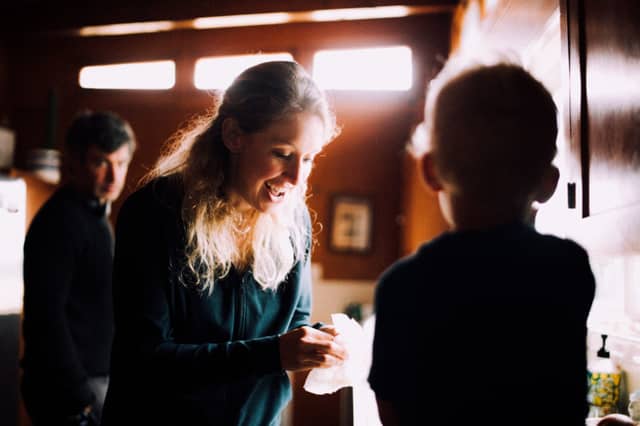

You Can See Everything (15) ★★★★★
“Radical transparency” promises Elizabeth Holmes’ romantic partner Billy Evans in the opening scene of You Can See Everything, Nathan Fielder’s wild documentary following the scandal plagued Theranos entrepreneur in the weeks before she begins her prison sentence for defrauding investors. Radical transparency, however, is not exactly what we get in this funny, strange, hard-to-classify three-hour epic. In part that’s down to how slippery Fielder’s subjects prove. Watching the unrepentant Holmes and the controlling and increasingly unhinged Evans, it’s hard to tell if they’re delusional or calculating as they tie themselves in linguistic knots deflecting his questions.
But they’ve also met their match in the deadpan Fielder, whose conceptually ambitious HBO show The Rehearsal lays some of the groundwork for what transpires here, particularly in the second half, when his access to Holmes is suddenly curtailed by her incarceration. Co-directing with Lance Oppenheim (Primetime), Fielder inserts himself into the action early on, becoming an intrusive, awkward presence as he moves into their beach-front property to stay with Holmes, Evans and their two young children, literally getting in their faces by shooting them in extreme closeup.
For the couple, this is a chance to change the narrative. They seem particularly aggrieved by portrayals of Holmes in the media and especially the extent to which public perception may have been shaped by the Amanda Seyfried-starring TV drama The Dropout, hitherto the most high-profile entry into the cottage industry of Elizabeth Holmes-centric pop-culture content that’s sprung up since Theranos collapsed in 2016. In a stunning coup, Fielder persuades them watch it for the first time, on camera, giving the show a jaw-dropping second life in the film in ways that would be remiss to spoil in a review.
But it’s also clear Elizabeth doesn’t really know what Fielder’s all about and though Evans brought him in, it’s clear too that he’s also underestimated him, perhaps because, like Elizabeth, Fielder comes off as awkward and socially inept, traits Evans seems to think — based on the way he treats the mother of his children — will make him pliable enough to do their bidding.
What’s fascinating here is the filmmaker’s willingness to play along. He may hold Elizabeth’s unblinking gaze and capture tantalising moments that seem to confirm their deceptive intent, but he also leaves plenty of threads deliberately unexplored, turning off his own mic at certain points and forcing us to rely on his own (possibly unreliable) memories of how certain interactions played out. When he finds his own view of her softening, it can feel frustrating, until, that is, you realise he’s also paying playful homage to Hitchcock’s Vertigo and that what he and Oppenheim are actually doing is using all the elements before them to recreate the cult of Theranos so we can see how things might have played out behind closed doors.
It’s an extraordinary feat of filmmaking chutzpah, one that willingly shatters the bogus authenticity of the documentary form to get at something more truthful about our corrupt, untrustworthy times.
The Scotsman’s arts newsletter is now sent twice a week - subscribe today
Enjoying the Arts & Culture journalism on scotsman.com? Make it easier to find by selecting us as a preferred Google source
Want the latest Scottish headlines sent directly to your phone? Sign up to our new WhatsApp channel here
Comments
Want to join the conversation? Please or to comment on this article.