
Film reviews: The Testament of Ann Lee | EPiC: Elvis Presley in Concert | Sirāt
Although it boasts a committed performance from Amanda Seyfried in the title role, The Testament of Ann Lee still ends up feeling like a pretty prosaic biopic, writes Alistair Harkness
The Testament of Ann Lee (15) ★★
EPiC: Elvis Presley in Concert (12A) ★★★★
Sirāt (15) ★★
Having most recently co-written The Brutalist with her husband and frequent collaborator Brady Corbet, Mona Fastvold re-unites with Corbet for The Testament of Ann Lee, a biopic of sorts that turns the life of one of the founders of the 18th Century Christian religious sect known as the Shakers into an abstract musical about, well, what exactly is hard to parse. Set in Manchester and pre-Revolutionary America, it is, like The Brutalist, an austere, artful, perplexing film — with an undeniably committed lead performance from Amanda Seyfried as “Mother” Ann. But it also has a curious unwillingness to arrive at any kind of larger point about who she was, what she stood for or what she hoped to achieve.
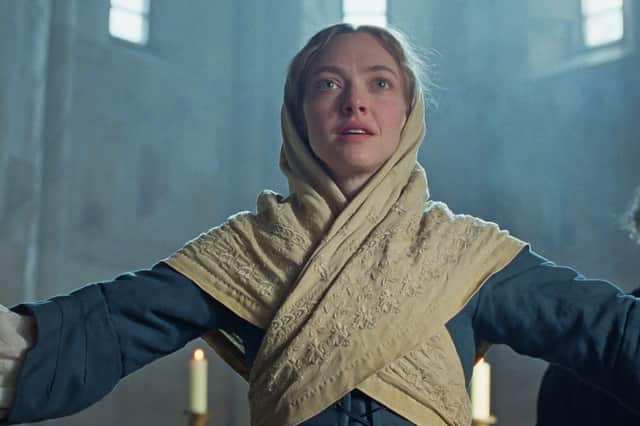

The Shakers, we soon learn, are a subset of the Quakers, but it’s Ann’s vision for the movement that transforms them into their own sect, one fuelled by celibacy and a denial of the flesh, but paradoxically expressed in the orgasmic writhing of bodies during prayer to reach a higher state of religious ecstasy — something Fastvold, in her boldest move, turns into choreographed musical sequences that prevent the film descending into primal screaming cliches.
Tracing the origins of Ann’s vow of chastity back to her poverty stricken childhood in industrial Manchester, the film shows us her revulsion at her father’s carnal use of her bedraggled mother and how this is further compounded by her own subsequent marriage to a BDSM-embracing blacksmith (played by Christopher Abbot) whose unwillingness to honour Ann’s beliefs results in her giving birth to four children, none-of-whom survive past infancy. The trauma of the latter, and a period of institutionalisation, drives her desire to create a utopian society where an absence of sex will make men and women equal before God. But when the Shakers flee to the New World to avoid persecution, they find it waiting for them anyway in a country with an already poor record of tolerance and understanding, especially for a woman claiming to be the Second Coming.
Weirdly, the film doesn’t really build to much given the scope of Ann’s life and the themes it’s scratching at. Outside of the musical reveries and Seyfried’s outré performance, it’s pretty prosaic. Divided into chapters and narrated by a secondary character (played by Thomasin Mackenzie), we’re also kept at a bit of a distance from the film’s subject, as if Fastvold is too scared to tarnish Lee’s proto-feminism and desire for equality with any suggestion that she may also have been a delusional fanatic whose fear of fornication unwittingly turned the Shakers into history’s slowest-acting death cult.
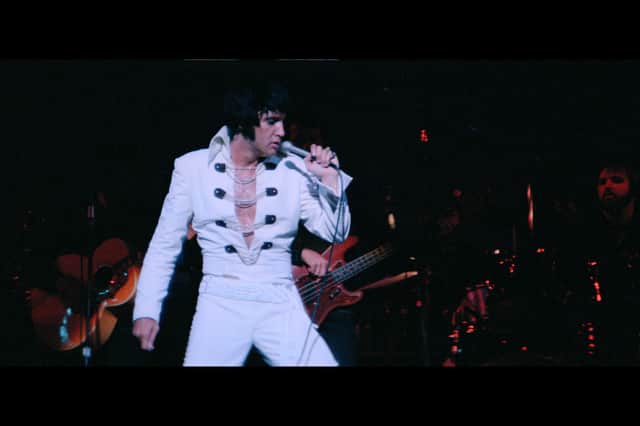
Baz Luhrman has already given us a rousing, razzle-dazzle biopic of Elvis Presley, but with EPiC: Elvis Presley in Concert he gets to work with the real deal. Having discovered 59 hours’ worth of never-before-seen footage of Elvis while making the aforementioned movie with Austin Butler and Tom Hanks, he’s restored, remastered and reshaped it into an illuminating celebration of what a consummate entertainer the King was.
The result is a pretty wild document of the times. From intimate rehearsal scenes featuring Elvis adding Beatles and Simon & Garfunkel songs to his repertoire, to backstage scenes of him hobnobbing with Vegas legends like Sammy Davis Jr, to his self-deprecating stage presence (he’s really funny), to the sight of his many now grown-up fans throwing themselves at him in full view of their bewildered husbands, it’s an incredible testament not just to the power the first superstar of the rock ’n’ roll era once had, but the power he continues to exert over pop culture. The real gift of the film, though, is its ability to reclaim Vegas-era Elvis from the jokes, the parodies and the endless tribute acts that have reduced what he did in those years to a tragic punchline. Whatever Elvis was going through off stage, while he was on it he was alive to the music and its effect on his fans like no one else.
Revolving around a father (Sergi López) searching for his missing daughter amid the nomadic ravers of a near-future Morocco on the brink of some kind of war, Cannes-winner Sirāt comes on like Sorcerer-meets-Mad Max as the film’s protagonist and his young son hook up with a band of outsiders in over their heads in a country they don’t fully understand. It’s pretty compelling stuff — until co-writer/director Oliver Laxe proceeds to deliver a devastating mid-point shock so upsetting the film never recovers. That’s largely because what follows is so facetious it betrays López’s character and soon reveals itself to be an empty provocation, one Laxe tries to cover up by orchestrating an explosive, drug-addled finale that feels like a non-ending to a film that’s veered wildly off track.
All films in cinemas from 27 February
The Scotsman’s arts newsletter is now sent twice a week - subscribe today
Want the latest Scottish headlines sent directly to your phone? Sign up to our new WhatsApp channel here
Comments
Want to join the conversation? Please or to comment on this article.