
Film reviews: Evil Dead Burn | Rosebush Pruning | Shoot the People
It may be stylishly shot, but the violence in Evil Dead Burn is so unpleasant that it’s a lot to take, even for seasoned gore-hounds, writes Alistair Harkness
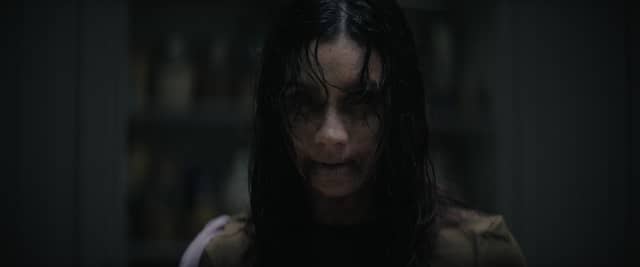

Evil Dead Burn (18) ★★★
Rosebush Pruning (18) ★
If Sam Raimi’s original Evil Dead trilogy played like a gonzo cross between The Exorcist and The Three Stooges, the rebooted franchise that began in 2013 with Fede Álvarez’s remake, and belatedly continued with Lee Cronin’s 2023 stand-alone sequel Evil Dead Rise, toned down the slapstick in favour of gnarlier violence and characters confronting trauma.
Evil Dead Burn continues that trend, and then some. Co-written and directed by up-and-coming French filmmaker Sébastien Vanicek, it’s the most gruesome instalment to date. Which isn’t to say it’s not also exceptionally well made (it is), but Vanicek does seem a little too in awe of his native cinema’s more extreme tendencies, unleashing the kind of uncomfortably gruesome violence here that gained early 2000s’ French horror movies like Martyrs and High-Tension all kinds of notoriety back in the day.
In Evil Dead Burn eyelids get caught on fishing hooks, the steak-knife-filled cutlery rack of a dishwasher becomes an impromptu bed of blades, and a fountain pen is used to slowly perforate an eardrum. Ugh. Even as characters are being chased by green-eyed reanimated corpses and maimed by power tools and car accessories, there’s a realistic edge to the violence that makes the film a decidedly less groovy watch than fans should reasonably expect of a series with such a goofy mythology.
READ MORE: Supergirl review: 'runs out of juice'
Speaking of which, this one actually ties more directly into Raimi’s films by making the characters descendants of a colleague of the archeologist who first discovered the Necronomicon (the curse-containing artefact featured in all the films). In this instance, the so-called Deadites are after a sacred dagger built to ward off evil, a weapon that aspiring writer Joseph (Hunter Doohan) unwittingly finds in an attic full of his grandfather’s research.
Thenceforth, bad things start happening to Joseph’s family, starting with the death of his brother William (George Pullar), though not before seeding a domestic abuse subplot that sets up William’s French wife Alice (Souheila Yacoub) as this film’s heroine.
As she’s forced to confront her soon-to-be-demonic in-laws, the film scratches at something interesting by using an evil curse as a metaphor for the horror of a bad marriage – and there are also a couple of brilliantly orchestrated set-pieces too that show Vanicek to be quite the visual stylist. But even for seasoned gore-hounds it’s a lot to take and the sequel it sets up in its post-credits stinger seems immediately more fun that what we’ve just been asked to sit through.
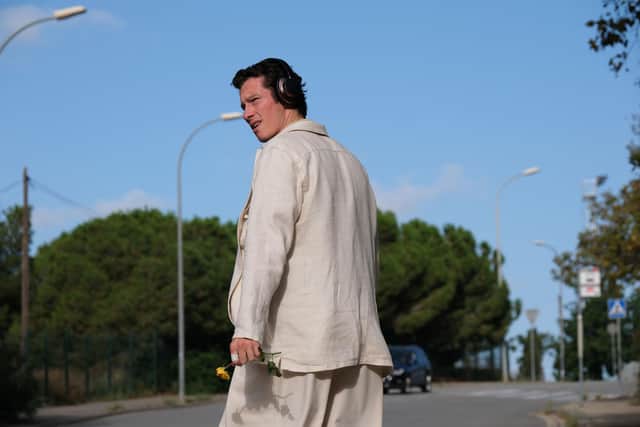
Directed by Brazilian filmmaker Karim Aïnouz (Firebrand) and scripted by frequent Yorgos Lanthimos collaborator Efthimis Filippou (he wrote The Lobster and Dogtooth), Rosebush Pruning is the sort of tiresome provocation that gives arthouse cinema a bad name, revolving as it does around a quasi-incestuous, uber-rich American family living in sequestered luxury in Spain and calling on its up-for-anything cast to act out all manner of transgressive behaviour for very little artistic reward.
Callum Turner takes the ostensible lead as Edward, a fashion-loving dilettante and one of four idle siblings living off their late mother’s inheritance. As the film opens, said mother (awkwardly played by Pamela Anderson) has allegedly been torn apart by wolves, though the truth about her demise may have been fudged for other absurd reasons that the film struggles to make either comical or shocking.
She’s been “survived” by her blind husband (Tracey Letts), a deviant misogynist who forces Edward to pleasure him sexually while brushing his teeth. Edward’s younger brother Robert (Lukas Gage) and his sister Anna (Riley Keough), meanwhile, have inappropriate sexual designs of their own on eldest sibling Jack (Jamie Bell). And on it goes, to little purpose, its icky excesses cynically calculated to distract from fact it has nothing substantial to say about the world of wealth and privilege it’s trying so very hard to satirise.
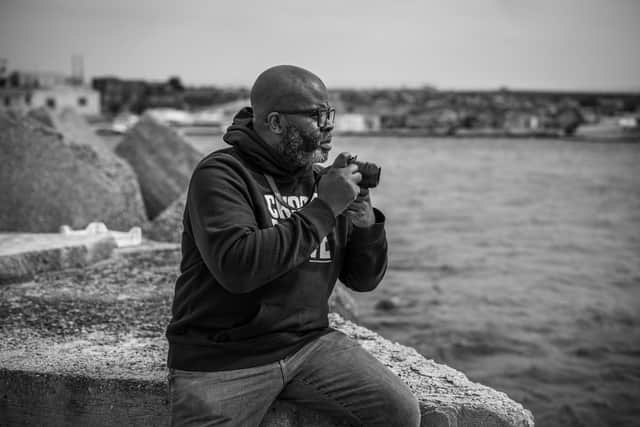
Zeroing in on British-Nigerian photographer, activist and Oscar-nominated filmmaker Misan Harriman, Shoot the People provides a useful overview of his meteoric rise. Becoming the first Black artist to shoot a Vogue cover (a mere three years after he first picked up a camera in his 40s), his story certainly has a good hook. But director Andy Mundy-Castle repeatedly discards the more glamorous aspects of his biography to explore Harriman’s determination to use the vast platform he’s created for himself to stay focussed on documenting the protest movements (particularly Black Lives Matter and the ongoing Free Palestine campaigns) that have belatedly given him a sense of himself and a sense of purpose. Harriman’s black-and-white images are world-class too.
All films are in cinemas
The Scotsman’s arts newsletter is now sent twice a week - subscribe today
Want the latest Scottish headlines sent directly to your phone? Sign up to our new WhatsApp channel here