
Fatherland review: 'Sandra Hüller delivers a performance of suppressed fury and raging emotional turmoil'
Pawel Pawlikowski’s film about self-exiled Nobel laureate Thomas Mann’s 1949 return to Germany, along with his daughter Erika, builds to a quietly transcendent moment of acceptance, writes Alistair Harkness
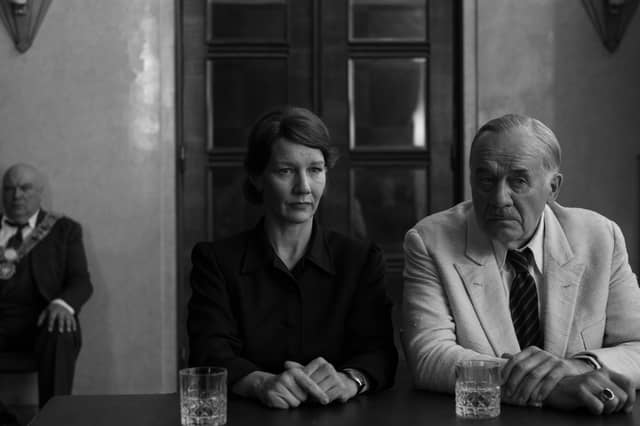

Fatherland (12A) ★★★★
Following more limiting Hollywood roles in Hail Mary and Digger, Sandra Hüller’s dominance of European cinema continues with Fatherland, Pawel Pawlikowski’s concise, Cannes-winning film about self-exiled Nobel laureate Thomas Mann’s 1949 return to Germany.
Cast as Mann’s multilingual daughter, Erika, Hüller delivers a performance of suppressed fury and raging emotional turmoil as Erika is reluctantly forced to play the role of doting daughter and dutiful assistant to her father (played here by Hanns Zischler) as he travels from West to East Germany being courted by the intelligentsia of both sides of the Cold War in the hope that he’ll provide the shattered, disgraced country with a new sense of purpose and national identity.
Along the way they encounter self-pitying artists with Nazi connections (Erika’s ex-husband among them), but are confronted too with the suicide of Erika’s brother, Klaus (August Diehl), whose own 1936 novel Mephisto explored of artistic compromise during the pre-war rise of Nazism.
Shooting in black-and-white amid buildings both ruined and grand, Pawlikowski uses Klaus’s terrible fate as a rebuke to Mann’s own efforts to distance himself from politics by harking back to more idealistic times – a way, perhaps, for Mann to deny both his own self-inflicted pain as a negligent father to Klaus and Erika, and the self-inflicted pain Germany is experiencing.
Instead that pain bleeds out of Hüller’s Erika, articulated in slaps to her ex-husband’s face and middle-of-the-night screams at drunkards singing Nazi songs, but also in her inability, and indeed, unwillingness to bury her grief. It is the inverse of Hüller’s chilling turn in The Zone of Interest and Pawlikowski – concluding a loose trilogy of post-war road movies begun with the Oscar-winning Ida and continued with the remarkable Cold War – uses it to brilliant effect as he builds to a quietly transcendent moment of acceptance between father and daughter, soundtracked to the music of Bach.
On general release from 23 October
The Scotsman’s arts newsletter is now sent twice a week - subscribe today
Enjoying the Arts & Culture journalism on scotsman.com? Make it easier to find by selecting us as a preferred Google source
Want the latest Scottish headlines sent directly to your phone? Sign up to our new WhatsApp channel here
Comments
Want to join the conversation? Please or to comment on this article.