
Edinburgh Fringe 'needs to reflect on what it wants to be' in 80th year as ticket sales rise by 8 per cent

As of 11.30am on Monday - the last day of the 2026 Edinburgh Festival Fringe - 2,805,395 tickets had been issued.
The Edinburgh Festival Fringe needs to “reflect on what it wants to be” as it heads into its 80th year, the head of the Fringe Society has urged, as the city’s festivals draw to a close.
The Edinburgh Festival Fringe said it had seen its biggest ever single day of ticket sales this August, as well as an eight per cent rise overall from last year.
Venue Summerhall Arts heralded an “incredibly successful August” at its venue - but warned that the cost of bringing work to the Fringe was a “huge challenge”.
Meanwhile, the Edinburgh International Book Festival said it had seen a 20 per cent increase in footfall and proportionally more tickets sold on a smaller programme, while the Edinburgh International Festival (EIF) said sales were broadly flat on last year at 112,340, adding more than half of its tickets this year were sold to Edinburgh residents.
Data released from the Fringe Society showed over 164,000 tickets were issued for performances on Saturday 15 August, one per cent higher than the previous peak on Saturday, August 17, 2019.
The Fringe welcomed a total of 4,232 shows from 77 countries who undertook 61,277 performances across 306 venues. As of 11.30am on Monday - the last day of the 2026 Edinburgh Festival Fringe - 2,805,395 tickets had been issued. The figure is still lower than in 2019, when more than three million tickets were sold.
Tony Lankester, chief executive of the Edinburgh Festival Fringe Society, said: “The Edinburgh Festival Fringe continues to be the world's best platform for artists at any stage of their career to showcase their work to global audiences. As Richard Gadd put it so eloquently – the Fringe remains the only place where someone can arrive with an idea and leave with a career. For 79 years, the Fringe has thrived because of the creativity, grit and resilience of the Fringe community. There quite simply would be no Fringe without artists and the risks they take.
“Every year there is passionate debate and discussion among participants and Edinburgh’s residents about every aspect of the Fringe. This year was no different, and while there are many divergent opinions; what we all agree on is the need to keep the Fringe affordable for artists, venues and audiences - protecting its reputation as a global marketplace.
“The Fringe Society will continue to work to keep that issue front and centre, advocating for the Fringe to be a fair and just platform for all voices.
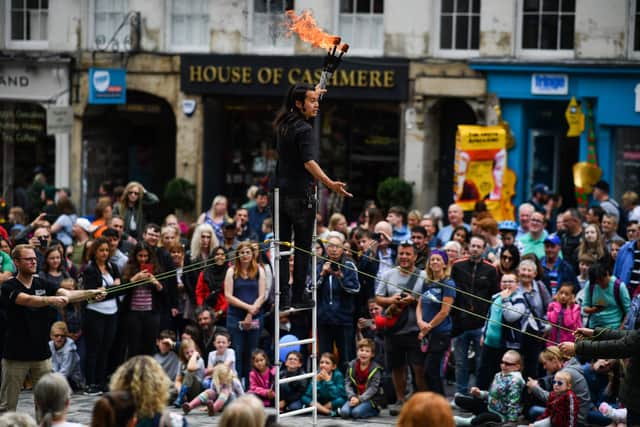

“As we look to the festival’s 80th anniversary, it’s appropriate that we reflect on what we want the Fringe to be, and how we preserve Edinburgh's reputation as a world-class festival city. That’s the challenge but also the opportunity – and we urge all stakeholders to make the most of it.”
The Book Festival said 62 per cent of tickets were sold to people in EH postcodes, underlining the Book Festival's strong local support.
Alongside major discussions on politics, technology and society, audiences flocked to hear acclaimed fiction writers including John Grisham, Maggie O'Farrell and 2026 International Booker Prize winners Yáng Shuāng-zǐ and Lin King.
The festival also reported the biggest-ever sales for the Book Festival's Waterstones bookshop.
Edinburgh International Book Festival director and chief executive Jenny Niven said: “In the National Year of Reading, it is heartening to see footfall increase, more tickets sold across a smaller programme and our Waterstones bookshop achieve its biggest-ever sales.”
“At a time when literacy rates are declining, book festivals have an important role in helping people discover the pleasure, confidence and connection that reading can bring. Our schools programme, free books for every child attending and year-round work with communities are all part of that commitment.
"With 62 per cent of tickets sold to people in EH postcodes, the Book Festival remains deeply rooted in Edinburgh. At the same time, people in 52 countries joined us online. That combination of strong local support and international reach shows a Book Festival that is both determinedly local and open-heartedly international."
Meanwhile, the Royal Edinburgh Military Tattoo said it had attracted more than 220,000 visitors from across the globe to near-sell out shows this year. It opened ticket sales for next year’s show, announcing the theme asThe Same Heart Beat.
Summerhall Arts chief executive, Sam Gough, said Summerhall had issued over 81,000 tickets to audiences, slightly higher than last year.
He said: “As we come to the end of this, our second fringe as Summerhall Arts, we will spend some time reflecting on what has been an incredibly successful August. The Fringe is definitely back. But the cost of bringing work here is a huge challenge, and it’s not just the financial cost. Safeguarding artist health and wellbeing will remain at the forefront of how we prepare for 2027.”
Anthony Alderson, director of the Pleasance Theatre Trust, said the venue group had sold 484,100 tickets this year.
He said: “Curiosity is at the heart of the Fringe; artists taking risks, audiences taking a chance on something they know nothing about and all of us being open to the possibility of discovering something extraordinary. That wonderful mix of established and much-loved names alongside artists arriving at the Fringe for the very first time is what makes the Pleasance so special.
“In a world increasingly determined to tell us what we already like, there is something rather wonderful about thousands of people coming together simply prepared to be surprised.”
Assembly Festival, which had to move its outdoor George Street operations to St Andrew Square following the Princes Street fire, said it had hosted 625 sold out performances this year, with over 500,000 tickets issued this August, the first time the company's audience numbers have passed that threshold since the Covid pandemic.
Karen and Katy Koren, artistic directors of Gilded Balloon, which made a return to its flagship Teviot venue after a two-year refurbishment, said 215,000 tickets had been sold this year, up from 180,000 last year, when they held shows temporarily in Appleton Tower.
They said: “What a Fringe it has been. Returning to Teviot after such a renovation has made this year incredibly special, and to see artists and audiences filling the building again has been a wonderful moment for everyone at Gilded Balloon.”
Francesca Hegyi, chief executive at the EIF, said: “The International Festival hosted artists from 46 countries, taking to stages alongside over 700 artists from across Scotland. We welcomed 23 international delegations and served as a launchpad for the Creative Trade Forum, a new initiative to promote trade and investment for the UK's creative sector.
“What sets the International Festival apart is the global role it plays, while rooted resolutely in Scotland - more than half of our tickets go to Edinburgh residents. We provide a global stage, a meeting place for cultures and ideas, where audiences gather every year.”
Comments
Want to join the conversation? Please or to comment on this article.